7-Eleven Franchise in Thailand: 15,430 Stores and What It Means for Foreign Investors
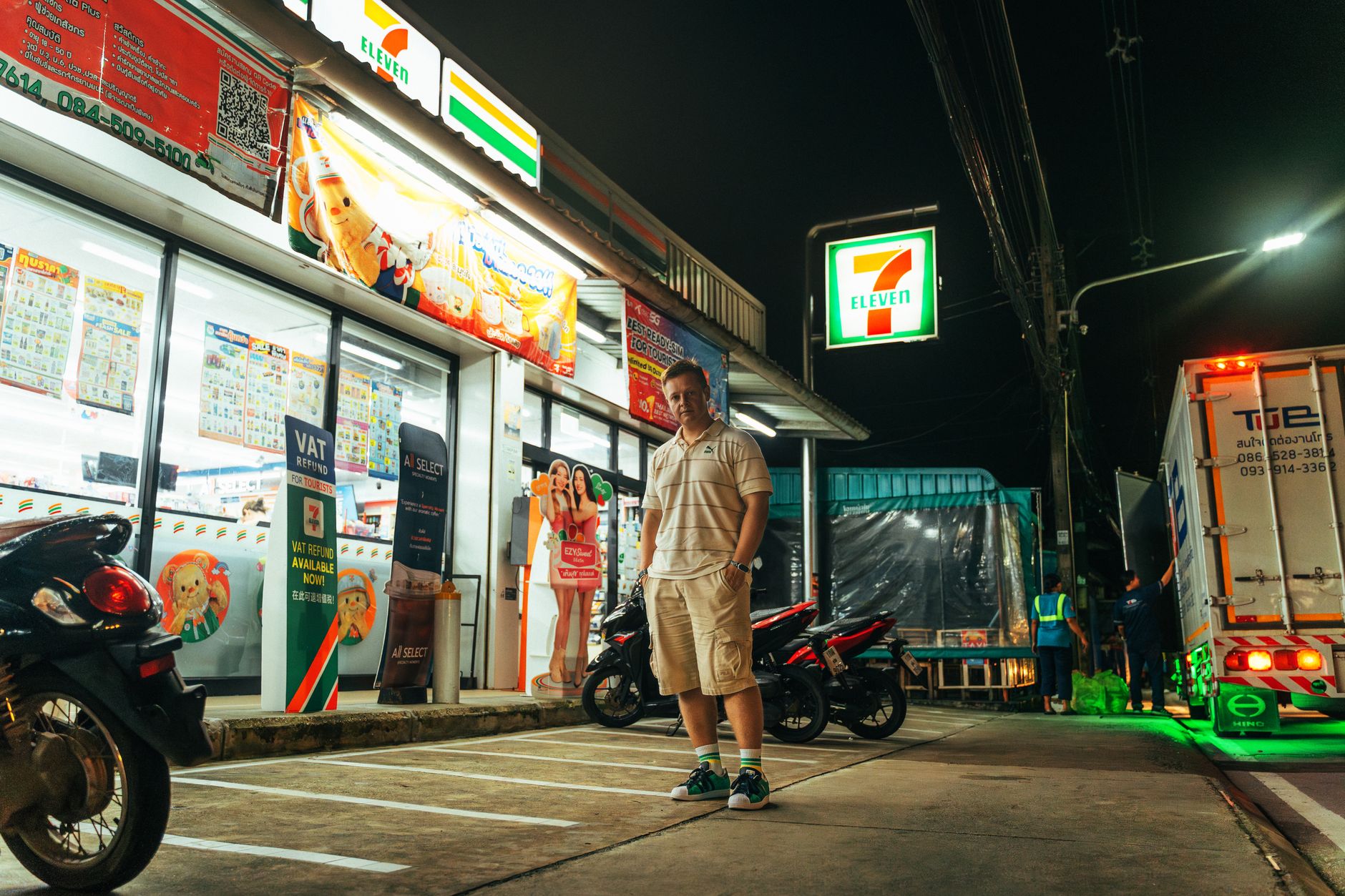
Thailand has one 7-Eleven for every 4,500 residents - making it the second-largest 7-Eleven market in the world after Japan, with 15,430 locations as of 2025. Nearly half of those stores operate under a franchise model. For international investors eyeing Thailand's retail sector, the first question is usually the most important one: can a foreigner actually buy into this franchise?
Responsible for content: Leonid Ustinov, Aster Of Asia Co., Ltd.
This material was prepared with the help of artificial intelligence. Please check key figures and terms with our adviser.
Shortlist by Aster of AsiaAll our services are free for the buyer
- Goal
- Home
- Budget
- Area
- Timing
Step 1 of 5
Why are you buying?
Your goal decides what we show first
5 questions, about a minute
The short answer is no - not directly. The franchise is restricted to Thai nationals and Thai-registered companies. But that does not mean the opportunity is completely off the table. There are legal structures that allow foreign capital to participate, and the 7-Eleven case reveals a great deal about how retail investment works in the Kingdom.
Quick Answer
- 15,430 stores operate across Thailand - second globally, behind Japan only
- 51% of locations are corporate-owned by CP All; 49% operate under franchise agreements
- Startup investment: 2-3 million THB (approximately $57,000–$86,000)
- Royalties: 35-45% of gross profit, depending on store format and location
- Contract term: 6-10 years, with mandatory 24/7 operations
- Eligibility: Thai citizens or Thai-majority registered companies only
Scenarios and Options
How the Franchise Model Works
Thailand's 7-Eleven network is operated exclusively by CP All Public Company Limited, which secured an exclusive master license from 7-Eleven, Inc. in 1988. The first store opened on June 1, 1989 on Patpong Road in Bangkok. Today, CP All is one of the most dominant retail operators across Southeast Asia.
CP All handles a significant portion of the operational infrastructure - logistics, supply chain, marketing support, location analytics, and staff training. In return, franchisees are required to run their stores around the clock and remain personally involved in day-to-day management. This is not a passive income vehicle.
Can a Foreign Investor Participate?
Direct franchise ownership is not available to foreigners. CP All only issues franchise agreements to Thai citizens or companies incorporated in Thailand with a Thai-majority shareholding structure. This is consistent with the broader protections established under Thailand's Foreign Business Act (FBA).
However, several legal pathways exist for foreign capital to participate:
- Minority stake in a Thai company - a foreigner may hold up to 49% of shares, with the remaining 51% held by Thai nationals. This is legally compliant but demands a high degree of trust in your local partner.
- Loan agreement with a Thai franchisee - the foreign investor finances the store opening and receives a fixed return. This is structured as a credit agreement, not an equity stake, which carries its own risk profile.
- Direct investment in CP All shares - the company is listed on the Stock Exchange of Thailand (SET) under the ticker CPALL, with a market capitalisation exceeding 400 billion THB. This allows participation in the network's growth without any operational exposure.
Alternatives to the 7-Eleven Franchise
If direct 7-Eleven access is unavailable, adjacent retail and F&B franchise concepts in Thailand may offer more flexible entry conditions for foreign capital - provided FBA requirements are met. Operating your own independent convenience store or food outlet through a properly structured Thai company is another route worth evaluating with qualified legal counsel.
Comparison Table
| Parameter | 7-Eleven Franchise | Independent Mini-Mart | CP All Shares (SET) | Commercial Property Rental |
|---|---|---|---|---|
| Initial Investment | 2-3M THB | 1-5M THB | Any amount | 5M+ THB (varies by location) |
| Foreign Access | Indirect only (Thai partner required) | Via Thai company (up to 49%) | Direct, no restrictions | Direct via freehold or leasehold |
| Royalties / Fees | 35-45% of gross profit | None | Brokerage fees only | None |
| Operational Involvement | Mandatory, 24/7 | Owner's choice | None | Minimal |
| Contract Duration | 6-10 years | Open-ended | Open-ended | Lease terms vary |
| Operator Support | Full (logistics, marketing, training) | None | Not applicable | None |
| Exit Liquidity | Low | Medium | High | Medium–High |
Main Risks and Mistakes
1. Nominee ownership structures. Arrangements where a Thai national holds 51% 'on paper' while the foreigner retains actual control are illegal under Thai law. The Department of Business Development (DBD) actively investigates such structures. Penalties include fines of up to 1 million THB and potential criminal prosecution. This is a risk not worth taking.
2. Overestimating net returns. Royalties of 35-45% are among the highest in global franchising. With average monthly revenues of 800,000-1,200,000 THB, the franchisee's net income after all deductions typically lands between 80,000-150,000 THB per month ($2,300–$4,300). Respectable for an operator - underwhelming for a passive investor.
Budget match
We will shortlist properties for your budget
Pick a range and leave a contact: a broker will send a shortlist with prices, layouts and payment plans.
3. Underestimating operational demands. CP All requires the franchise owner to be personally present in store management. A 24/7 format means night shifts, holiday coverage, and continuous staff oversight. This is a working business, not an asset that runs itself.
4. Location dependency. Up to 70% of a store's performance is driven by its location. CP All provides site analysis support, but the final decision rests with the franchisee. A poor location choice can lock you into years of underperformance within a long-term contract.
5. Currency exposure. Investments and returns are denominated in Thai baht. For foreign investors, fluctuations between the baht and their home currency can materially erode real returns over a multi-year contract horizon.
FAQ
The Smarter Play for Foreign Investors
The 7-Eleven franchise in Thailand is fundamentally an operational business built for Thai entrepreneurs - with demanding terms and moderate returns. For foreign investors drawn to Thailand's retail sector, a more practical entry point is commercial real estate. Owning a retail unit in a high-footfall location in Phuket or Bangkok and leasing it to an established chain operator - including 7-Eleven - offers rental yields of 5-8% per annum in baht, with far less operational complexity and a legally straightforward ownership path.
Ready to invest in Thailand? Our experts will help you find the perfect property.
Area match
We will help you choose an area for your goals
We will match properties where it suits you, with schools, clinics and shops nearby. You will get options with prices and layouts.
More in Business in SE Asia
All articles in this topic
VAT Registration in Thailand 2026: The 1.8M Baht Threshold and 5 Costly Traps
Thailand VAT registration threshold is 1.8M baht. Learn the 7% rate, 5 common mistakes, key scenarios, and monthly filing rules for 2026.

7-Eleven Franchise in Thailand 2026: 15,430 Stores and What Investors Need to Know
Can foreigners buy a 7-Eleven franchise in Thailand? Learn costs, royalties, legal options, and the best alternatives for international investors in 2026.

Thailand e-Work Permit 2026: What Every Foreign Investor Needs to Know
Thailand switched to a digital e-Work Permit system in October 2025. Learn how it affects foreign investors, BOI companies, and DTV visa holders in 2026.