

Photo by Bia Limova on Pexels
Sending Money to Thailand: Bank Fees and Large-Transfer Rules in 2026
This material was prepared with the help of artificial intelligence and checked by a person. Editorial responsibility: Aster Of Asia Co., Ltd..
Responsible for content: Leonid Ustinov, Aster Of Asia Co., Ltd.
Aster of Asia editorial team
A Thai bank charges a fee even on an incoming transfer. At Bangkok Bank and Krungsri it is 0.25%, with a minimum of 200 and a maximum of 500 baht. At SCB it is 0.25 to 0.5%, from 300 to 500 baht (figures as of autumn 2026). This comes on top of the sender's fee, the exchange-rate spread and a possible intermediary bank charge.
What one transfer really costs
There are four layers of cost, not one.
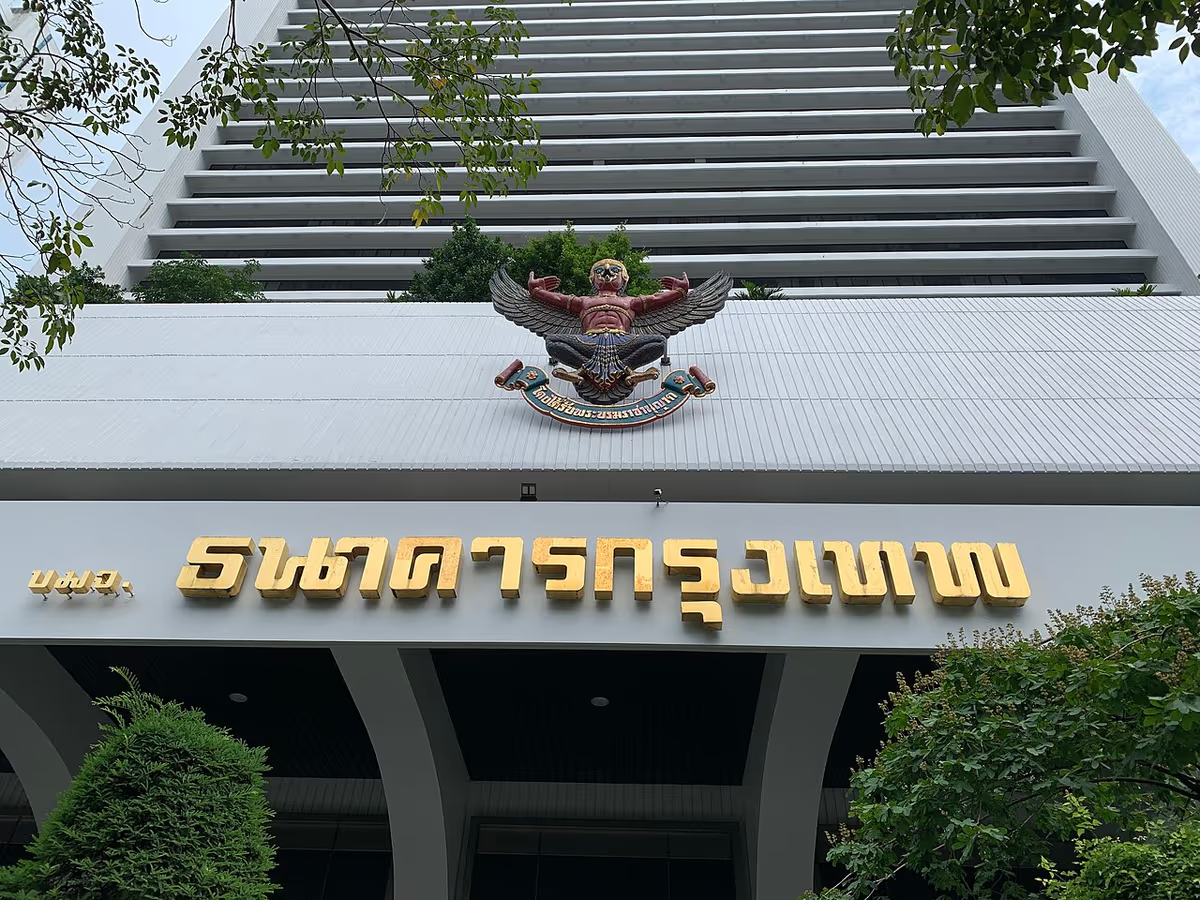
First, the sending bank's fee. Second, the exchange-rate spread: banks build their own margin into the rate, and you usually lose more there than on the fees themselves. Third, the Thai bank's crediting fee. Fourth, any intermediary bank on the payment chain. Its charge is invisible up front unless the sender selects Charge OUR, which puts all costs on the sending side.
We will shortlist properties for your budget
Pick a range and we will send a shortlist with prices, layouts and payment plans within 24 hours.
Here is the incoming fee picture:
- Bangkok Bank: 0.25%, from 200 to 500 baht
- Krungsri: 0.25%, from 200 to 500 baht
- SCB: 0.25-0.5%, from 300 to 500 baht
The key point many seasonal residents miss: the fee is capped. A transfer of 3,000 USD costs the same 500 baht as one of 30,000 USD. Five small payments over a season therefore cost more than one large payment at the start.
Our advice is to send the season's funds in a single payment in November or December and keep them in a Thai account. If you have no Thai account, or are unsure you will stay the whole season, do not do this: moving the money back out will cost more than you saved.
One more point on KBank: the bank says it became the first in Thailand to act as a gateway in the SWIFT payment scheme, promising transparent fees, a visible exchange rate and end-to-end payment tracking. In practice the recipient can see the transfer status instead of waiting a week blind. If you are still choosing where to open an account, that matters more than a 100 baht difference in fees.
What to put in the payment details: Thailand has no IBAN
The first newcomer mistake is looking for a Thai IBAN. It does not exist. You need:
- the recipient's full name exactly as the bank has it on file (Latin letters, as in the passport);
- the account number;
- the beneficiary bank's SWIFT code (for Bangkok Bank it is BKKBTHBK);
- usually the recipient's address and the bank branch address.
The name is the most common reason a payment stalls. A Thai bank may have recorded your name without a middle name or in a different order than the sender's document. The transfer goes into review, bounces back, and both sides lose fees. Before sending, open your Thai banking app and copy the name character for character from there, not from memory of your passport.
Direct transfers from Russia often fail
A direct transfer from a Russian bank to a Thai bank works far from reliably today. Most large banks are under restrictions: foreign-currency payments abroad are either unavailable or run on narrow routes in a limited set of currencies. Available directions and tariffs change at each bank, so check the app or official website on the day you send. No article stays current for longer than a month.
One development worth noting: according to a finance.mail.ru report, T-Bank removed its fee for SWIFT transfers to Thailand by account number, including transfers sent straight to the recipient's foreign account via SWIFT/BIC. Verify current terms before relying on this.
What people actually use for a winter season:
- an account at a third-country bank that can already send a standard international transfer to Thailand;
- a transfer from relatives or partners who hold an account outside Russia;
- cash brought with you and declared at customs under the current rules;
- a foreign bank card for ATM withdrawals (a Thai ATM charges a fixed fee per withdrawal, shown on screen before you confirm).
What works worse than chat groups promise is the scheme of sending crypto, cashing out to a Thai account and expecting no questions. Digital-asset transactions are on the Bank of Thailand watch list, and for each one the bank must request source-of-funds documents, with no exception for amount. A person arrives for the season, moves money, and the account is put under review exactly when the rent is due.
Planning logistics early helps: flight prices in November and late December can differ several times over, so book flights and the first nights in a hotel before you start moving money. Then you will know the real budget for the season.
Thresholds that trigger document requests
Two thresholds are worth remembering.
From roughly 50,000 USD in an incoming transfer, the bank usually asks you to explain the purpose of the payment. This is not a refusal, just paperwork: a lease, a purchase contract, proof of a property sale, or a salary statement.
The second threshold is stricter. Under foreign-exchange supervisor notice No. 38, the Bank of Thailand requires banks to obtain source-of-funds documents for incoming foreign-currency receipts of 200,000 USD or more per person. There is one exception: a client who has passed KYB at their own bank. There is also a separate watch list that covers, among other things, Thai property sold to foreigners and digital assets, where documents are needed on every transaction regardless of amount.
There is also a cash rule to know about. According to Money & Banking Magazine, the Bank of Thailand is tightening controls on cash transactions of 5 million baht or more, effective October 15, 2026. The scope extends beyond withdrawals to deposits, non-account payments, currency exchanges and other large cash flows, with a focus on high-value real estate deals. Thai Examiner reports the same 5 million baht level as a limit on funds without source details.
For a winter stay the amounts are usually lower and you will not notice these rules. But if you are moving money to buy an apartment or a car, prepare the document package in advance and ask the bank for a confirmation of foreign-currency inflow: you will need it when you later sell and take the money back out.
Sending money back out of Thailand
People remember the reverse direction in April. Outgoing transfers at Thai banks are priced by channel. At KBank, for example, a transfer through the partner network costs 250 baht for amounts up to 100,000 baht, and sending by phone number in selected currencies costs 150 baht per transfer, with limits by destination.
Documents matter more here than the fee. For a notable amount the bank will ask where those baht came from. Keep confirmations of the season's incoming transfers: without them the conversation at the branch can drag across several visits.
FAQ
Can I send money to Thailand directly from T-Bank?
The currencies and directions available at Russian banks keep changing, and T-Bank is no exception. Check the app or the bank's official website on the day you send. There is no universal answer that will hold for six months.
How long does a transfer to a Thai bank take?
Usually several business days, depending on how many intermediary banks are in the chain. A payment sent on Friday evening will not arrive by Monday.
Do I need a Thai account to spend the winter there?
No, many people manage with a foreign card and cash. But for a rental of several months with regular payments, a Thai account saves both time and withdrawal fees.
Why did less arrive than I sent?
Most often three deductions hit at once: the sender's fee, an intermediary bank charge and the Thai bank's 0.25% crediting fee. On top of that comes the conversion rate, which includes the bank's own spread.
What counts as a large amount for a Thai bank?
Around 50,000 USD is the level at which banks usually ask you to confirm the purpose of the payment. From 200,000 USD, source-of-funds documents are required under Bank of Thailand rules.
Is there an IBAN in Thailand?
No. You need the recipient's name, account number, the bank's SWIFT code and usually addresses. For Bangkok Bank the SWIFT code is BKKBTHBK.
Is one large transfer cheaper than several small ones?
Yes, because the incoming fee is capped at 500 baht. Sending 3,000 USD costs the same maximum fee as sending 30,000 USD.
What should I do before the first big transfer?
Send a small test transfer to the same details first. You lose up to 500 baht in fees, but you confirm that the name and account number match before you move the whole season's budget.
Source: Money & Banking Magazine
Ready to invest in Thailand? Our experts will help you find the perfect property.
Let us calculate the full cost of your deal
We will find options with transparent costs and taxes for your budget.
What is your goal?