Is It Safe to Swim in Phuket? Rip Currents, Flags and Lifeguards
Swimming in Phuket is not always safe. From May to October, strong rip currents run along the west coast, and in June alone lifeguards at Patong pulled 33 people out of them. The rule is simple: swim only between the flags, only when lifeguards are on duty, and never under a red flag, even if the sky is clear.
Responsible for content: Leonid Ustinov, Aster Of Asia Co., Ltd.
This material was prepared with the help of artificial intelligence and checked by a person. Editorial responsibility: Aster Of Asia Co., Ltd.
Aster of Asia editorial team

Shortlist by Aster of AsiaAll our services are free for the buyer
- Goal
- Home
- Budget
- Area
- Timing
Step 1 of 5
Why are you buying?
Your goal decides what we show first
5 questions, about a minute
When Is It Dangerous to Swim in Phuket?
The risky period is tied to the southwest monsoon, which arrives around mid-April and lasts until October. It is felt most strongly on the Andaman coast, meaning Phuket, Krabi and Khao Lak, from May to October: waves are higher and currents are invisible from the shore.
The most common mistake is judging the sea by the sky. Sun, blue water and a crowded beach seem to mean it is fine. Patong lifeguards specifically warn that clear weather guarantees nothing during the monsoon. Wind far out at sea drives the waves and currents, not the cloud above your head.
On bad days, waves go well beyond the normal beach range. In the second half of May, for example, the meteorological service forecast heavy rain and waves of 2-3 metres off Phuket, locally higher. Small boats were advised not to go out at all. On such days red flags go up and lifeguards ask people directly not to enter the water.
What Do the Beach Flags in Phuket Mean?
Thailand uses several flag colours. Learn them before you lay down your towel.
- Red: dangerous, no swimming. Stay out of the water.
- Double red: extremely dangerous, swimming prohibited. Do not enter even knee-deep.
- Yellow: medium risk, be careful. Stay close to shore.
- Green: calm sea. Swimming is fine, but no long-distance swims.
- Red-and-yellow: a zone supervised by lifeguards. Swim only between these flags.
Red-and-yellow flags are easy to mistake for a warning, but they are actually a good sign. They mark the stretch the lifeguards are watching. Even there, it is advised to stay close to shore.
Now the uncomfortable part: no flag does not mean calm water. A flag may not have been raised, the wind may have torn it down, or there may be no lifeguards at all at the far end of the beach. If you cannot see any flags and the surf looks heavy, treat it as a red flag day.
Which Phuket Beaches Are Risky in the Rainy Season?
Almost the entire west coast is in the risk group: Patong, Karon, Kata, Kata Noi, Kamala, Surin, Bang Tao, Nai Thon and Mai Khao. These are exactly the beaches most visitors come to Phuket for.
On Karon, there are several currents, found along the whole length of the beach rather than in one known spot. On Kata, the southern part is more dangerous. On Nai Thon, two serious incidents happened in 2026, one after the other. On 16 May a man in his twenties was swept away there. Red flags were flying, lifeguards were warning tourists, rescues had already taken place that same day, and he still had to be searched for at sea. On 11 August, at the same beach, currents and waves above two metres carried off six foreigners, including Russian nationals. Lifeguards and volunteers pulled them out. They had been swimming in a red-flag zone.
Budget match
We will shortlist properties for your budget
Pick a range and leave a contact: a broker will send a shortlist with prices, layouts and payment plans.
Phuket's east coast is usually sheltered from monsoon swell, and the bays there are calmer. If you are travelling between May and October and want to swim, consider choosing a hotel with a pool or on the eastern side. Do not count on the beach outside your window being open every day.
Our position: from May to October on the west coast, do not enter the water under a red flag at all, even if you are a confident swimmer and only want a quick dip near the shore. A rip current is dangerous not because you swim badly, but because it carries you away faster than you can understand what is happening. If you visit only in the dry months, the risk is noticeably lower, and watching the flags is usually enough.
What Hours Do Lifeguards Work in Phuket?
At Patong, lifeguards are on duty from 9:00 to 18:30, and swimming is advised only during those hours. Schedules may differ on other beaches, so ask at the lifeguard tower or look for red-and-yellow flags.
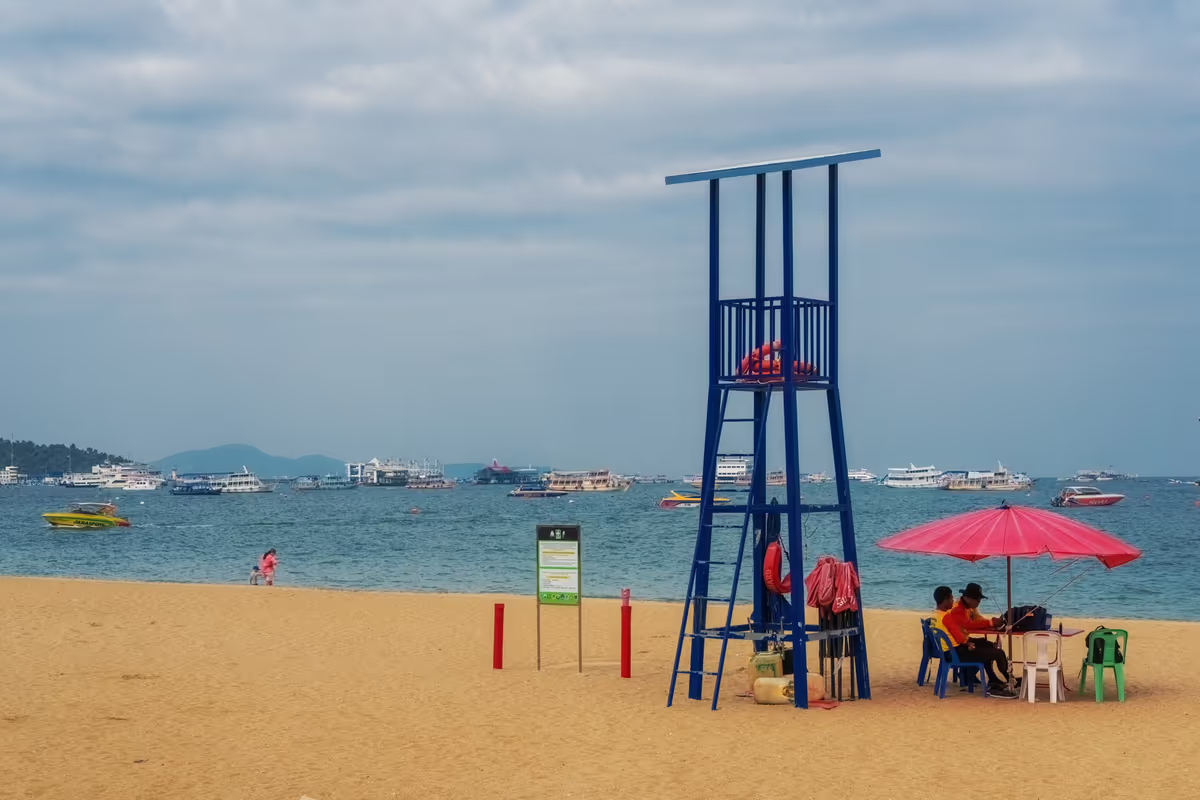
Night swimming is not recommended at all. In the dark you cannot see waves or currents, and if something goes wrong there is nobody to help.
Lifeguards are few. After the August incident at Nai Thon they said themselves that they lack people and equipment, and that some beachgoers simply ignore warnings. Do not expect anyone to be watching you if you swim beyond the edge of the supervised zone.
What to Do If You Are Caught in a Rip Current
A rip current pulls away from the shore in a narrow channel. You can sometimes spot it in advance: it is usually a stretch where waves do not break, the water looks darker and calmer than around it, and foam and debris drift out to sea. Local sources note that such currents can reach up to 2.4 m/s, and that the main danger is fatigue and panic rather than the current itself.
If you do get pulled out:
- do not swim straight back to shore against the current, that is how people exhaust themselves
- swim parallel to the shore until you feel the pull stop
- if you have no strength left, roll onto your back and float, since the current usually weakens further from shore
- raise your hand and shout so the lifeguard tower can see you
If someone else is in trouble, do not rush in after them. Run to the lifeguards or call for help, and throw the person something that floats. Many sea tragedies begin with a second victim entering the current after the first.
FAQ
Can you swim in Phuket in May?
On the west coast, red flags are common in May, and on stormy days waves rise to 2-3 metres. Swim only where red-and-yellow flags are up and lifeguards are on duty.
What is the fine for swimming under a red flag in Phuket?
For a specific penalty, ask the lifeguards or the local administration. The main risk is not a fine: in 2026 people were swept away at Nai Thon precisely under red flags.
Which Phuket beach is safest in the rainy season?
Bays on the east coast are usually sheltered from monsoon swell. On the west, the safest option is the zone between red-and-yellow flags during lifeguard hours. Local guides also point to calm, closed bays such as Ao Yon in the Rawai area, and to Trang and Freedom beaches, where waves are minimal.
Until what time can you swim at Patong?
Lifeguards work from 9:00 to 18:30. Swimming after that, and at night, is not recommended.
How do I recognise a rip current?
Look for a stretch where waves do not break, water that looks darker and calmer than the surrounding surf, and foam or debris moving out to sea.
Which way should I swim if a current pulls me out?
Swim parallel to the shore until the pull stops. Do not fight the current by swimming straight back toward the beach.
Does a clear sunny day mean the sea is safe?
No. Patong lifeguards stress that clear weather guarantees nothing during the monsoon, because wind far out at sea drives the waves and currents.
Is the east coast of Phuket safer for swimming?
Usually yes. The east coast is typically sheltered from monsoon swell, so its bays are calmer from May to October.
Practical tip: every time you arrive at a beach, first find the flag and the lifeguard tower with your eyes, and only then choose where to put your towel. A beach that was calm yesterday may be closed today.
Source: The Phuket News
Ready to invest in Thailand? Our experts will help you find the perfect property.
Area match
We will help you choose an area for your goals
We will match properties where it suits you, with schools, clinics and shops nearby. You will get options with prices and layouts.
More in Phuket lifestyle
All articles in this topic
Jellyfish in Phuket: Season, Dangerous Species and What to Do After a Sting
Jellyfish in Phuket: peak May-October, dangerous species, hotspot beaches, why vinegar fails on man o' war stings, and when to call 1669.

Dibuk Hospital and Thailand Social Security: What Changes for 2027
Change your Social Security hospital between 16 Dec 2026 and 31 Mar 2027. Dibuk Hospital Phuket address, hours, insurance tips and rate changes explained.
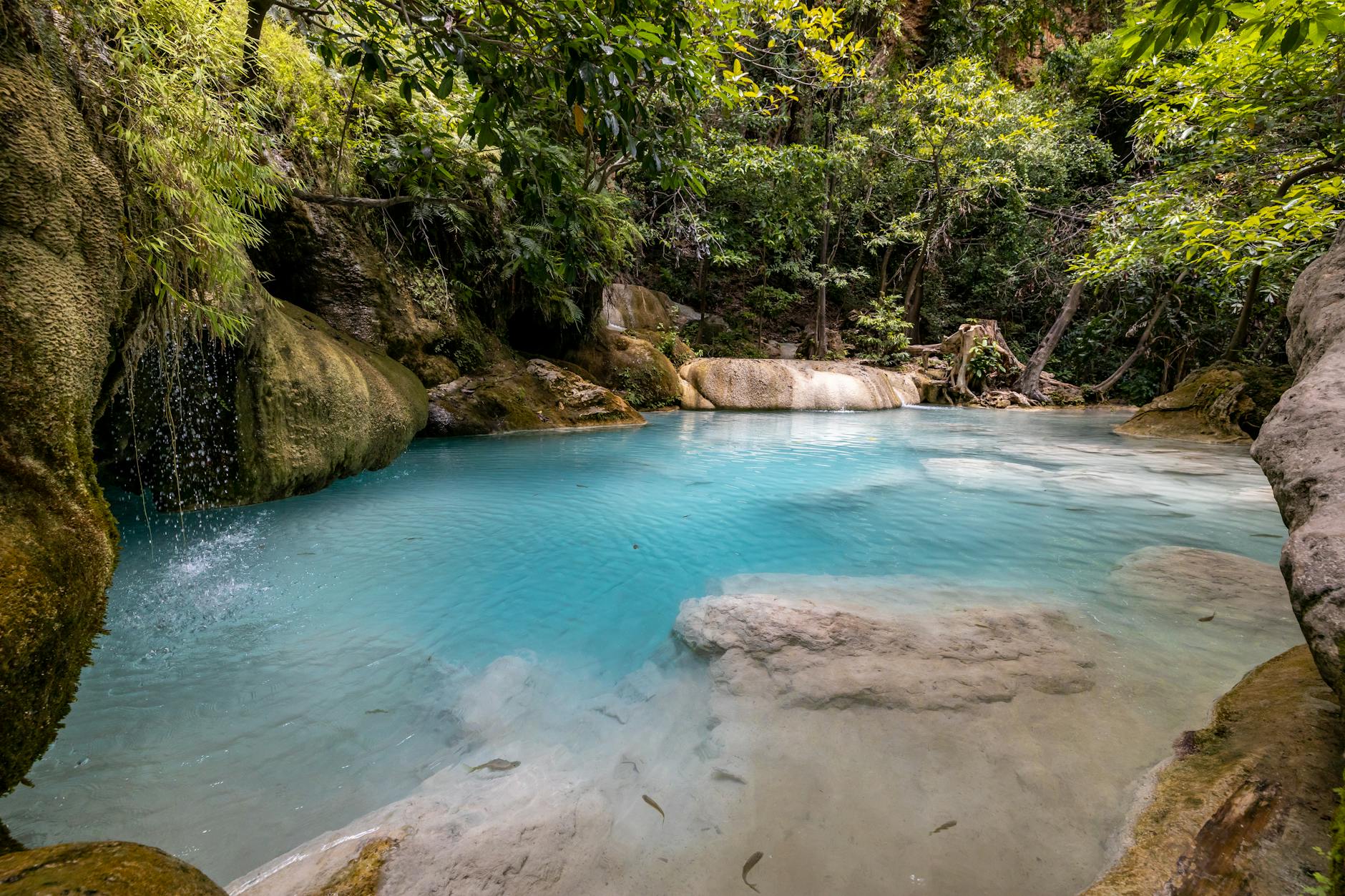
Phuket Waterfalls in the Rainy Season: Where to Swim and When to Go
Where to swim at Phuket waterfalls in the rainy season: Bang Pae vs Ton Sai, 200 baht entry, best months June to October, safety tips and getting there.