

Photo by Philippe Bonnaire on Pexels
Thailand Airports Can Open Your Checked Bag Without You From 16 October 2026
This material was prepared with the help of artificial intelligence and checked by a person. Editorial responsibility: Aster Of Asia Co., Ltd..
Responsible for content: Leonid Ustinov, Aster Of Asia Co., Ltd.
Aster of Asia editorial team
You land after a flight from Bangkok, open your suitcase at home and find a folded notice on top: your bag was opened. Nobody called you, and nobody at the airport said a word. From 16 October 2026, that is standard procedure, not a glitch.
Under the new rule from the Civil Aviation Authority of Thailand (CAAT), airport operators can open checked baggage without the passenger present if screening flags a suspicious item, a prohibited item or potentially dangerous goods. The inspection is video-recorded, and an official Notice of Baggage Inspection is placed inside the bag.
It affects everyone flying out of Thailand: tourists, visa residents, condo owners on Phuket, business travelers heading to Singapore. If you fly with carry-on only, you can stop reading.
We will shortlist properties for your budget
Pick a range and we will send a shortlist with prices, layouts and payment plans within 24 hours.
Key Facts
- The rule takes effect on 16 October 2026 and applies to airport operators, not just airlines.
- Grounds for opening a bag: screening detects suspicious items, items banned from carriage or potentially dangerous goods.
- The owner does not need to be present. Previously passengers were paged to come to the bag; now the airport is not obliged to wait.
- The whole inspection is video-recorded, and a Notice of Baggage Inspection is left inside the bag.
- Official advice to passengers: use TSA-standard locks, and keep valuables, fragile items, important documents and essentials out of checked luggage.
- The stated goals are better security and faster screening.
Story and Context
Screening 100% of checked baggage is not a Thai invention. It is an ICAO requirement that member states have been rolling out since the early 2000s. In practice the check has several levels. First comes an automated X-ray line where the flow never stops. Then an operator reviews the image by hand, and only suspicious bags go to the third level, where the suitcase has to be physically opened. That is where bottlenecks formed.
Consider the scale. Suvarnabhumi, with its new satellite terminal, is designed for roughly 60 million passengers a year, and Phuket airport handles an estimated 15-18 million by market figures. Even if only a fraction of a percent of bags need a manual search, at a single large terminal that is hundreds of suitcases a day. Tracking down each owner 40 minutes before departure simply isn't workable, especially once the person has cleared immigration or is sitting in a lounge. So the fix is to open the bag without the passenger, but on camera and with a paper trail.
Now, about locks. The official advice works less well than it sounds. The TSA standard comes from a US agency, and American screeners hold the master keys. Whether every shift at every Thai airport has a key for your lock is anyone's guess. If there's no key and the bag must be opened, it will be opened. A cable or the shackle of a cheap lock doesn't always survive that.
So the practical takeaway is blunter than the official one: pack your suitcase as if it will definitely be opened, and not by you.
The second weak point is liability. The airport's security staff open the bag, yet passengers habitually take missing-item claims to the airline. The carrier is liable under the Montreal Convention, with a baggage limit of about 1,519 SDR, roughly 2,000 USD per passenger, and payout requires proof of the contents' value. A laptop, camera, gold, cash, original documents and prescription medication in checked baggage are barely protected at all. A video of the inspection formally exists, but getting hold of it through a private request is a separate story with an uncertain ending.
The most boring reason a bag gets pulled is also the most common: lithium-ion batteries. Power banks and spare batteries are banned from checked baggage under IATA rules and may travel only in the cabin. Thai carriers went further and since spring 2025 have also banned using power banks in flight. Batteries above 100 Wh need airline approval, and those above 160 Wh aren't accepted at all. An electric scooter or a battery from a surf board in your suitcase practically guarantees an inspection.
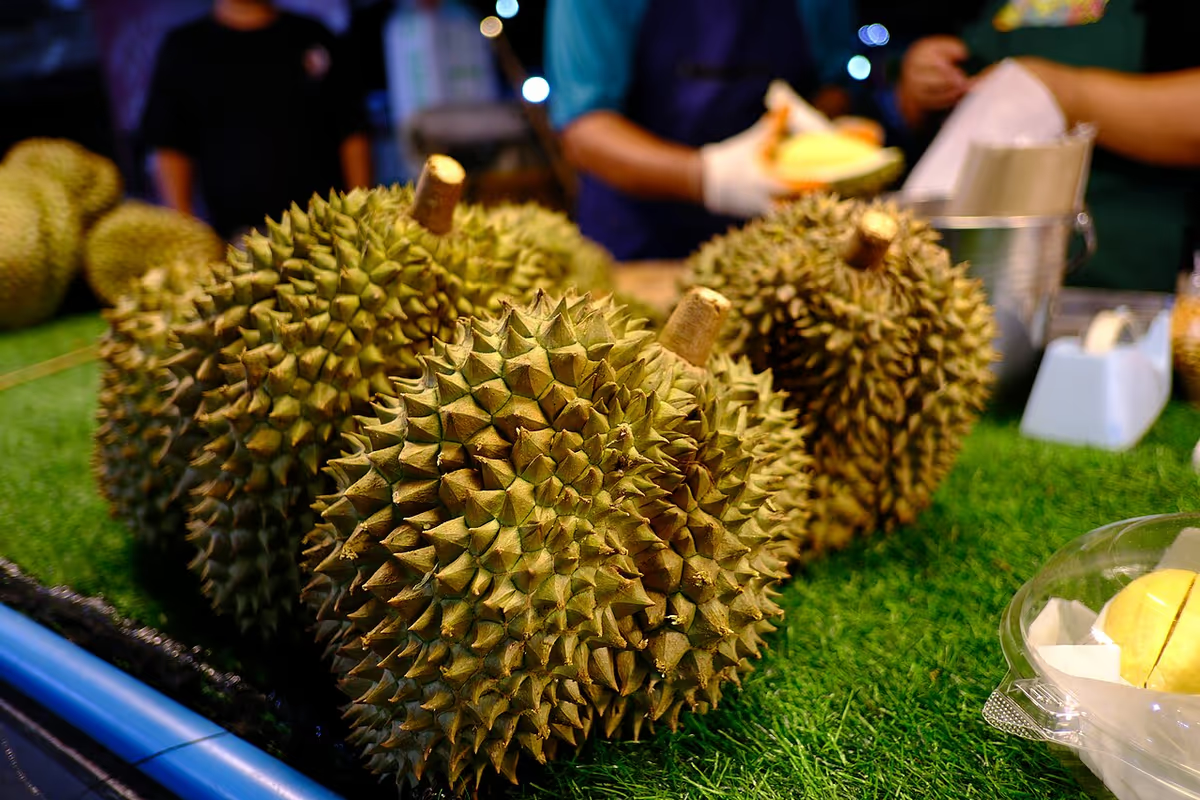
Next on the list are aerosols, gas canisters for camping stoves, lighters with liquid fuel and building chemicals that expats cheerfully carry home after a renovation. One uniquely Thai case is durian: many carriers refuse it in both cabin and hold, not for safety but because the smell lingers in the compartment for a week.
One last thing people remember only at the airport: images of Buddha, antiques and religious art can't leave Thailand without a permit. The license is issued by the Fine Arts Department, the fee is token, but processing takes several working days. A souvenir bought the day before your flight can't legally fly out in time.
FAQ
Will I be called to my bag if something is found?
Not necessarily. From 16 October 2026 the airport may open the bag without you. If they have time and can reach you, they may invite you, but don't count on it.
What should I do if I find an inspection notice inside my suitcase?
Count your belongings right away without leaving the baggage claim area, and photograph the notice together with the suitcase. If something is missing or the lock is damaged, a report is filed on the spot at the lost baggage office at your arrival airport. Once you're home, you'll have nothing to prove it with.
Does a TSA lock guarantee my suitcase will not be damaged?
No. It's a recommendation, not a guarantee: TSA master keys belong to the American standard, and nobody promises that a given shift at a Thai airport has them. A TSA lock reduces the risk but doesn't remove it.
Can I carry a power bank in checked baggage?
No. External batteries and spare lithium batteries go in carry-on only, and Thai airlines have also banned charging devices from them in flight since 2025. A power bank in the suitcase is the single most common reason for an inspection.
Does the rule apply to domestic flights within Thailand?
The wording is addressed to airport operators, so domestic departures such as Bangkok to Phuket are covered. The explanations focus on international routes, but I wouldn't expect an exemption for domestic flights.
What happens to my bag on a long layover?
If the suitcase is checked through to the final destination, it can also be screened at the transit airport under local rules. On a layover longer than six to eight hours, it's wiser to collect the bag, clear immigration and book a hotel near the terminal than to leave the bag unattended for a day.
Who compensates for missing items?
Claims go to the carrier. Its Montreal Convention limit is about 1,519 SDR per passenger, and the amount has to be supported by receipts. Since the airport opened the bag, disputes often drag on between the two parties.
Which Thai purchases should stay out of checked baggage?
Buddha images and antiques without an export permit, aerosols and gas canisters, any lithium batteries and, with some carriers, durian. Items like fish sauce are fine in checked baggage, though not in the cabin because of liquid limits.
Do I need to change anything if I travel with carry-on only?
No. The rule applies only to checked baggage. If everything fits in your carry-on, it doesn't affect you.
One step removes 90% of the risk. Put together a separate pack for your carry-on: documents, electronics, money, prescription medication, chargers and every battery. Never put those in the suitcase that goes onto the belt. Everything else will survive any inspection.
Source: Bangkok Post
Ready to invest in Thailand? Our experts will help you find the perfect property.
Ready to start?
Answer 4 questions and we will prepare a personalised selection of property in Thailand.
What is your goal?