

Photo by Bia Limova on Pexels
How Much Cash to Bring to Thailand: Cards, QR and ATMs
This material was prepared with the help of artificial intelligence and checked by a person. Editorial responsibility: Aster Of Asia Co., Ltd..
Responsible for content: Leonid Ustinov, Aster Of Asia Co., Ltd.
Aster of Asia editorial team
Budget 1,000-3,000 THB per person per day for food, transport and small expenses, excluding accommodation, and withdraw a large amount in one go at the ATM. A Thai bank charges per transaction, not per baht: about 250 THB on Visa and up to 350 THB on Mastercard for each withdrawal with a foreign card.
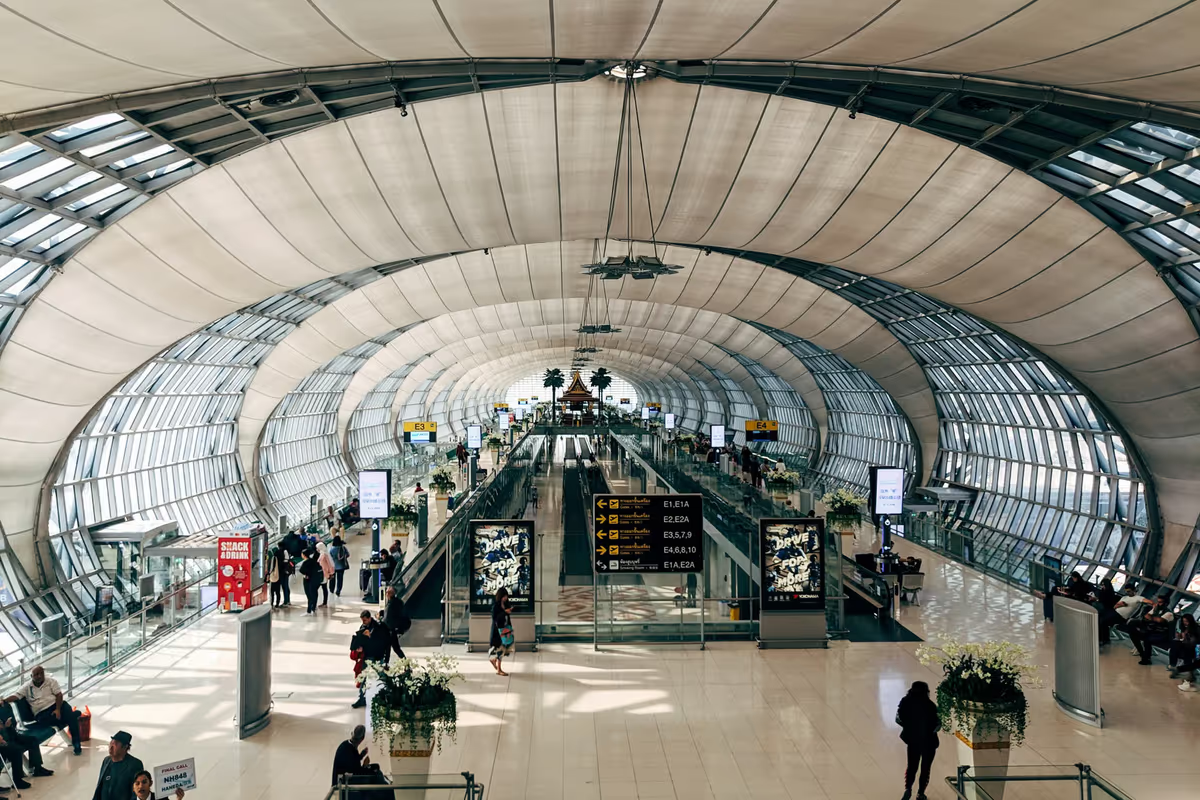
You can see the mistake play out in the arrivals hall every day. A traveler withdraws 2,000 THB for a taxi, another 3,000 THB the next day, then more. After four rounds, Thai bank fees alone have eaten roughly 1,000 THB, and that is before your home bank adds its own charge.
How many baht to budget per person per day
For a comfortable mid-range trip, plan on 1,000-3,000 THB per day per person, accommodation not included. If your hotel is already paid and you do not book tours every day, real spending will land closer to the lower end.
We will shortlist properties for your budget
Pick a range and we will send a shortlist with prices, layouts and payment plans within 24 hours.
Almost all of this budget goes on cash: markets, street food, motorbike taxis, temples, small cafes, ferries and songthaews. Cards work better in shopping malls, chain restaurants, hotels, hospitals and hospital pharmacies, and for Grab rides paid through the app.
If you are spending the winter here, it is easier to think in weeks than in days. One withdrawal of 20,000 THB usually covers a week to a week and a half of everyday spending, and you pay the fee once instead of six times.
In circulation you will find banknotes of 20, 50, 100, 500 and 1,000 THB and coins of 1, 2, 5 and 10. A 1,000 THB note is hard to break at a small stall or with a driver, so change part of it early at a supermarket or a larger cafe.
Why withdrawing 2,000 THB at a time is the costliest habit
The fee is charged per transaction, so the arithmetic is simple: one withdrawal of 20,000 THB instead of five of 4,000 THB. Five rounds push the Thai bank fee alone above 1,000 THB, while a single round stays within 250-350 THB.
- Foreign Visa at a major bank: about 250 THB per withdrawal
- Foreign Mastercard: about 350 THB per withdrawal
- Spread across different machines: 220 to 350 THB
- Aeon ATMs: traditionally lower than the rest
- Your home bank's fee: from zero to a few dollars on top
The second trap costs more than the first, even though it looks helpful. The ATM offers to charge you in your card's home currency and shows a ready exchange rate. Choose billing in baht and decline the ATM's conversion: its rate is noticeably worse than your own bank's, and the withdrawal fee still applies.
Also note that cards issued by Russian banks are not serviced by the international payment systems in Thailand. They will not work at an ATM, a till or in the Grab app. Bring cash or a card from a foreign bank.
Where to exchange money and how much cash to carry
Before a large exchange, check the live rate online, because on sums of several hundred dollars the gap between exchange counters is real. For orders of magnitude, think roughly 33.5 THB per US dollar and about 44.5 THB per pound. These are reference figures only and the rate moves daily.
In practice, exchange the minimum at the airport, enough for a taxi and the first day, and keep the main sum for an exchange counter in the city where both the rate and the queue suit you. One large exchange beats 50 dollars every couple of days.
Split your cash between different parts of your luggage and the safe in your accommodation instead of keeping it all in one wallet. Lost cash cannot be recovered, unlike a card.
How to pay by QR without a Thai bank account
The PromptPay QR square, part of Thailand's national instant payment system, is almost everywhere. People use it in cafes, at markets, for delivery and even for a bunch of herbs at a roadside stall. Thai banks often charge no fee on these payments.
The catch is that QR payment normally needs a Thai bank account or a supported wallet. A tourist without an account has two official routes:
- TrueMoney: the wallet is verified with your passport and holds a balance of up to 30,000 THB. A good option if you are in the country for several weeks or months.
- TAGTHAi Easy Pay: a tourist wallet inside the TAGTHAi app, backed by KASIKORNBANK. You need your passport and foreign cash, and it is activated at a KBank exchange counter. The limit is up to 25,000 THB per transaction; check the overall ceiling in the app itself.
The downside of the second option is obvious: the wallet cannot be activated without visiting a bank counter, and many travelers land at night. So you will still need cash for the first 24 hours.
This area is moving fast. In June 2026 the Tourism Authority of Thailand highlighted its Pay Like a Local cross-border QR program, backed by the Bank of Thailand and eight banks (Krungthai, Bangkok Bank, Kasikornbank, SCB, Bank of Ayudhya, ICBC Thai, BAAC and CIMB Thai) together with National ITMX, Alipay, WeChat Pay and UnionPay. The aim is for visitors to scan and pay at participating outlets using their home-market mobile wallets and banks, so check whether yours is supported before you fly.
If you pay by QR through a foreign wallet or card, expect currency conversion: the exchange rate and possibly a foreign transaction fee are added to the amount. On small purchases that is pennies, on large spending it becomes noticeable.
Where a card will definitely not work
The advice to take one card and not think about it stops working around day three. Contactless payment is widely accepted in Bangkok and the big tourist zones but noticeably less so on the islands and in villages. Visa and Mastercard are accepted by almost all formal venues, while Amex is mostly limited to large hotels.
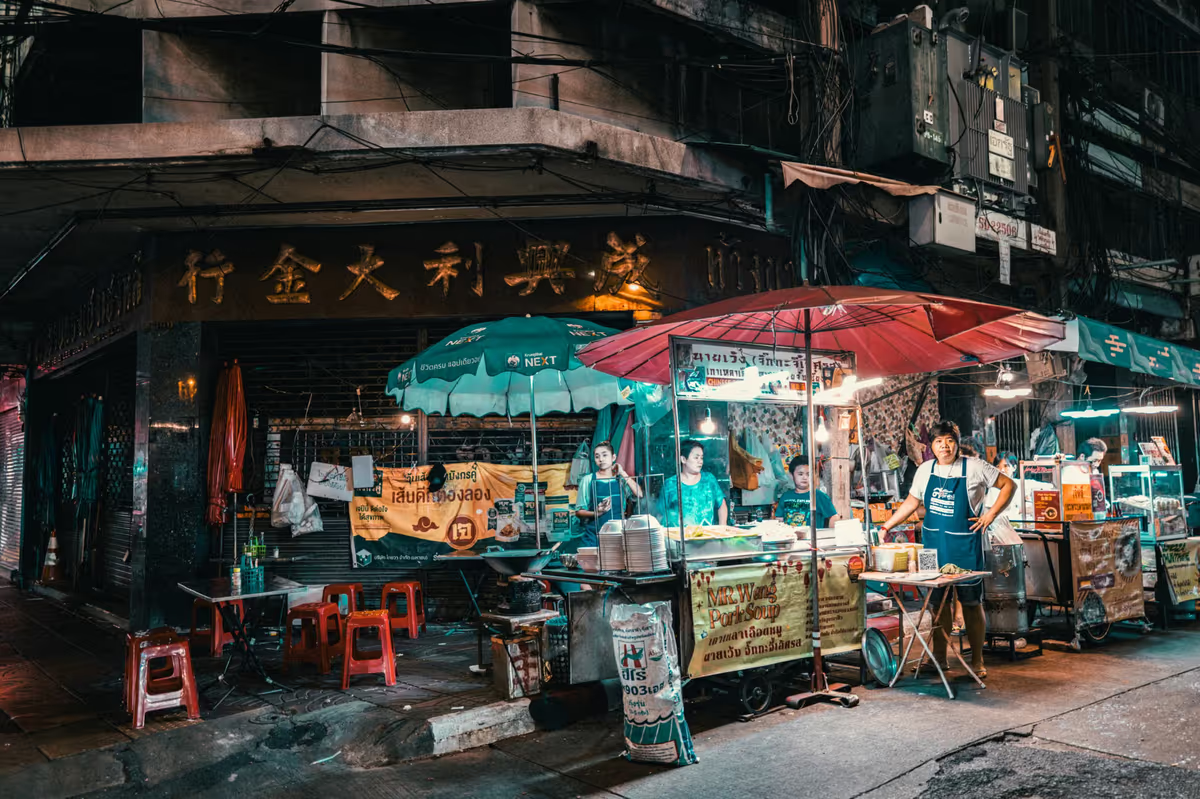
Cash is always needed for street food, markets, informal taxis, motorbike taxis, entry to parks and temples, small guesthouses, and boats and ferries to the islands.
Expensive accommodation and flights are easier to pay by card before departure. If you book your hotel in advance, only your everyday budget remains on the ground, and the whole ATM calculation shrinks to one or two withdrawals per trip.
A sensible winter setup: one card from a foreign bank with no extra conversion fees, a single 20,000 THB withdrawal at an Aeon ATM, and a TrueMoney wallet for QR. If you are flying to Bangkok for a week and staying in a chain hotel, you do not need the wallet; a card and 10,000-15,000 THB in cash is enough.
FAQ
How much cash should I bring for two weeks in Phuket?
Plan on 1,000-3,000 THB per person per day for everyday spending, then add excursions and transport rental. For two people that comes to roughly 30,000-60,000 THB over two weeks, accommodation separate.
Which ATM is cheapest for a foreign card?
Aeon ATMs traditionally charge less than the rest. At the major banks the fee is about 250 THB per withdrawal on Visa and up to 350 THB on Mastercard.
Can I pay by QR without a Thai bank account?
Yes, through a TrueMoney wallet verified with your passport (balance up to 30,000 THB) or through TAGTHAi Easy Pay, which is activated at a KBank exchange counter.
Why does the ATM offer to charge me in my own currency?
That is conversion done by the ATM, and its rate is usually worse than your own bank's. Choose billing in baht and decline the offered rate.
Is it better to exchange money at the airport or in the city?
At the airport, exchange only enough for a taxi and the first day. Keep the larger sum for the city, after checking the live rate.
Do Russian bank cards work in Thailand?
No. Cards from Russian banks are not serviced by the international payment systems in Thailand, so they will not work at ATMs, tills or in Grab. Bring cash or a card from a foreign bank.
What notes and coins are in circulation?
Banknotes of 20, 50, 100, 500 and 1,000 THB and coins of 1, 2, 5 and 10 THB. A 1,000 THB note is hard to break at small stalls, so change part of it at a supermarket early on.
How much cash is enough for one week in Bangkok?
If you stay in a chain hotel, a card plus 10,000-15,000 THB in cash is usually enough, since malls, chains and hotels take cards.
One last tip: photograph both of your payment tools (the card on both sides and the wallet screen with its number) and keep the images in a locked note. If an ATM keeps your card on a weekend evening, you will at least have the details needed to block and reissue it.
Source: Tourism Authority of Thailand (TAT Newsroom)
Ready to invest in Thailand? Our experts will help you find the perfect property.
Let us calculate the full cost of your deal
We will find options with transparent costs and taxes for your budget.
What is your goal?