

Photo by Vladyslav Dushenkovsky on Pexels
Phuket Beaches 2026: Where to Swim by Season and With Kids
This material was prepared with the help of artificial intelligence and checked by a person. Editorial responsibility: Aster Of Asia Co., Ltd..
Responsible for content: Leonid Ustinov, Aster Of Asia Co., Ltd.
Aster of Asia editorial team
From November to April, swimming is possible almost everywhere on Phuket's west coast: Kata Noi, Nai Harn and Karon are calm and clear. From May to October the picture flips. Karon has persistent rip currents, and the red flags there are not decorative. Nai Harn remains the most swimmable beach all year.
Where to Swim From November to April
This is the dry season, and the choice is almost unlimited. The calmest water is at Kata Noi, Nai Harn and Karon: a gentle entry, clear water and small waves. Patong has the most lifeguards on Phuket during these months, so weaker swimmers are safer there than on remote wild beaches with no flags at all.
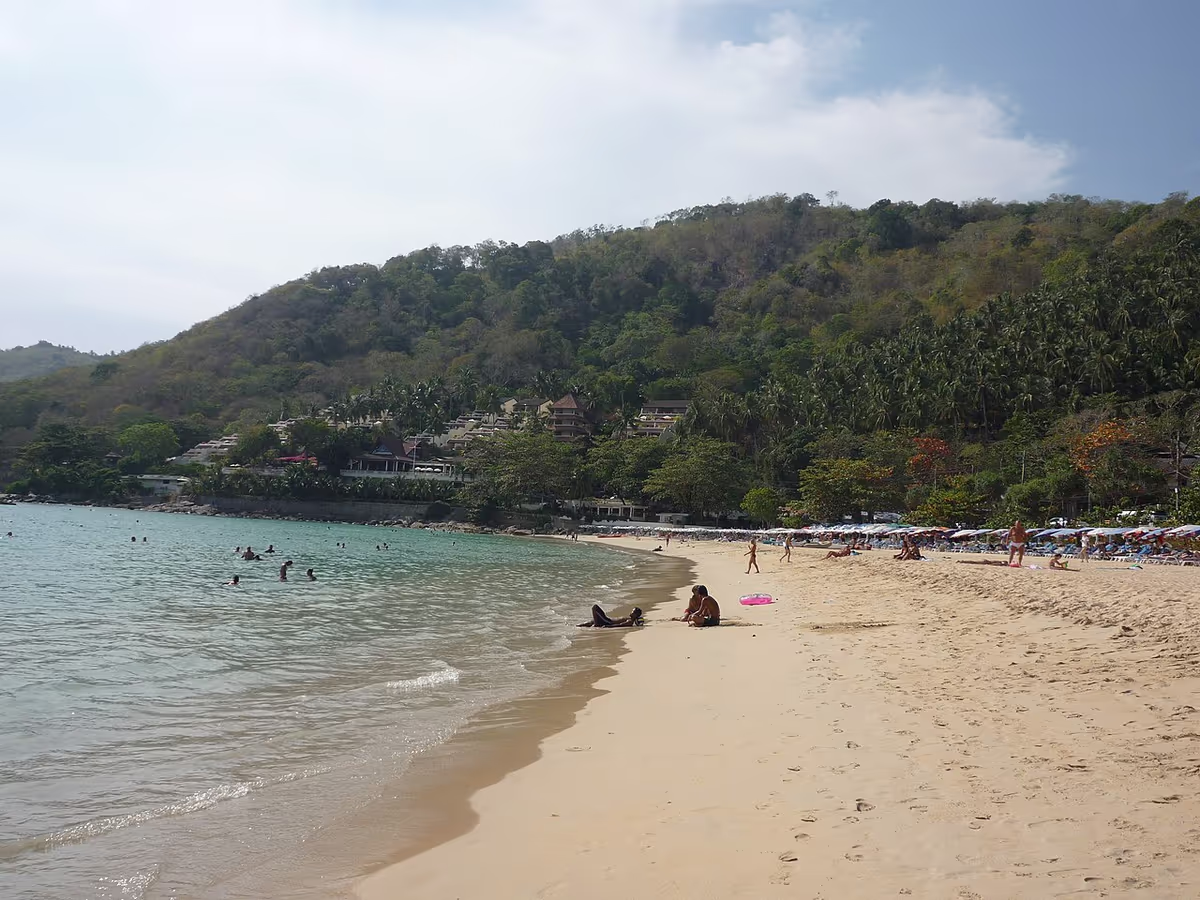
At Nai Harn, lifeguards work from November to April. In high season the problem there is not the water but parking: everything is full by noon. The fix is simple: leave your car or bike farther up the road and walk down, a couple of minutes downhill.
We will shortlist properties for your budget
Pick a range and we will send a shortlist with prices, layouts and payment plans within 24 hours.
If you want one base for the whole winter, I would suggest pairing Nai Harn with Kata Noi: quiet, with good water for the longest stretch, and cafes and groceries nearby. The advice fails in one case: you are here for two weeks and want to walk to bars and massage shops in the evening. Then Patong or Karon is more practical, you just swim by the flags.
Where to Go in the Rainy Season, May to October
The monsoon hits the west coast. The sea can still look friendly, and that is the main trap: Karon carries the highest risk in these months because of persistent rip currents that cannot be seen from shore. A red flag there means exactly what it says.
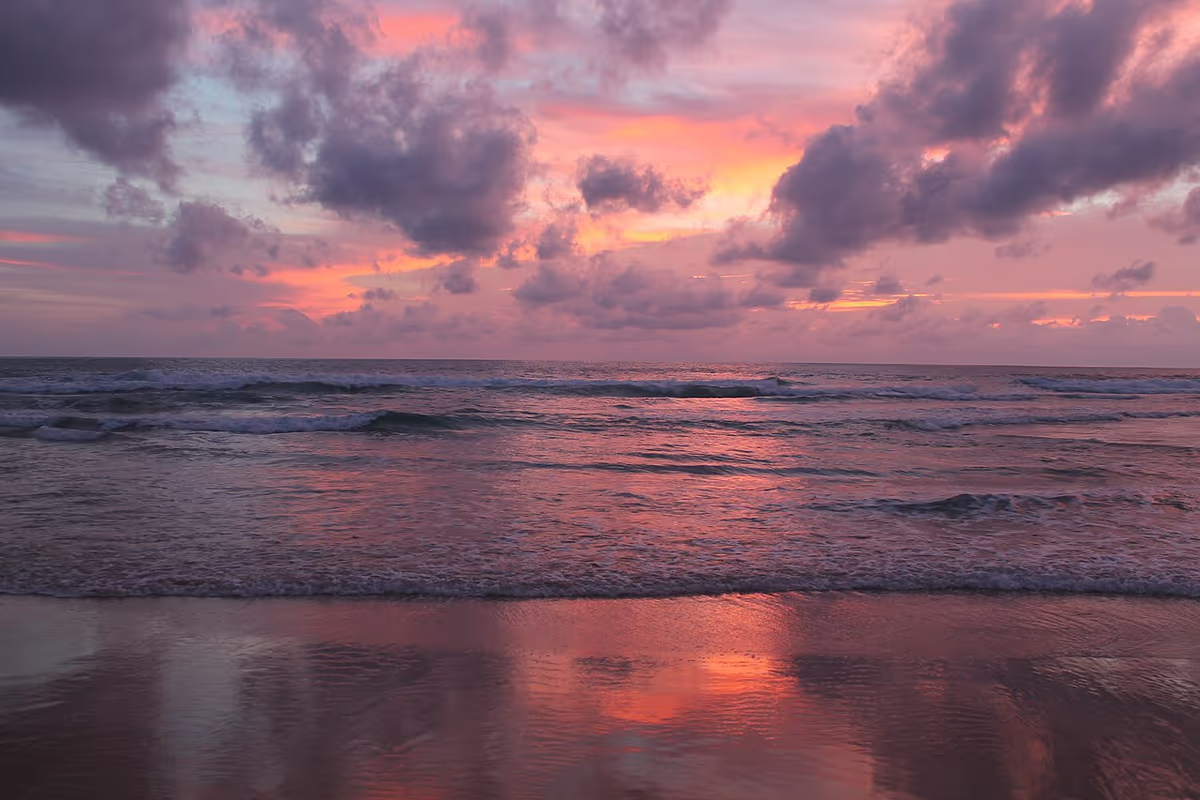
At Kata, waves bring rocks at the northern end and a rip channel closer to the south. It is surf season, not ordinary swimming season. At Patong, shore break strengthens right at the waterline and can knock you down even in shallow water.
Nai Harn is enclosed by two headlands, so you can swim there longer than at other beaches, but it too sometimes goes under a red flag because of reverse currents. In the wet season the northern end of the bay is given over to beginner surfers.
Here is the season-by-season picture:
- Nai Harn: calm with lifeguards November to April; usually swimmable May to October, with occasional red flags
- Kata Noi: calm November to April; waves and rocks at the north end May to October
- Karon: calm November to April; high risk with rip currents May to October
- Patong: calm with the most lifeguards November to April; strong shore break May to October
- Bang Tao: calm November to April; varies May to October, so check the flags that day
The east coast is calmer during the monsoon, but it is a different story: there is no open sea or long swell, and also no surf. Rawai, which looks like an ordinary beach on the map, is not suitable for swimming at all: it is a working waterfront with boats. People go there for seafood and island trips, not to swim.
Best Phuket Beaches for Families With Kids
Kamala is the most child-friendly option on the west coast: the entry is very gradual, and a child walks a long way through shallow water.
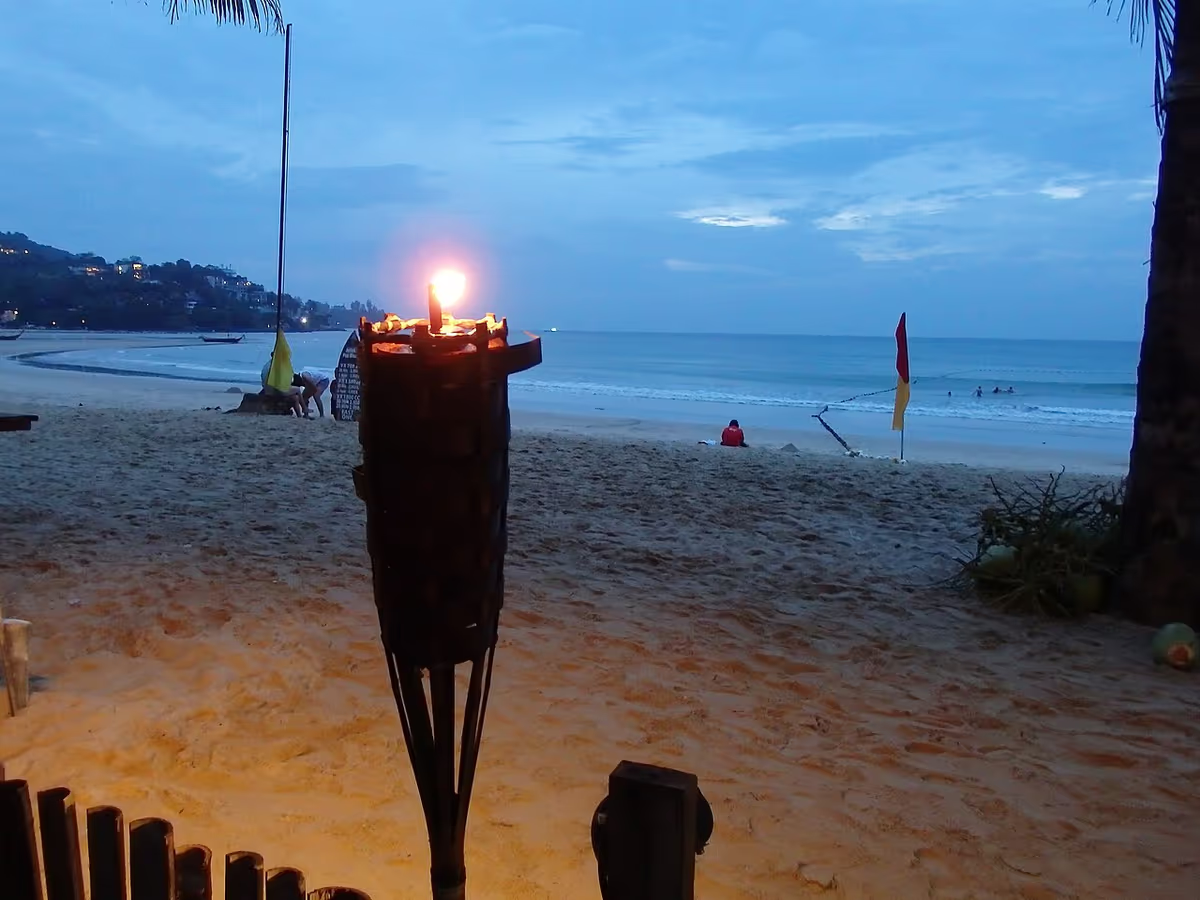
Nai Harn is good for the same reason, plus a soft seabed and a local ban on motorised water sports: no jet skis and no parasailing off the beach, and that changes how the whole beach feels. Behind the sand there is a lagoon where you can sit in the shade when the sun gets harsh.
Kata, Kata Noi and Karon suit families for soft sand and everything needed close by: water, fruit, toilets and showers. A separate word on Karon, because people usually skip it: from May to October it is not a kids' beach, however calm the sea looks on a particular morning.
The typical parental mistake is swimming in the middle of the day. From 11:00 to 15:00 the sand burns bare feet, and shade on most beaches is paid and runs out first. Before 10:00 and after 16:00 works far better.
Shore Snorkelling Without a Boat
The best shore snorkelling on the island is at Ya Nui: a tiny enclosed cove next to Nai Harn. Angelfish and pufferfish stay around the rocks, and reef sharks sometimes pass through. They are harmless, but the sight is bracing.
The second spot is the headland between Kata Yai and Kata Noi. Enter along the rocks and do not swim out into open water. The third is the rocks at both ends of Nai Harn, which you can reach straight from the sand, with no boat and no cost.
Two practical points. Bring your own mask: rental ones leak and fog, and visibility is everything here. And do not plan snorkelling in the monsoon: from May to October, suspended sediment cuts visibility to almost zero, even on a day with no waves.
Quiet Beaches and How to Reach Them
Mai Khao in the north offers eleven kilometres of almost undeveloped coastline. There are few people, few cafes and little shade, but you get the feeling that the island has not all been carved up yet. Banana Beach is a compact bay for those who want quiet but are not ready to drive an hour for it.
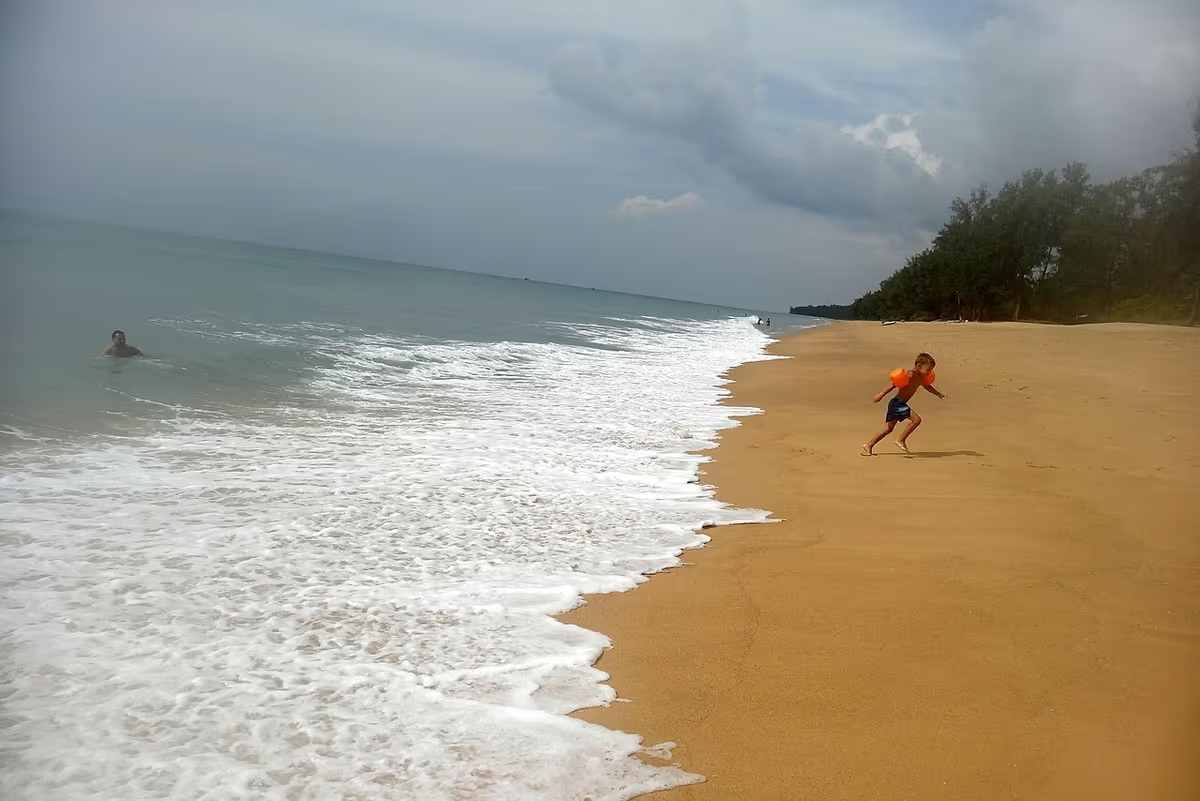
Quiet beaches have almost no public transport, and a taxi back is hard to catch. If you plan to tour the coast rather than sit in one bay, it is easier to rent a car for a few days: few people enjoy riding a bike in the rain from Nai Harn to Mai Khao across the whole island.
Beach flags change every day, and they are not put up for show. Trouble usually starts the same way: a person sees swimmers near a red flag, decides that if others are in the water it must be fine, and walks into a rip channel.
One independent guide points the same way: Kata is the strongest family pick, with safe swimming and paddling from November to April thanks to the natural curve of the bay, and a compact beach village where the walk from hotel to sand takes under 5 minutes.
FAQ
Which Phuket beach is swimmable all year round?
Nai Harn. The bay is enclosed by two headlands, so it stays swimmable in the monsoon while neighbouring beaches are already under red flags. Even there, some days the water is off limits.
Can you swim in Phuket during the rainy season?
Yes, but selectively and by the flags. From May to October the worst are Karon with its constant rip currents and Kata with its rocks and rip channel. Swim only where lifeguards are on duty and inside the marked zone.
Which beach should I choose with a small child?
Kamala for the most gradual entry, or Nai Harn for the soft seabed and the ban on motorised water sports off the beach. Kata Noi works if you want cafes and showers close by.
Where can you snorkel in Phuket without a boat?
Ya Nui, the headland between Kata Yai and Kata Noi, and the rocks at both ends of Nai Harn. Only in the dry season, from November to April, and with your own mask.
Why does nobody swim at Rawai?
It is a working waterfront: boats, piers, and shallow, murky water. People come to dine and to catch boats to the islands, and swimmers head to nearby Nai Harn or Ya Nui, a few minutes away.
How do I spot a rip current?
Look for a strip of water moving away from shore with no breaking waves. In May to October, check the flag colour on the spot rather than the forecast, and do not let a child go deeper than the knee in the first ten minutes.
Source: Phuket Escape
Ready to invest in Thailand? Our experts will help you find the perfect property.
Planning to live in Thailand?
We will match relocation-ready property and explain the visa options.
What is your goal?