

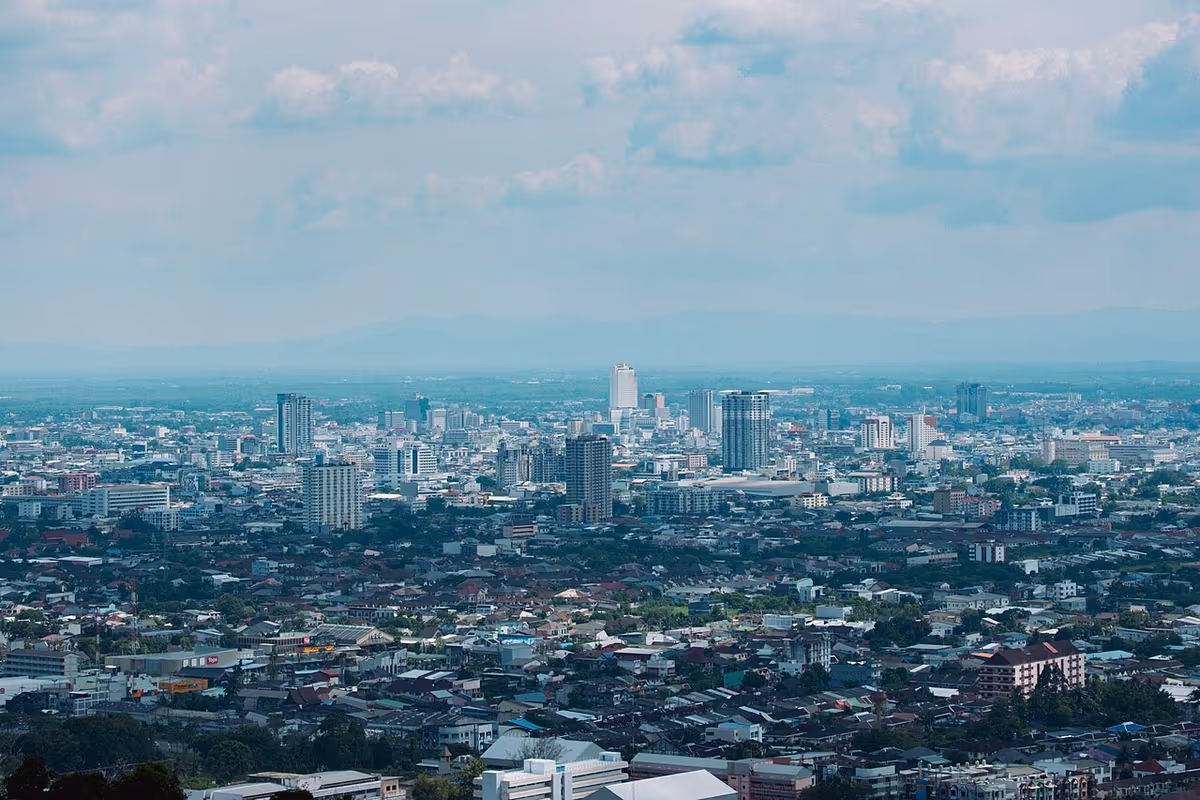
Photo by Tima Miroshnichenko on Pexels
Thailand Visa-Free Stay Cut to 30 Days, With a Two-Entry Land Border Cap
This material was prepared with the help of artificial intelligence and checked by a person. Editorial responsibility: Aster Of Asia Co., Ltd..
Responsible for content: Leonid Ustinov, Aster Of Asia Co., Ltd.
Aster of Asia editorial team
Another quick trip to Malaysia for a fresh stamp will no longer work. From 15 September 2026, visa-free entry to Thailand for most passports drops from 60 days to 30, and visa-free entries by land or sea are limited to two per calendar year.
If you arrive by air, the two-entry cap does not apply to you: it is written specifically for land and sea checkpoints. But the routine that kept much of the long-stay crowd in Phuket and Samui going for years is closed. Cross to Hat Yai or Ko Kong, come back, get another two months - that no longer works.
The bottom line: 30 days plus the standard extension at an immigration office gives you two months in the country. After that you need a proper visa.
Key Facts
- 15 September 2026 is the date the visa-free window shrinks from 60 to 30 days for most arrivals.
- Visa-free entries through land and sea borders are capped at two per calendar year. The counter resets on 1 January, not 12 months after your first stamp.
- The rule applies to 60 countries and territories, a list that reaches as far as the USA. Citizens of Malaysia, Brunei, Indonesia and Singapore are exempt from the land-border cap, and the interior minister can add others.
- The 30-day extension at an immigration office costs about 1,900 baht, which brings the total stay to 60 days.
- Citizens of Mauritius and Seychelles can enter visa-free for 15 days from 15 September 2026, and visa on arrival stays available for Azerbaijan, Belarus and Serbia.
- The immigration department's THIM app launched on 25 September 2026. The 90-day report is listed as a feature, but it was not working properly at launch.
- The updated filing process for the DTV (remote work visa) applies from 31 August 2026 for those who meet the criteria.
- The e-Work Permit online system has run since 13 October 2025, so work permits are now processed electronically and some paper visits are gone.
- A tourist entry fee and a departure tax are still proposals, not law. Nothing is collected at the border today.
- VAT on low-value parcels from abroad is already in force, so an order from a Chinese or European marketplace arrives with Thai tax added.
Story and Context
The 60 visa-free days arrived in summer 2024 and were remarkably generous. Thailand was courting tourists back and widened the visa-free list to several dozen countries. A side effect appeared quickly: people began living in the country for years with no immigration status at all. They rented flats, ran small businesses, worked remotely and left every two months for a new stamp.
That door has now closed. The logic is easy to read: if you come for a holiday, 30 days is plenty, and if you live here, get a DTV, a Non-Immigrant visa or an Elite visa. A visa-free stamp is no longer a substitute for residency.
The cap on land entries matters more than the shorter period. The stay can be extended at an immigration office, and that adds 30 days. But nothing can extend the two land entries you get per year. For people based in the south who are used to taking a bus to Malaysia, the difference is fundamental: the old strategy is gone and there is no replacement.
The THIM app is a separate trap. It was presented as the end of paperwork, and many assumed that both the 90-day report and extensions would move to their phones. In reality, after launch on 25 September 2026 some functions were unstable, and in several provinces offices still asked for a visit in person or the paper TM.47 form. If your report date is close and the app throws an error, do not count on the system crediting the attempt. The late-filing fine is issued to you, not to the app.
Work permits got easier. Electronic filing through e-Work Permit, live since 13 October 2025, genuinely shortens the process for an employer with a competent HR team. A freelancer without a Thai company gets nothing from it.
The tourist fee and departure tax have been discussed for so long that the news about them can be met calmly. For now they are drafts. It is too early to put them in your travel budget, but if you are planning a spring visit and already looking at flights, note that such charges are usually built into the ticket price rather than collected in cash at the counter.
Source: Royal Thai Government Public Relations Department
FAQ
How many days can I stay in Thailand without a visa in 2026?
30 days on entry. An extension at an immigration office adds another 30, so up to 60 in total. The old default of 60 days was cancelled from 15 September 2026.
Are border runs banned now?
Not banned, but limited. Visa-free entries through land and sea borders are now capped at two per calendar year. Arrivals by air do not count toward this limit.
What happens if I have already used my two land entries?
You will not be processed visa-free at the border a third time. You need a visa obtained in advance at a consulate, or you can enter by air.
Do I now have to file the 90-day report through THIM?
The app launched on 25 September 2026 and includes this feature. But check the result: if no confirmation arrives, file the report at the office or by post, as before.
Who is the DTV better suited to than visa-free entry?
Remote employees and freelancers with foreign income who meet the financial criteria. The updated filing process applies from 31 August 2026.
Do tourists pay an entry fee for Thailand?
No. The entry fee and departure tax are still proposals and have not been introduced.
I buy small items from marketplaces shipped to Thailand. What changed?
VAT on low-value imported parcels is no longer waived, so tax is charged even on cheap orders. You will notice it on regular small purchases, not on one parcel a year.
Does this affect people who own a condo in Thailand?
Not your ownership rights, which do not depend on visa status. But it does affect daily life: without a proper visa you can no longer live in your own flat year-round.
If you spend more than six months a year in the country, stop planning around stamps. Apply for a DTV or a Non-Immigrant visa before your current visa-free period ends: processing takes weeks, and the border will not wait. If you visit twice a year for two weeks, nothing needs to change, because 30 days is more than enough.
Ready to invest in Thailand? Our experts will help you find the perfect property.
Planning to live in Thailand?
We will match relocation-ready property and explain the visa options.
What is your goal?