

Photo by Cầu Đường Việt Nam on Pexels
Phuket Launches 4,166 New Homes in H1 2026: Villas Take 61% of Value
This material was prepared with the help of artificial intelligence and checked by a person. Editorial responsibility: Aster Of Asia Co., Ltd..
Responsible for content: Leonid Ustinov, Aster Of Asia Co., Ltd.
Aster of Asia editorial team
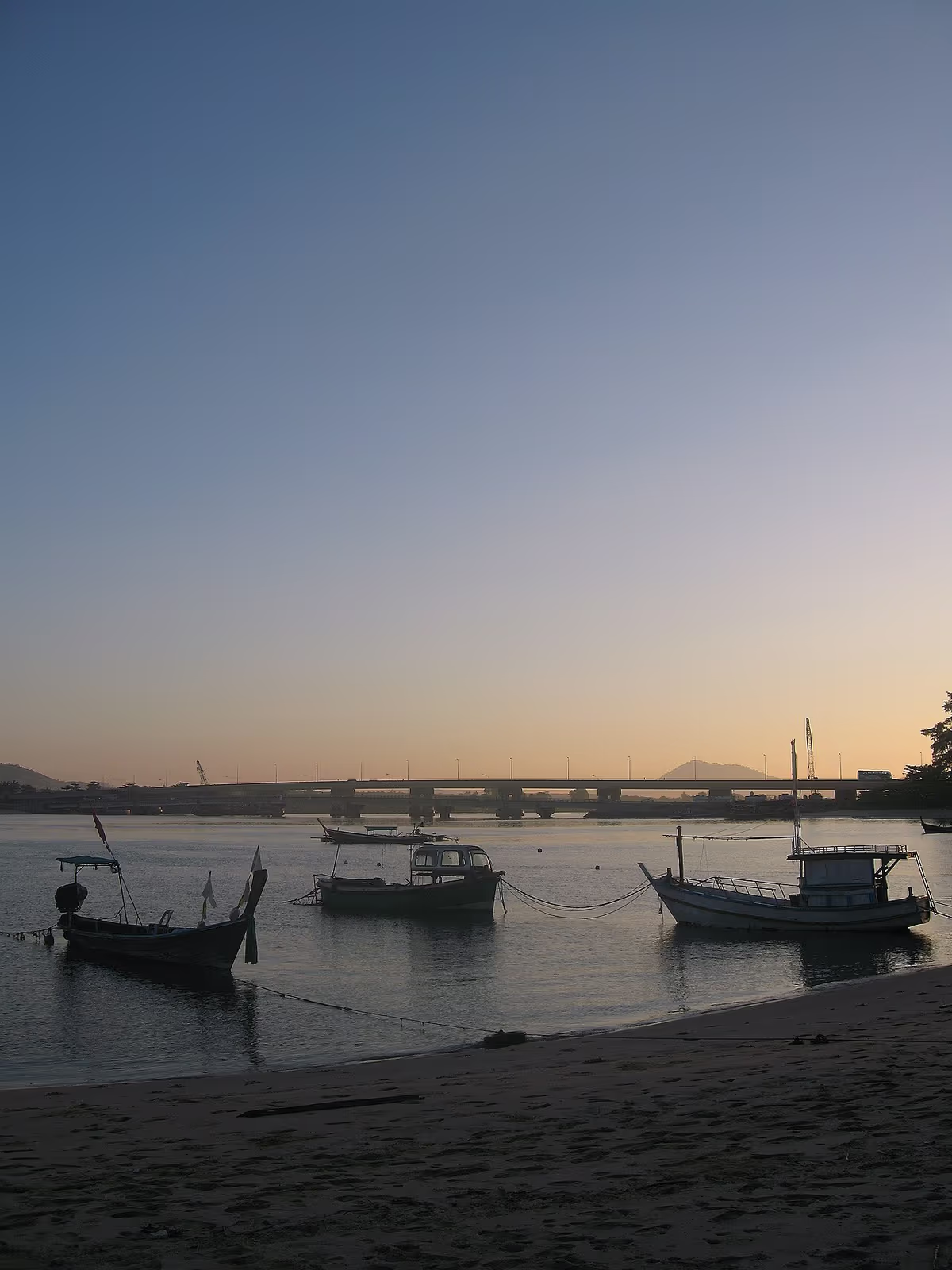
Savills counted 4,166 new homes launched on the Phuket market in the first half of 2026. Phuket is an island of 543 sq km where municipalities periodically introduce water supply schedules in the dry season, and the only road link to the mainland runs across the Sarasin Bridge.
The headline number matters less than what sits behind it: villas generated more than 61% of the total value of all launches. Developer capital flowed into the premium segment rather than mass-market condo towers.
For a buyer, the practical takeaway is this: in the 15-30 million THB villa segment, supply will grow fastest over the next two years, and that is where negotiating power shifts toward the buyer. Prime beachfront condominiums will see little change.
We will shortlist properties for your budget
Pick a range and we will send a shortlist with prices, layouts and payment plans within 24 hours.
Quick Answer
- 4,166 new homes were launched in Phuket in January-June 2026, according to Savills data on projects released for sale.
- More than 61% of the value of all new projects is villas, even though villas are far fewer than apartments by unit count.
- Local market data puts the split at 67 projects in total: 51 villa projects with 700 units worth about 32.5 billion THB, versus 16 condo projects with 3,466 units worth around 20.5 billion THB (total launches roughly 52.0-53.0 billion THB).
- Most of this stock will physically reach the market in 2027-2028: a typical villa build on Phuket takes 14-24 months, a condominium 24-36 months.
- Price pressure is expected to be localized: oversupply is building in the Thalang - Bang Tao - Layan cluster, not across the whole island.
- Buyers with a budget under 7 million THB are largely unaffected: in that range the choice is still limited to apartments, and discounts will not increase.
Key Facts
- Savills recorded 4,166 launched homes on Phuket in H1 2026, across 67 residential projects.
- Villas account for over 61% of value, about 32.5 billion THB across 51 projects and 700 units, signalling a shift of developer budgets to the premium segment.
- Foreign buyers account for about 60% of villa deals on Phuket (purchases or long-term leases), and Juwai IQI estimates 2,400-3,000 villas are effectively owned or long-term leased by foreigners on the island.
- A foreigner can own a condominium freehold within the 49% foreign quota; a villa is held only through a land lease, usually registered for 30 years, or through a Thai company.
- Short-term rentals (under 30 days) without a hotel license violate the Hotel Act B.E. 2547, and penalties fall on the owner, not the management company.
- On resale within 5 years of ownership, a specific business tax of 3.3% applies, plus a transfer fee of 2% of the appraised value.
- Demand is rental-led: Phuket Property Exchange data for December 2025 to May 2026 shows 71% of inquiries are for rentals and 29% for purchases, with 62% of demand coming from abroad (141 countries) and a median purchase budget of 7.5 million THB.
Why 61% of Value Is Not 61% of Units
The figure is easy to misread. Share of value reflects price tags, not the number of roofs. A four-bedroom pool villa in Layan costs four to five times more than a studio in Kata.
In physical terms, the market received roughly 700 new villas in six months against 3,466 new condo units. On an island where flat, road-accessible plots are running out, that is a lot of villa stock.
Villas are not sold as a standardized tower product. Each 20-40 unit project competes with the neighboring 20-40 unit project within a three kilometer radius, with near-identical layouts, the same grey porcelain tile and the same promise of 7% annual yield. Price and view are the only real differentiators.
Where the Supply Is Concentrated
The west coast north of Patong takes the bulk of launches. Bang Tao, Layan, Cherngtalay and Thalang have built up international schools, private clinics and restaurants over the past four years, and developers follow buyers there.
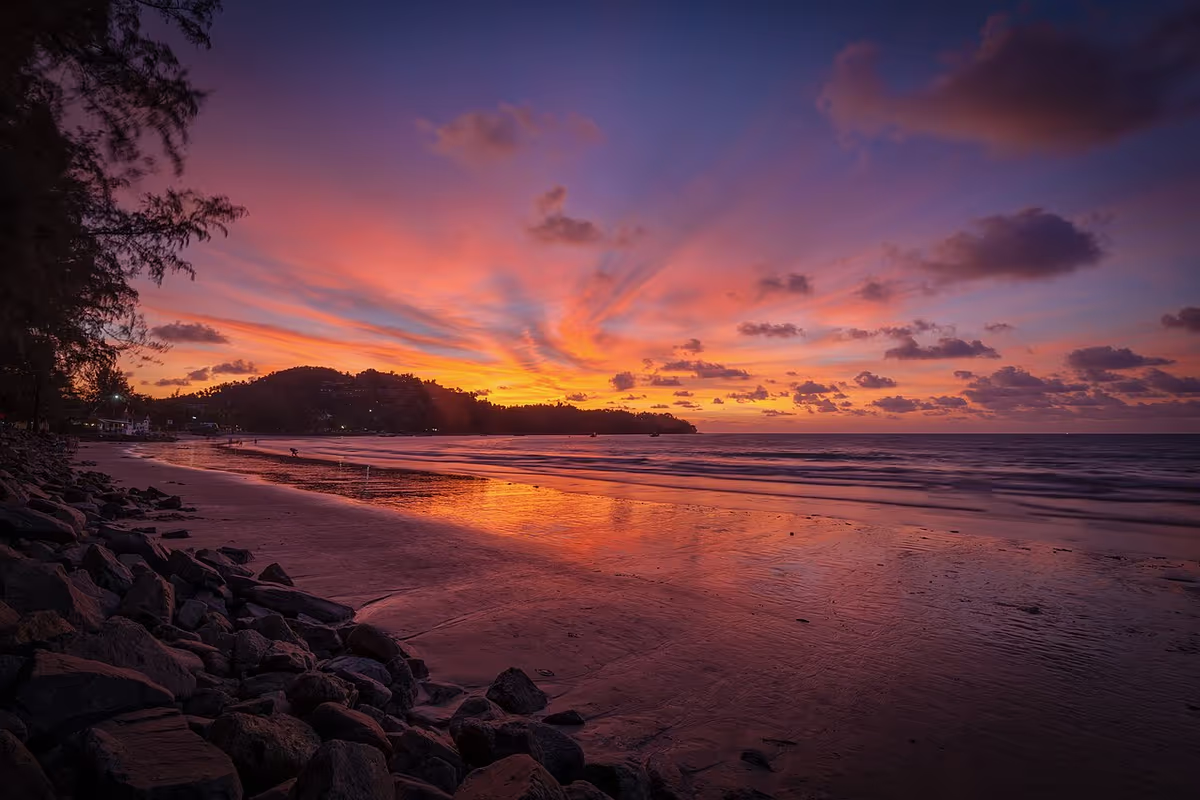
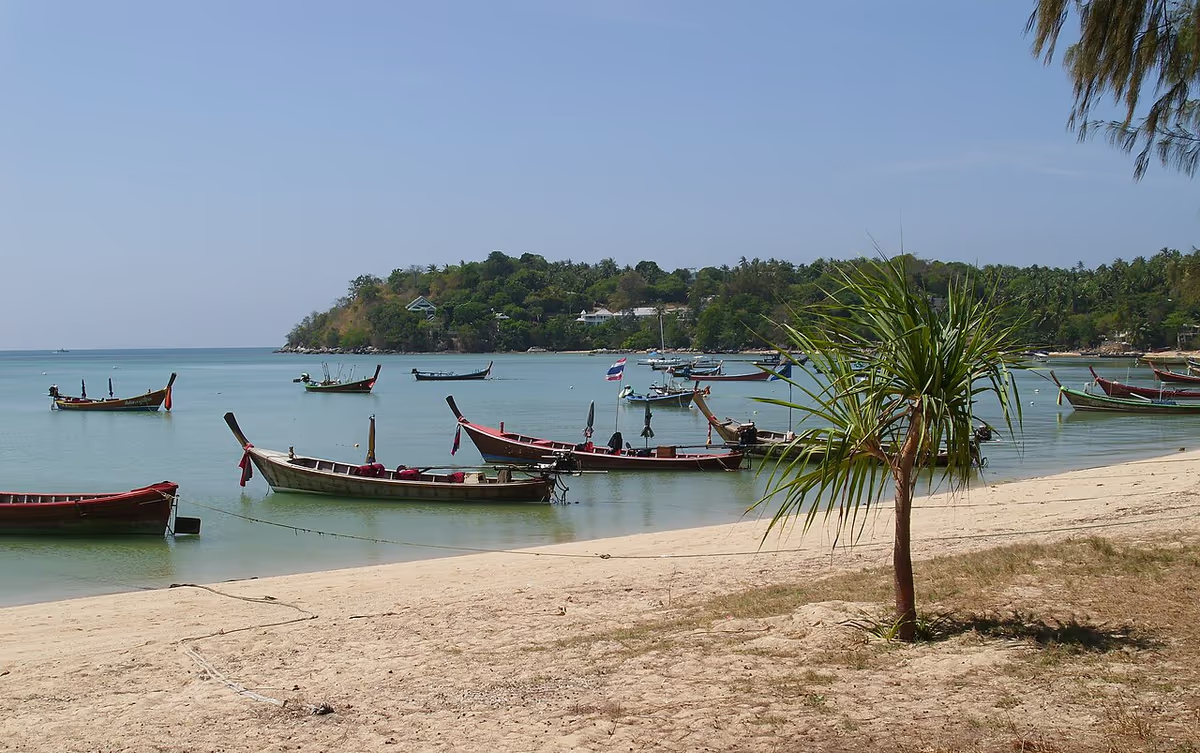
The south (Rawai, Nai Harn, Chalong) grows more slowly and with a different product: more homes for permanent residents, fewer investment pools.
Mai Khao and Nai Thon are a separate story: further from daily life, cheaper land, longer empty beaches. Rental yields there have historically been lower, but entry prices are lower too.
If you plan to view properties in person, allow a week rather than three days and stay in two different parts of the island. The drive from Rawai to Bang Tao in high season takes over an hour, and it changes your view of a location more than any presentation.
What the Market Does Not Confirm
Expectation one: more supply means lower prices. On Phuket this holds only inside a homogeneous cluster. Developers almost never cut list prices on new projects. Instead you see discounts for full prepayment, free furniture, and two years of paid management. The real transaction price falls by 5-12% while the headline price stays the same. Prices fall on 2018-2021 resale villas that compete with new product at the same price point.
Expectation two: a guaranteed 7-8% yield. A guarantee is worth exactly as much as the guarantor, which is usually a project-level SPV with no assets. Once the guarantee period ends, the owner faces real occupancy, and by market estimates net villa yields after all costs more often land at 4-6% than the promised high single digits.
Expectation three: you can rent the villa nightly. You cannot, unless the project holds a hotel license. Phuket has seen real inspections and fines in recent years, often triggered by complaints from neighbors in villa estates. Ask for the license before paying a deposit, not after.
Expectation four: a 30-year lease automatically renews twice. The contract often records such a right, but Thai courts are not obliged to force a new landowner to honor it. A renewal option is an obligation of a specific lessor, not a property of the land.
What I Would Buy in This Market
My view: a standard villa at 15-25 million THB in Thalang or deep in Bang Tao at the start of construction is the least attractive purchase right now. That is where most first-half developer capital went, and by your handover five similar projects will be completing next door. You would be selling or renting in the densest competition on the island.
Two options look better. The first is a ready resale villa with a registered license and a verified occupancy record over two to three seasons: you pay for a fact rather than a rendering, and negotiation is real. The second is a sea-view condo within walking distance of a beach where land has physically run out; such sites cannot be reproduced and new supply will not dilute them.
You can ignore this advice if you are buying a family home rather than a yield asset. In that case rising supply is your friend, and 2026-2027 should offer the best selection and terms in five years.
FAQ
How many new homes were launched in Phuket in 2026?
In the first half of 2026, 4,166 new homes were launched according to Savills. These are sales launches, not completed buildings: most physical handovers will fall in 2027-2028.
Why do villas account for 61% of value if there are fewer of them?
Because the share is measured in money. A typical villa costs roughly four times a typical apartment, so a few hundred villas can outweigh thousands of condo units by value.
Will Phuket property prices fall because of rising supply?
List prices on new projects will most likely stay the same, but real deal terms will soften: prepayment discounts, furniture packages and paid management. Resale villas built in 2018-2021 in the same areas are likely to fall the most.
Can a foreigner own a villa in Phuket?
Not the land. Standard structures are a long-term land lease registered at the Land Department, usually for 30 years, or ownership through a Thai company. The building itself can be registered in a foreigner's name separately from the land.
What is the real rental yield on a Phuket villa?
By market estimates, about 4-6% net per year after management, utilities, taxes and maintenance, with a good location and a proper license. Figures of 8-10% in sales presentations are usually gross and based on optimistic occupancy.
What taxes does a seller pay on resale?
A 2% transfer fee on the appraised value, a 3.3% specific business tax if sold within five years of ownership, and withholding income tax on a progressive scale. Who bears these costs is negotiable and should be written into the contract.
Which Phuket area is most crowded with new supply?
The Thalang - Bang Tao - Layan - Cherngtalay cluster. Most villa launches are concentrated there, and so will be the tightest competition for tenants in 2028.
What should I check before paying a deposit on an off-plan villa?
The land title deed (chanote), the project hotel license or its absence, the water source, a payment schedule tied to construction milestones, and completed projects by the same developer on the island that you can visit in person.
Source: Phuket.pro
Ready to invest in Thailand? Our experts will help you find the perfect property.
Which area of Thailand suits you best?
We will match properties in locations that fit your goals.
What is your goal?