

Photo by Camila Morini on Pexels
Phuket Weather by Month: Seas, Rain and the Best Time to Go
This material was prepared with the help of artificial intelligence and checked by a person. Editorial responsibility: Aster Of Asia Co., Ltd..
Responsible for content: Leonid Ustinov, Aster Of Asia Co., Ltd.
Aster of Asia editorial team
The best time to visit Phuket is November to April: the southwest monsoon has retreated, the west-coast beaches are calm, and the Similan Islands are open from mid-October to mid-May. February is the driest month of the year. Rain arrives from May to October: May averages 340 mm over 28 days by long-term norms, but only 4 of those are heavy downpours.
This guide is for travellers and expats planning life on the island, not for investors, so it focuses on what each month actually feels like.
Dry season, November to April: why February beats April
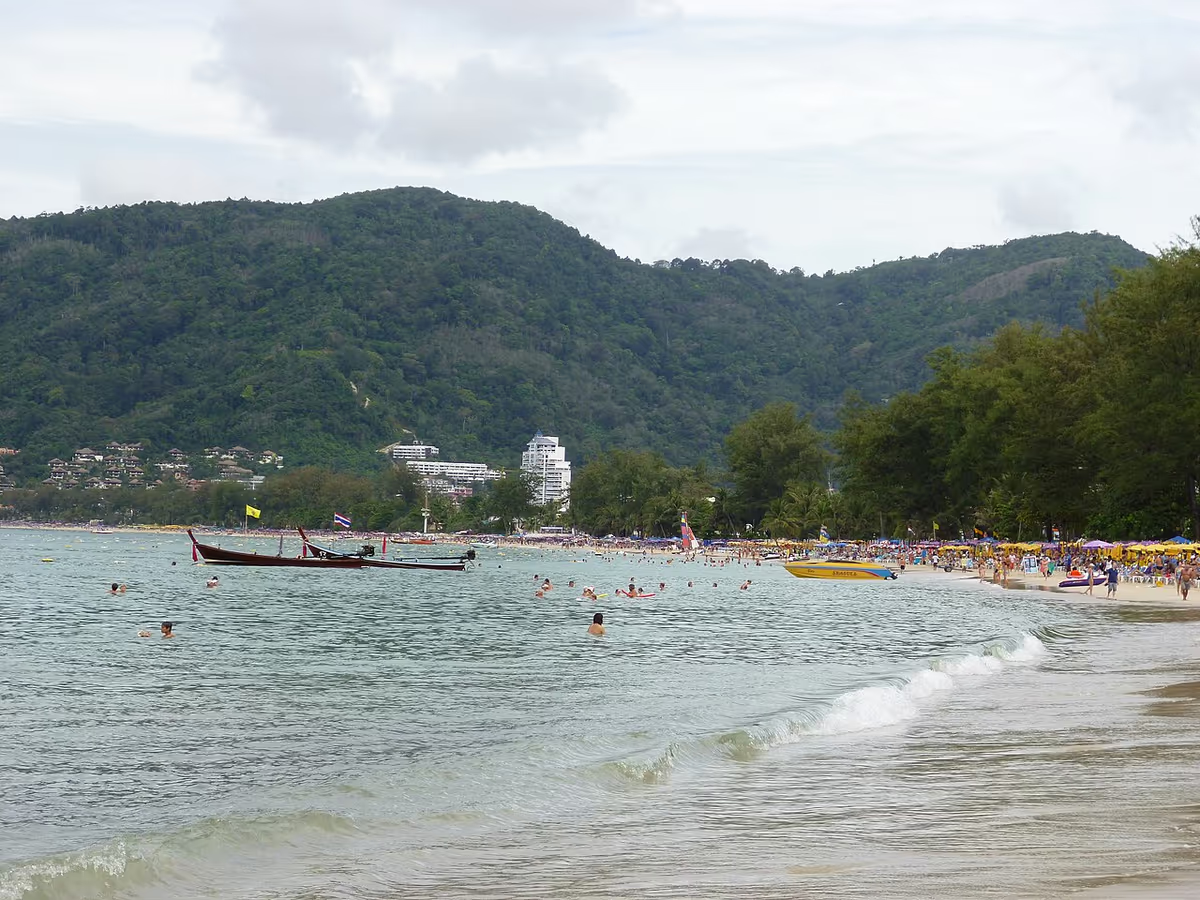
If your dates are flexible, choose February. There is almost no rain, the sea at Patong, Karon and Nai Harn is flat, and the heat is still bearable. December and January are just as good weather-wise, but they are peak months: accommodation and flights cost more and the beaches are crowded. February and March are calmer and cheaper.
We will shortlist properties for your budget
Pick a range and we will send a shortlist with prices, layouts and payment plans within 24 hours.
March is noticeably hotter, with daytime highs of up to 34.4 °C by 1991-2020 averages. April brings the first thunderstorms and is the most oppressive month of the year, which makes it hard to enjoy. Nights are warm all year, with the average minimum never dropping below roughly 24.9 °C, so do not expect a cool break.
Month by month in short:
- November: the monsoon is leaving, with some residual showers. The sea is settling but waves still occur. Dry enough, without peak prices.
- December: dry and calm. Good for New Year if prices do not put you off.
- January: dry, with 0 storm days in the norm. A good balance of sea and heat.
- February: the driest month of the year with a calm sea. The best choice if your dates are free.
- March: dry and hot, up to 34.4 °C. Quieter and cheaper than January.
- April: first thunderstorms and humidity. Only if you tolerate heat.
- May: 340 mm over 28 days, 4 heavy downpours. Waves appear. Green landscapes, empty beaches, savings.
- June: rain in short bands, waves present but not the worst. The most reasonable month of the green season.
- July: one of the wettest months, with 13 storm days in the norm. Only if your holiday is fixed to July.
- August: also among the wettest, with frequent red flags. Needs a plan B for every day.
- September: up to 350 mm over ~19 days, restless sea, the lowest prices.
- October: 336 mm over ~19 days. The sea evens out toward the end, and the second half of the month is already good.
Rainy season, May to October: how the rain really falls
The common belief is that it pours all day in the rainy season. The numbers say otherwise. In May, with 340 mm of rain and 28 wet days, there are still 286 hours of sunshine, and only four truly heavy downpours. A typical day: sun in the morning, an hour of rain around midday or evening, then bright and humid again.
Climate summaries differ in detail, and it helps to know that in advance. By some data the wettest month is September with 350 mm over about 19 days, by others July and August are worse. October brings 336 mm over the same ~19 days, but the second half of the month is often already dry.
The island does not empty out in the rains. In July 2025, 1,139,408 visitors arrived in Phuket, as it is peak season for tourists from China. The plan of going in August because it will be empty does not work.
When the sea in Phuket is dangerous for swimming
The weather changes less in the green season than the sea does. In a typical July the west coast sees 13 days of storm-level surf, versus none in January. When waves are high, red flags go up, and this is not a formality: rip currents pull swimmers out from shallow water that looks deceptively calm.
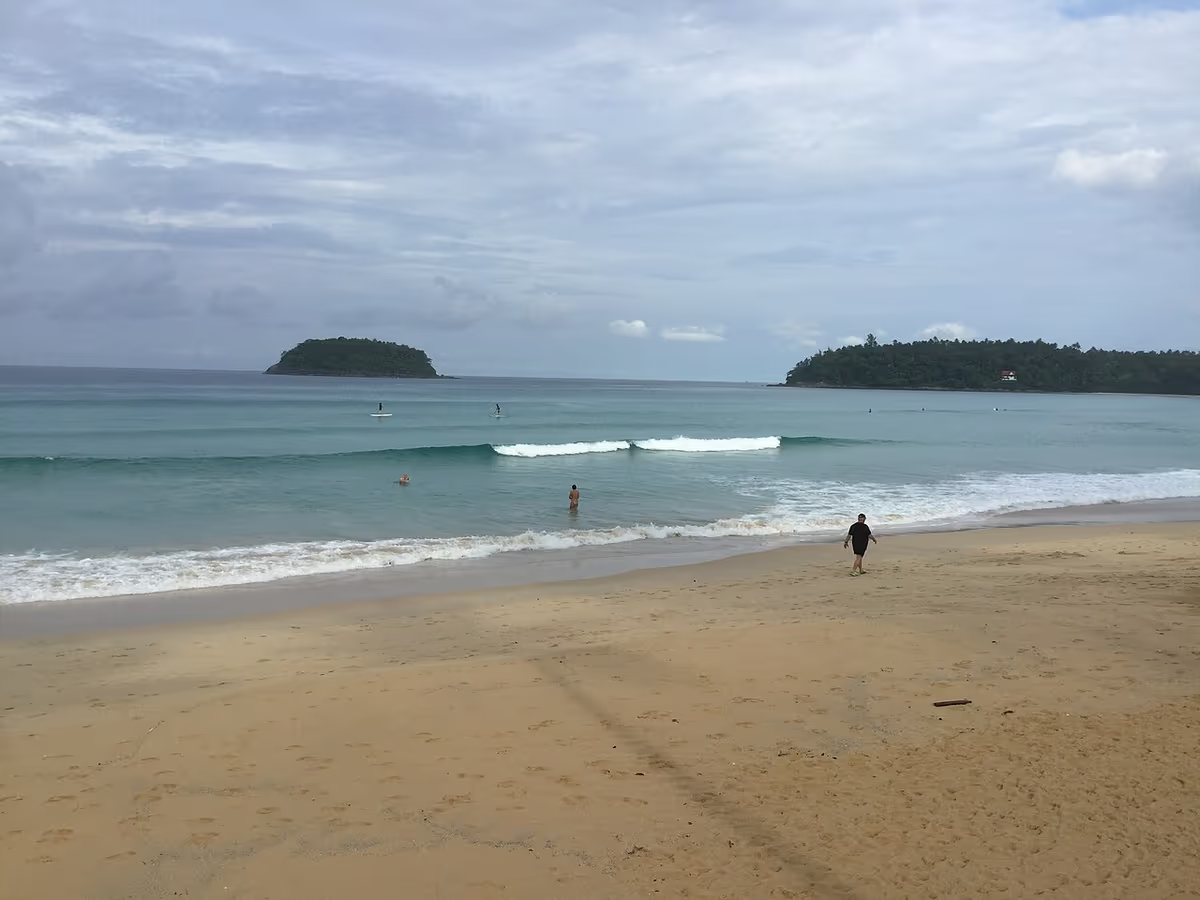
The rule is simple: red flag means do not enter the water, even if someone nearby is swimming and nothing has happened yet.
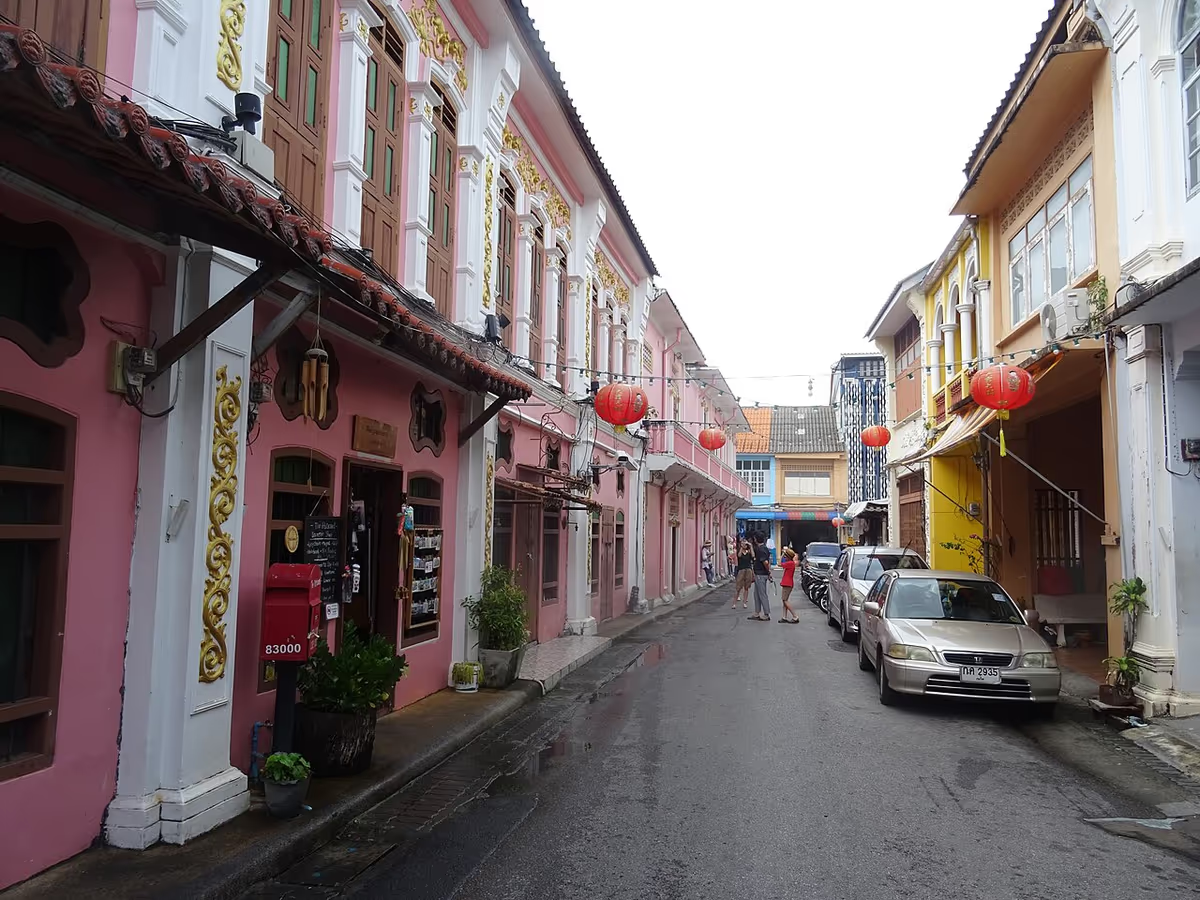
The east coast is sheltered from the southwest swell, but there is hardly anywhere to swim there: boats, piers, markets and cafes. In wet months the fallbacks are the pool, the island interior, Old Town, waterfalls and trips to bays on the leeward side. In a storm, ferries and boat tours are cancelled, and refunds do not always come quickly.
Which month to choose, and when this advice fails
For sea and diving without compromise, pick February, ideally its second half. If you are counting money but want dry weather, pick March: hotter, but quieter and cheaper. From the green season I would take June rather than September: the rain falls in short bands, prices are already low, and the sea is not yet at its angriest.
The February advice does not suit everyone. If you are tied to school holidays or flying at the end of December, you have no choice of month. Then the question is not when to go but how early to book: accommodation and flights for peak weeks sell out well in advance, and it is easier to book flights for fixed dates than to pick through leftovers a month out.
A typical mistake is buying cheap September tickets to dive the Similan Islands. The national park is open only from mid-October to mid-May, so your plans would have to change on arrival.
FAQ
When is the driest month in Phuket?
February. December, January and March are also dry, but February is the most stable for both rainfall and calm seas.
Can you swim in Phuket in July and August?
Often yes, but not every day: in a typical July the west-coast beaches see 13 days of storm-level surf and red flags. Check the flag before entering the water.
How long does it rain in the rainy season?
Mostly in bands of about an hour, not all day. In May, with 28 wet days, there are 286 hours of sunshine and around four heavy downpours.
Which month is the wettest?
Depending on the climate summary, it is either September (about 350 mm over ~19 days) or July and August. October brings 336 mm, but conditions even out toward the end of the month.
Is April a good time to visit?
The weather is still dry, but it is the most oppressive period and the first thunderstorms start. If you handle heat badly, choose February or November.
What is the best practical tip for the green season?
Schedule activities for the first half of the day and keep a no-sea backup plan for every day. Choose boat excursions with free rescheduling rather than the lowest price.
Ready to invest in Thailand? Our experts will help you find the perfect property.
Which area of Thailand suits you best?
We will match properties in locations that fit your goals.
What is your goal?