
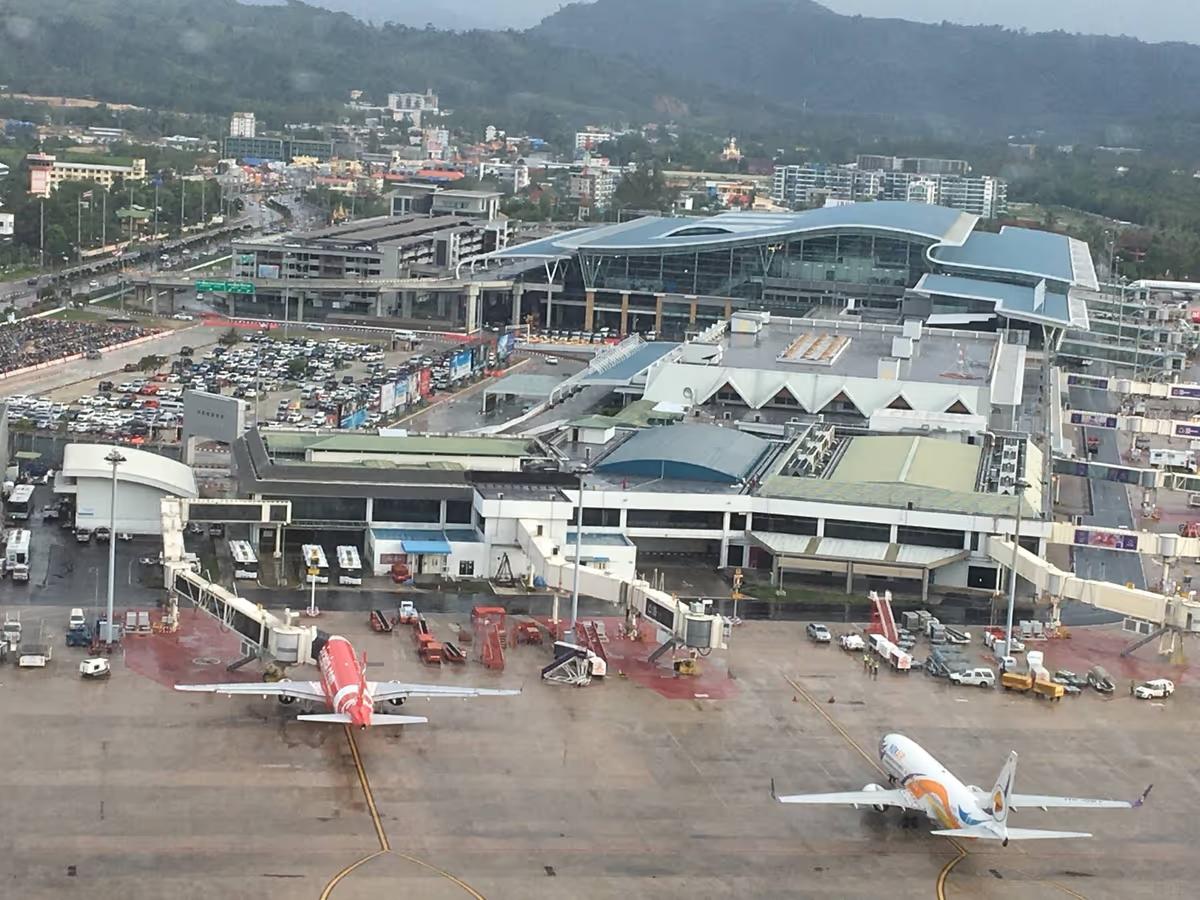
Photo: Infantpo, CC BY-SA 4.0, Wikimedia Commons
Thailand Departure Tax 2026: 1,000 Baht Per Flight Out
This material was prepared with the help of artificial intelligence and checked by a person. Editorial responsibility: Aster Of Asia Co., Ltd..
Responsible for content: Leonid Ustinov, Aster Of Asia Co., Ltd.
Aster of Asia editorial team
You pay nothing yet. The Thailand departure tax exists only as a draft law: the Ministry of Finance, through the Revenue Department, proposes to charge 1,000 baht per departure by air, on any nationality's passport, with a ceiling written into the draft of 5,000 baht. Public consultation on the draft runs from 30 September to 29 October 2026.
FAQ
How much would the tax be, and how would it be collected?
The starting rate is 1,000 baht per departure, per person. That is not per round trip and not per year, but per departure from Thailand. A family of four flying out would pay 4,000 baht.
There will be no counter at the boarding gate like with the old airport fee. Under the draft, the airline or ticket agent collects the tax at the moment of sale, and it is simply built into the final ticket price. How to handle cases where no ticket is issued will be set separately by the Revenue Department.
We will shortlist properties for your budget
Pick a range and we will send a shortlist with prices, layouts and payment plans within 24 hours.
The 5,000 baht ceiling is more worrying than the 1,000 baht rate. It does not mean the rate will become 5,000 tomorrow, but it could be raised without a new law.
Do I need to pay 1,000 baht when leaving Thailand right now?
No. The law has not been adopted and is not in force. For now it is a draft, and public consultation on it runs until 29 October 2026.
When could the tax take effect?
There is no firm date. After the consultation, the draft goes through further approvals. If adopted, the law would take effect 180 days after publication in the Royal Gazette. Between the news that it is signed and the first more expensive ticket, expect roughly six months.
What happens to tickets I have already bought?
Tickets purchased before the effective date are not subject to the tax. Buy your ticket before that date and you pay the old price, even if you fly after the law takes effect. And the law will not take effect before spring 2027: the draft is still under consultation, and 180 days must pass after publication.
Does it apply to land and sea exits?
Not at first. In the initial stage the charge covers aviation only, and land crossings and sea routes are exempt. The table-free summary: air departures face 1,000 baht (cap 5,000), while land and sea exits are exempt at the first stage. Under the 1983 regulation, land and sea exits were charged 500 baht.
The history is long. Thailand collected this tax under the 1983 rule, then layered on exemptions through ministerial rules in 1986, 1989 and 1991. The idea is not new. What is new is that short tourist trips are now caught for the first time.
Our view: taking a bus to Hat Yai and on to Malaysia just to save 1,000 baht is poor arithmetic. A day on the road, a night's stay and the return trip will cost more than the fee. The one exception is if you already travel to the border for a stamp and no flight is involved.
Who might be exempt?
The draft mirrors the exemptions that already apply to the airport Passenger Service Charge and lists them in the text. Transit passengers who stay in the transit area or change planes inside the airport do not pay, and neither do children aged two or under. Members of the royal family and their entourage, foreign heads of state, state and government guests, and people on official missions for the Thai or a foreign government are exempt too.
The claim that 'children under 12 do not pay' is not backed by the draft: only children aged two or under are exempt. The list may still change before the law is adopted, so once it is published, check the final version on the Revenue Department website, not in retellings.
Do tourists of other nationalities and Thais themselves pay?
Yes. The charge is designed for all departing passengers regardless of citizenship, including Thai citizens.
What does it mean for winter residents in Phuket or Pattaya?
A November to April stay rarely involves a single flight. A trip to Bali, a Vietnam visit, a New Year hop to Kuala Lumpur: each departure adds 1,000 baht per person. Three departures in a season for two people comes to 6,000 baht, which is noticeable money.
The Association of Thai Travel Agents (ATTA) opposes the draft for exactly this reason: the charge stacks on top of airport fees and a discussed inbound tourist fee while the economy is weak. Finance Minister Ekniti Nitithanprapas counters that the money is needed so part of tourism spending stays inside the country.
Practical takeaway: if you fly out of Thailand several times a season, it is worth booking flights early, before the law takes effect. If you fly home once a year, there is no reason to panic: 1,000 baht is less than the price gap between a Tuesday and a Friday on the same ticket.
Will land crossings to Cambodia be charged?
Not in the first stage, as land and sea exits are exempt. But the very wording 'first stage' hints that things may change.
If your flight is already booked for this season, keep the booking receipt showing the payment date: the purchase date is what proves the ticket was issued before the law.
Source: The Standard
Ready to invest in Thailand? Our experts will help you find the perfect property.
Let us calculate the full cost of your deal
We will find options with transparent costs and taxes for your budget.
What is your goal?