

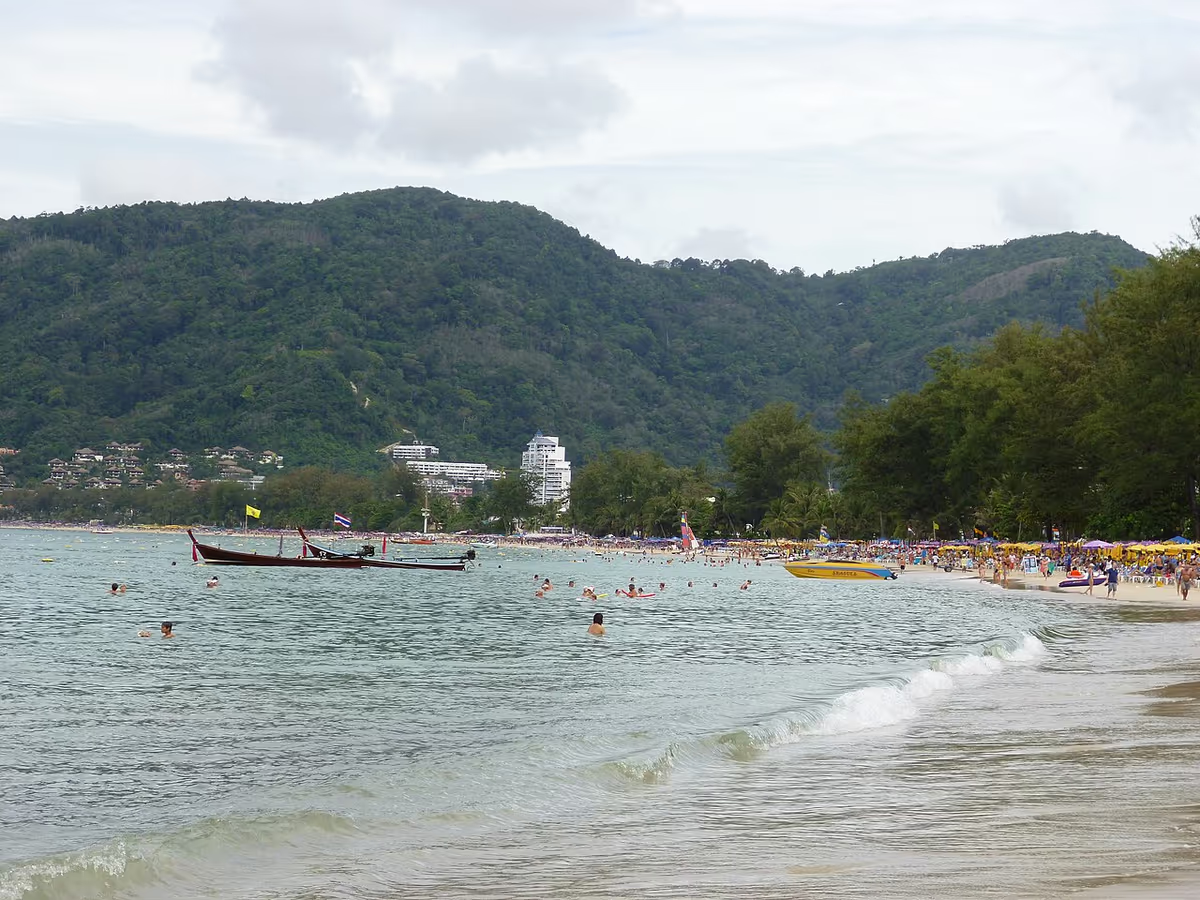
Photo by Angelyn Sanjorjo on Pexels
Thailand's 450 Baht Entry Fee: Who Will Pay and What Happens Next
This material was prepared with the help of artificial intelligence and checked by a person. Editorial responsibility: Aster Of Asia Co., Ltd..
Responsible for content: Leonid Ustinov, Aster Of Asia Co., Ltd.
Aster of Asia editorial team
Thailand's proposed 450 baht entry fee is less than the extra-bag charge on most budget flights within Asia, so the debate was never really about the amount. It is about who gets exempted and where the money actually goes.
On 9 October 2026, the plan moved again. Government agencies were told to publish clear rules on how the fee is collected and spent, hold public consultations, and only then send the document to the cabinet.
There is still no start date. The fee is not in force. Nobody needs to pay anything on arrival right now, and you should not pay for any QR codes or pre-payments before the official rules are published.
Key Facts
- Fee amount: 450 baht per foreign arrival. This is the figure in the October 2026 draft, not a payment you can be asked for today.
- 9 October 2026: the relevant agencies were told to publish the collection and spending rules before the draft goes to the cabinet.
- Public consultations are mandatory. The document cannot move forward without them, so several procedural steps remain before any launch.
- One payment may cover 30 days. Reports on the proposal describe a single payment of 450 baht allowing multiple entries and exits within 30 days. This is still a draft and could change.
- Possible timing: some reports point to a launch in the first quarter of 2027 for air arrivals, with land and sea checkpoints following about a year later. None of this is confirmed.
- Stated spending areas: tourism infrastructure, safety, and insurance coverage for visitors.
- A surprise item: part of the money may support the film industry through the Cash Rebate program, if the spending qualifies under the fund's conditions. A separate committee is being created to deal with delayed rebate payments.
Story and Context
This fee has a long reputation in Thailand. It has been discussed since 2022, and in that time it has been approved in principle several times and has failed to start just as many times.
In February 2023, the cabinet approved the scheme in principle, but with a different structure: 300 baht for air arrivals and 150 baht for those entering by land or sea. Start dates were then floated for mid-2023, late 2023 and 2024, and each passed without a fee. The reason was usually the same. Tourist numbers were recovering unevenly, and nobody wanted to add friction at the border. The current 450 baht is a flat rate instead of two tiers, which suggests the draft has been rewritten from scratch more than once.
The insurance component has always been the main argument in favor. Earlier versions put part of the money into a tourism development fund and part toward medical costs and a payout in case of death for foreigners without their own policy. The logic is easy to see: Thai hospitals regularly end up with unpaid bills, and repatriating a body at the family's expense is a painful problem of its own. Whether it works in practice depends on details that are not yet public. At 450 baht per person, the size of the fund is simple to calculate. The claims procedure, the list of exclusions and the processing times are not, and those are exactly what officials are being asked to publish before the cabinet vote.
The most unexpected part of the October decision is the link to cinema. Thailand has spent several years competing with Malaysia, Vietnam and Indonesia for film budgets, and its main tool is a cash rebate for foreign productions that, under the current program rules, reaches up to 30% of approved in-country spending, with a cap per project. The tool works: international series and films are shot here regularly. What does not work is payment speed. A producer who has spent money in Thailand can wait months for the rebate, and that gap hurts the program's reputation more than the rate itself. The new committee on delays exists to fix that.
That points to a less obvious conclusion: the entry fee is being treated not only as a tourist levy but as a source for a fund that also pays productions. For the traveler, it means your 450 baht will not necessarily come back as a new sidewalk in Patong.
The collection method matters too. Every option discussed boils down to adding the amount to the airfare, or a separate online payment before arrival, rather than a queue at an airport counter. If it is built into the ticket, the 450 baht will simply dissolve into the price, and only people who read the fare breakdown when booking flights for the season will notice it. If it is a separate online payment, it becomes one more mandatory step before travel, which is a real hassle, especially for frequent flyers who book at the last minute.
Our view: for someone who lives in Thailand and leaves four to six times a year, the money is minor even in the worst case. That is roughly 2,000 to 3,000 baht a year, less than a single visa extension. The real risk is friction at the border and whether residents with work permits make it onto the exemption list. Reports on the draft mention exemptions for work visa holders, diplomats and official government guests, but the final list will only exist in the published rules. If you visit once a year for two weeks, you can safely ignore all of this until those rules appear.
The people who should read the rules most carefully are those who regularly cross land borders with Malaysia, Laos or Cambodia. With a flat rate and no exemption for frequent land crossings, the math changes: ten crossings a year would add up to 4,500 baht and ten extra formalities. A single payment covering 30 days, if it survives into the final version, would soften that considerably.
FAQ
Do I need to pay 450 baht when entering Thailand right now?
No. As of October 2026 the fee has not been introduced. The rules are not published, public consultations are not finished, and the document has not been submitted to the cabinet.
When will the fee start?
No date has been announced. The sequence of steps is known: publish the rules, hold consultations, then cabinet review. Some reports suggest the first quarter of 2027, but the project has slipped repeatedly since 2023, so it is too early to plan around a specific month.
Will foreigners with work permits and permanent residents be exempt?
Exemptions for such groups were discussed in earlier versions, and reports on the current draft mention work visa holders, diplomats and official guests. The final list will only be confirmed in the published rules. For anyone living in the country full time, this is the point to watch.
How will the money be collected?
Two main options have been discussed: including the amount in the airfare, or charging it as a separate online payment before arrival. Other ideas include a website, a mobile app or terminals. The final mechanism has to be described in the collection rules.
Is the fee the same for air arrivals and land arrivals?
The current draft has a single rate of 450 baht. The 2023 version had 300 baht by air and 150 baht by land or sea, so the structure has changed. Some reports suggest land and sea checkpoints would start about a year after airports.
Does the fee include insurance?
Insurance coverage for visitors is listed among the intended uses of the money. Limits, claims procedure and exclusions are not yet publicly described.
Why might part of the money go to the film industry?
The fund fed by the fee is seen as a possible source for the Cash Rebate program for film productions. Under current program rules the rebate reaches up to 30% of approved in-country spending, and payments to producers have been delayed, which is why a separate committee is being set up.
Should I change my travel plans because of the fee?
No. 450 baht does not change the economics of any trip. The only change worth making is to read the fare breakdown and official notices before you travel.
One practical tip: wait for the published rules and check two things in them, the list of exempt categories and the payment method. Everything else in this story does not affect your budget. And do not pay any "entry fee" sent through messaging apps or links until an official mechanism is actually running.
Source: The CITY Asia
Ready to invest in Thailand? Our experts will help you find the perfect property.
Let us calculate the full cost of your deal
We will find options with transparent costs and taxes for your budget.
What is your goal?