

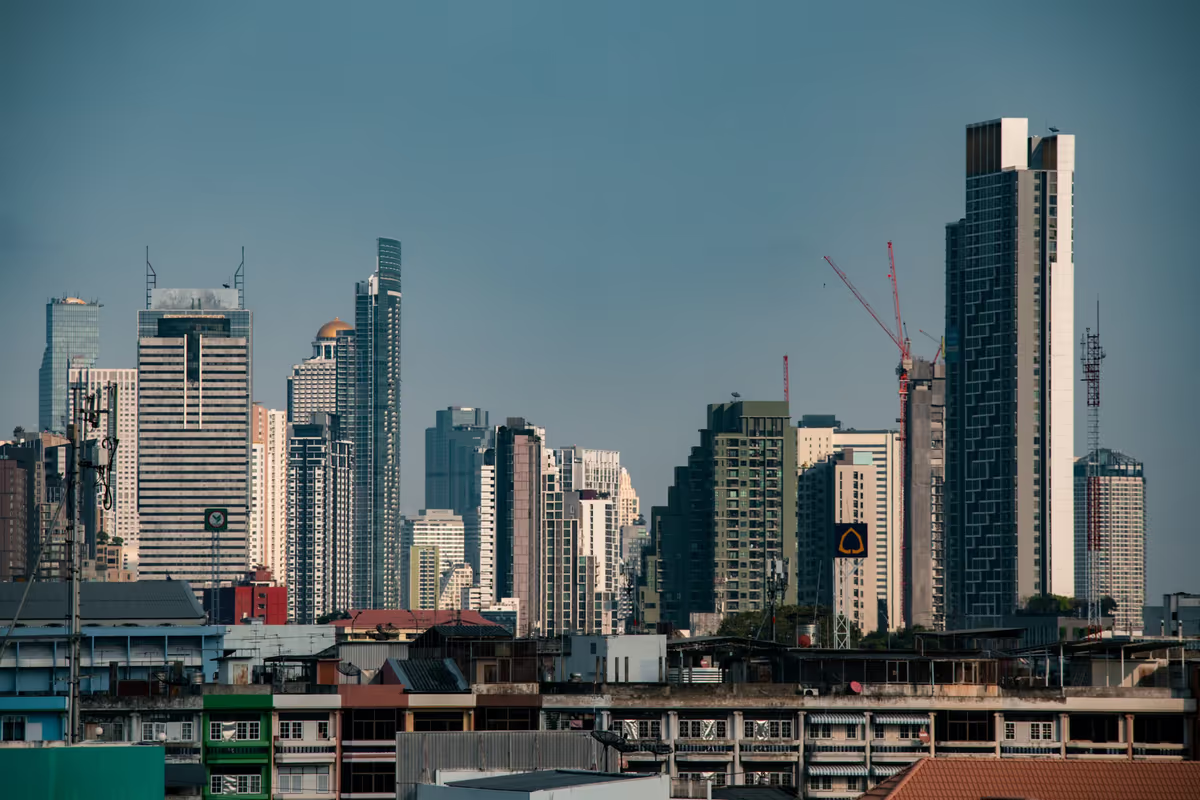
Photo by Sommart Sopon on Pexels
Working in Thailand as a Foreigner: Work Permit vs DTV Remote Work (2026)
This material was prepared with the help of artificial intelligence and checked by a person. Editorial responsibility: Aster Of Asia Co., Ltd..
Responsible for content: Leonid Ustinov, Aster Of Asia Co., Ltd.
Aster of Asia editorial team
The short answer: Thailand has no general list of jobs foreigners can do without permission. Almost any work requires either a work permit or an official exemption. Remote work for a foreign employer is legalised by the DTV (a 5-year visa, 180 days per entry, a 10,000 THB fee, and proof of 500,000 THB in funds), but it does not allow you to take Thai clients.
Thai law looks at what you do inside the country, not where the money comes from. Getting paid to a foreign bank card does not make the activity legal: what matters is your stay status and whether you hold a permit or a recognised exemption. There is also no such thing as a 'work permit without an employer'. A permit is always tied to a specific company, position and location. Anyone offering to arrange one 'just to have it' is proposing fictitious employment at a Thai firm, which carries entirely different risks.
Exemptions exist, but you cannot simply pick one. They cover defined categories: startup founders under SMART-S, spouses under SMART-O, diplomats, international organisation staff, government missions, short-term events and urgent special assignments, plus remote workers on the DTV and professionals on the LTR Work-from-Thailand route. You qualify by status, not by arguing that you are only here briefly.
We will shortlist properties for your budget
Pick a range and we will send a shortlist with prices, layouts and payment plans within 24 hours.
Enforcement is not theoretical. Thailand's Ministry of Labour has promised stricter checks on foreign workers in Phuket, where there are 10,889 employer companies and roughly 89,982 foreigners, with a focus on illegal work, work permit violations and jobs reserved for Thais.
Remote work for a foreign company: the DTV
The DTV (Destination Thailand Visa) was launched on 15 July 2024 and is administered by the Ministry of Foreign Affairs together with the Tourism Authority and BOI. Its Workcation category lets eligible applicants work remotely for overseas clients without a Thai work permit. The key numbers:
- Validity of 5 years, unlimited entries, up to 180 days per entry.
- Each entry can be extended once for another 180 days at a local immigration office for 1,900 THB.
- The visa fee is 10,000 THB.
- The applicant must be at least 20 years old and must apply from outside Thailand.
- You need proof of 500,000 THB in funds and evidence of foreign employment: a contract, portfolio or freelancer documents.
- A spouse and minor children can be added as dependants.
The DTV is not only for IT professionals. The soft-power category also covers people who come for Muay Thai, Thai cooking or language courses, or for medical treatment.
The main limitation fits in one line: the DTV is not a work permit. It does not allow you to work for a Thai employer or serve Thai clients. Running a project for a European studio from a laptop in Chalong is fine. Building a website for the café next door for 15,000 THB is not.
A common stumbling block: you cannot apply for the DTV from inside Thailand. Many people arrive visa-free, decide to 'sort it out locally', and then learn they have to leave first. If that is your plan, budget for a short exit trip.
Work permits: who needs one and how it works
If a Thai company hires you (a school, hotel, construction firm or local agency), the standard route is a Non-B visa plus a separate work permit. These are two different documents, and a Non-B alone does not permit you to work.
The usual sequence: the company prepares a document package for itself and for you, you obtain the Non-B at a consulate abroad, you fly in, and only then is the permit issued by the Department of Employment. Check the official website for current fees and document lists, as they change and outdated guides send people back for a second round of paperwork.
The permit is strictly tied to the employer. If you change companies, you go through the process again.
LTR Work-from-Thailand: who it really suits
The LTR Work-from-Thailand Professional category is built for remote workers with an employer outside Thailand and a qualifying income. Its advantage is that a Thai work permit is generally not required, although in some cases a separate LTR permit procedure applies.
The bar is higher than for the DTV. Remote workers employed by overseas companies typically need an average income of at least $80,000 a year over the past two years, and those earning $40,000 to $80,000 may qualify with additional criteria such as a master's degree, IP or qualifying Series A funding. The foreign employer must also be well established. Reported figures show 1,043 LTR approvals for overseas-employed nomads. For most winter-stay freelancers and small studios the LTR is unnecessary, but for an employee of a large foreign company on a long contract it is more convenient, with less renewal paperwork every six months.
What most often goes wrong for freelancers
The most common mistake is confusing a visa with a work permit. Someone gets a DTV, lives comfortably for six months, then takes a side job at a Thai restaurant or starts managing the Instagram of a local spa for pay. That is work inside Thailand, and the DTV does not cover it.
The second mistake is hoping to 'top up' a DTV later with employment at a Thai firm. It does not work that way: a Thai employer requires its own visa category.
The third is leaving the extension too late. The 180-day extension for 1,900 THB is available once per entry, at the immigration office where you live, not on your last day at the airport.
Our advice is simple. If your income comes from foreign clients, take the DTV and stay out of the Thai services market, even for small jobs. If you want to work for a Thai company, find an employer willing to arrange the Non-B and the permit, and do not accept starting 'without documents for now'. The one practical exception: you fly in for two weeks of holiday and answer work email between beach days. There is no separate procedure for such trips, and it is not usually treated as a problem.
FAQ
Can I live in Thailand permanently on a DTV?
The visa is valid for 5 years, but each entry gives you 180 days plus one extension of 180 days for 1,900 THB. After that you must leave and re-enter.
Do I need a work permit to work remotely for a foreign company?
No, if you hold a DTV or LTR Work-from-Thailand. On tourist status there is no separate legal arrangement for this.
Can I take Thai clients on a DTV?
No. The DTV only covers work for clients and employers outside Thailand.
How much money do I need to show for a DTV?
500,000 THB in your account, plus employment documents: a contract with a foreign employer, a freelancer portfolio, or proof of enrolment in a course.
Can I apply for a DTV while already in Thailand?
No. You must be physically outside the country at the time of application, and the request goes through the Thai eVisa system.
Can I get a work permit without an employer?
No. A Thai work permit is always tied to a specific company, position and location.
Does a Non-B visa let me work?
No. The Non-B visa and the work permit are two separate documents, and you need both.
Source: Travel Daily News Asia
Ready to invest in Thailand? Our experts will help you find the perfect property.
Ready to start?
Answer 4 questions and we will prepare a personalised selection of property in Thailand.
What is your goal?