Thai Food for Beginners: What to Order and What to Avoid
If you are new to Thailand, the easiest way in is with dishes that carry almost no heat: khao man gai (chicken rice), khao pad (fried rice), pad thai and massaman curry. When you order, say 'mai phet', meaning 'not spicy', and add chili yourself from the jars on the table. Spice is less of a risk than food that has been sitting in the heat for hours.
Responsible for content: Leonid Ustinov, Aster Of Asia Co., Ltd.
This material was prepared with the help of artificial intelligence and checked by a person. Editorial responsibility: Aster Of Asia Co., Ltd.
Aster of Asia editorial team
Shortlist by Aster of AsiaAll our services are free for the buyer
- Goal
- Home
- Budget
- Area
- Timing
Step 1 of 5
Why are you buying?
Your goal decides what we show first
5 questions, about a minute
Which Thai dishes are mild, and where to start
The same bowl of tom yum can differ in heat many times over between two neighboring cafes. Spiciness depends on the dish, the cook, the region and even the specific batch. So for a gentle first lunch, it is safer to pick a dish with a calm base than to ask the cook to tone down a fiery one.
Thailand often uses a five-step heat scale:
- 1 out of 5: no heat at all, fine for children
- 2 out of 5: a light warmth
- 3 out of 5: medium Thai spice, clearly noticeable
- 4 out of 5: hot
- 5 out of 5: genuine 'Thai spicy', for the seasoned
Where popular dishes land when cooked the standard way:
- Khao man gai (poached chicken with rice cooked in broth): no heat, 1 out of 5
- Khao pad (fried rice), pad thai (fried rice noodles), kuay tiew (noodle soup), tom kha gai (chicken in coconut milk soup), massaman curry (thick curry with potato and peanuts), moo ping and gai yang (grilled pork and chicken): mild
- Khao soi (northern curry noodle soup): medium
- Tom yum goong (hot and sour shrimp soup) and green curry: medium to hot
- Pad kra pao (meat with holy basil and chili) and som tam (green papaya salad): hot
For your first two or three days, I recommend khao man gai for breakfast or lunch. It is the safest dish both for heat and for the stomach: the chicken is poached, the rice is hot, and the sauce comes on the side, so you can ignore it entirely. If you happily eat spicy Korean or Mexican food at home, skip this advice and go straight to pad kra pao.
How to say 'not spicy' in Thai
Two phrases cover almost every situation:
- 'mai phet': not spicy
- 'phet nit noi': a little spicy
The logic is simple: you cannot remove chili from a finished dish, but you can always add it. Nearly every noodle shop has a condiment set on the table: sugar, dried chili flakes, fish sauce with chilies, and chili vinegar. Start mild and adjust spoon by spoon.
Now for what does not work. 'Mai phet' does not guarantee zero heat. Many cooks hear it as 'a bit less', not 'no chili at all', especially in dishes where chili goes into the paste or dressing. In som tam, green curry and tom yum, chili is the backbone, and even a 'mai phet' version can sting noticeably. If you cannot tolerate heat at all, do not count on a mild version of a spicy dish. Pick from the mild group above instead.
Thai dishes that are spicier than they look
The classic trap looks innocent. Green curry has coconut milk and a sweetish aroma, so it seems as gentle as massaman. In reality it is one of the hottest curries, and beginners get burned by it regularly.
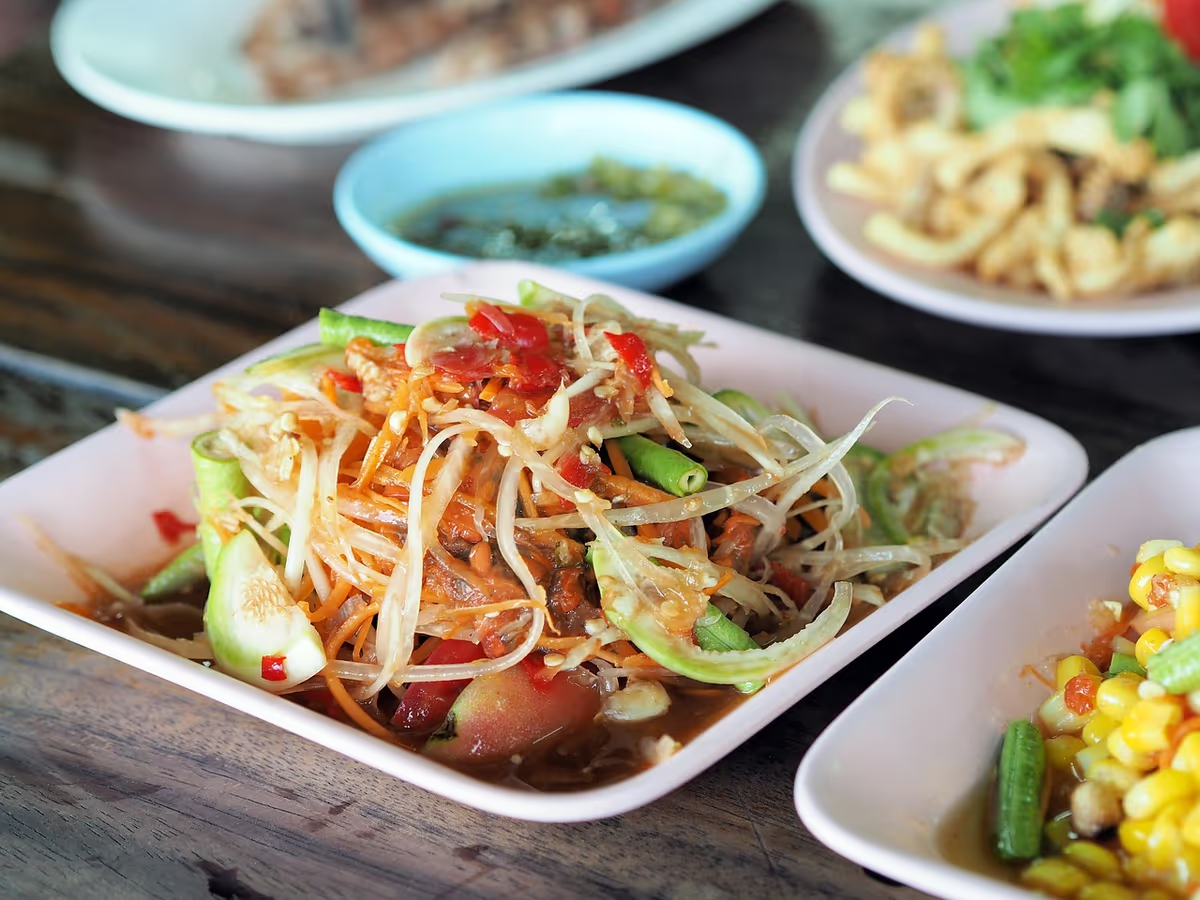
Som tam works the same way. Fresh papaya salad with cherry tomatoes sounds light. But the classic market version is made with a handful of fresh chilies and lands at 4-5 out of 5 as served.
Pad kra pao (meat with Thai basil, often topped with a fried egg) is an everyday lunch for Thais, so chili goes in 'the usual way'. Do not order it without 'mai phet'.
By contrast, poo pad pong karee, crab stir-fried in curry with egg, is usually milder than the word 'curry' suggests. If you want seafood without fire, it is a good pick.
If you do get burned, water will not help: it just spreads the heat around your mouth. Eat a spoonful of plain rice, or drink Thai milk tea or any sweet drink.
How to pick safe street food in Thailand
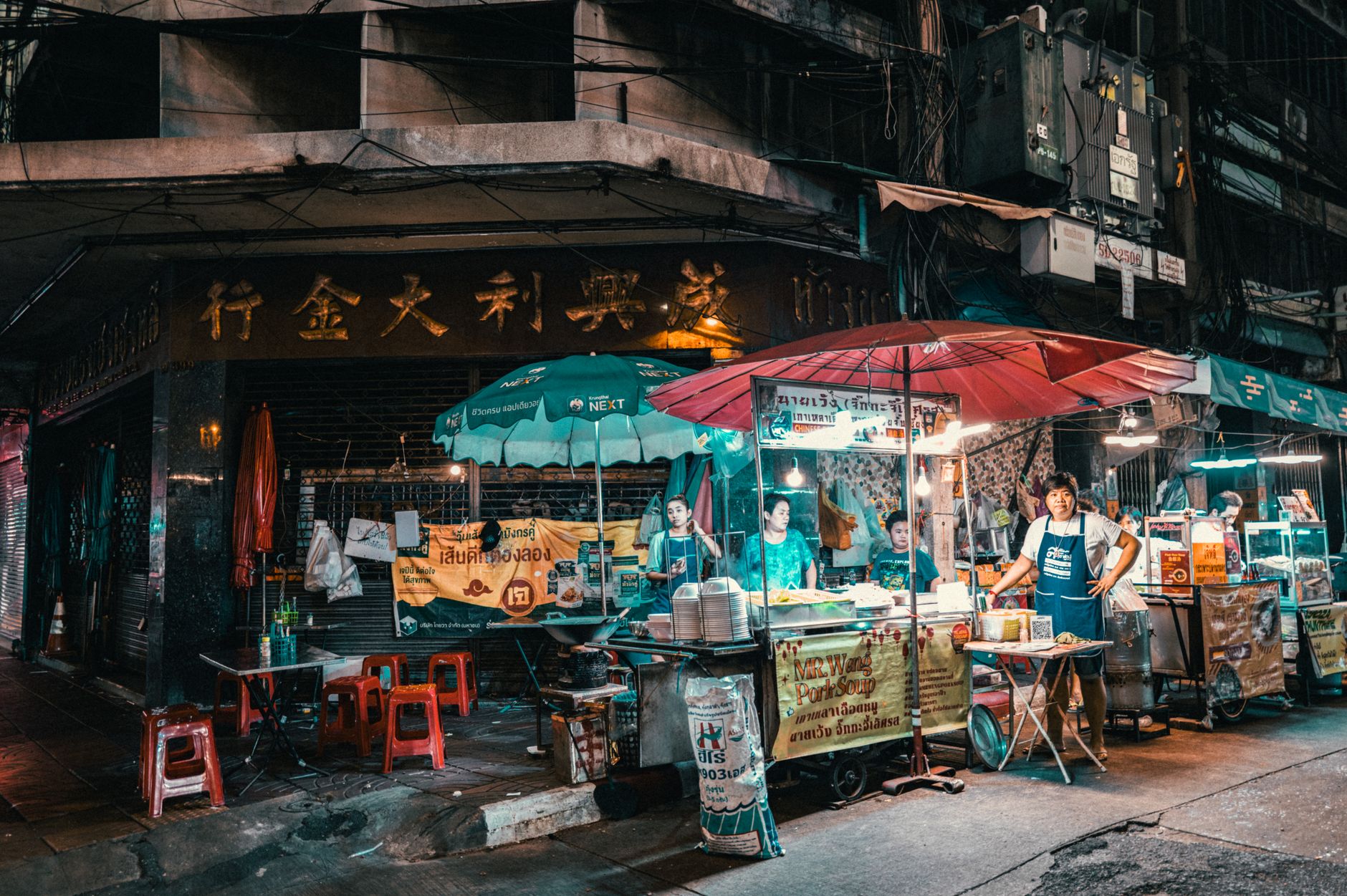
The simplest rule of thumb is a queue of locals. If Thais are standing in line, the stock turns over quickly, the food is fresh, the price is fair and the quality holds year after year. An empty stall at lunchtime is a reason to keep walking.
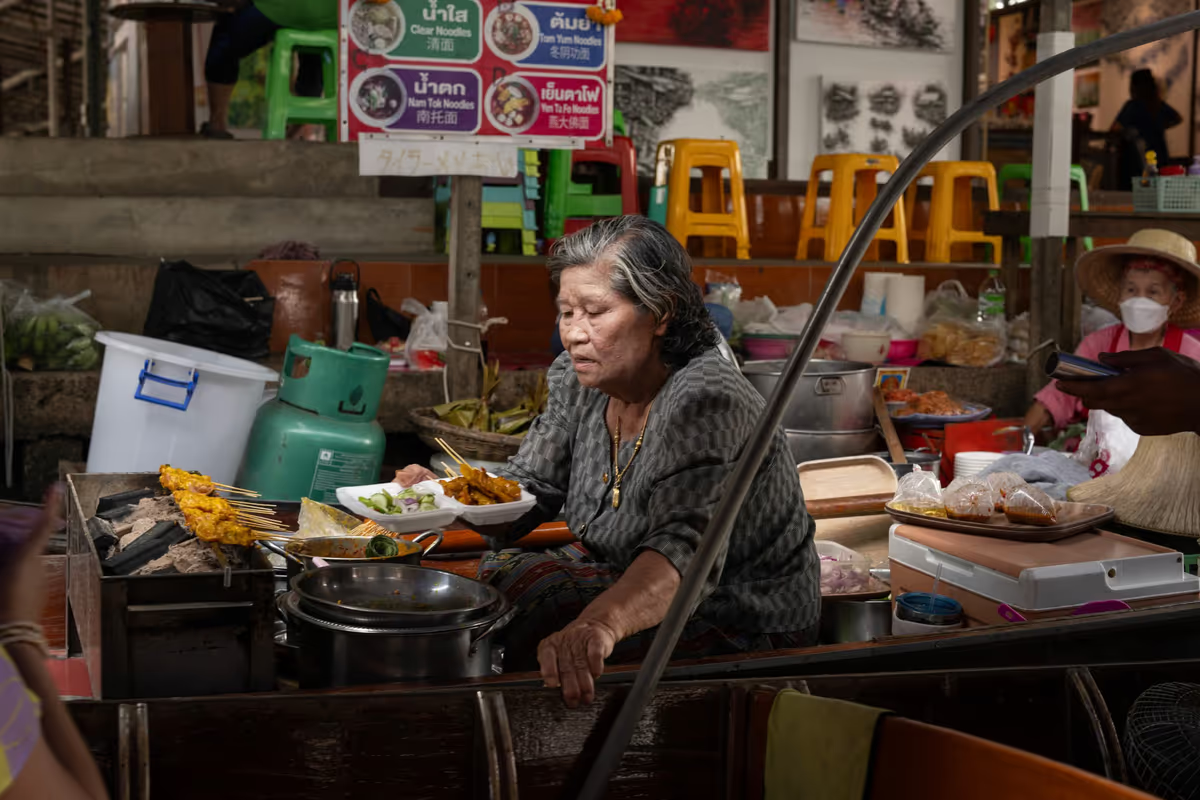
What to check while you wait:
- the dish is cooked in front of you over strong heat, not ladled from a pot that has been standing
- soup is steaming and fried food arrives sizzling
- frying oil is amber, not dark and cloudy
- money and food are handled by different hands, or the vendor changes gloves after taking payment
- raw meat and cooked food are kept apart, and the counter is wiped between orders
- no flies, and the grill is clean
In Bangkok, many stalls display a certificate from the Bangkok Metropolitan Administration. That is a plus, but not the main test: plenty of excellent stalls do not hang one.
Budget match
We will shortlist properties for your budget
Pick a range and leave a contact: a broker will send a shortlist with prices, layouts and payment plans.
The warning signs are different. Cooked food sits uncovered in the sun, nobody is cooking anything, the oil is clearly past its best, or the vendor hawks too aggressively. A note on evening markets: anything that has sat in the heat for more than a couple of hours is best left alone, however appetizing it looks. Food grilled or wok-fried in front of you is safer in this respect than salads and desserts that were chopped in the morning.
If walking up to street stalls alone feels daunting in your first days, a guided food tour can help: book a food tour. A guide will show you how to order, and after that you can manage on your own.
One more point on raw dishes. Thailand's Department of Disease Control warns that raw river fish and shrimp can carry liver fluke parasites linked to bile duct cancer, and lime juice, salt or fermentation do not kill them. Thorough cooking is the only reliable prevention, so beginners should skip raw or lightly marinated freshwater dishes and eat at busy, clean, reputable places.
Ice, water and raw food: what to watch
Neither locals nor visitors drink tap water in Thailand. Buy bottled water; cafes usually serve either that or filtered water.
Ice is calmer territory than many assume. Cafes and drink stalls most often use factory-made ice: cylinders with a hole in the middle, or neat cubes. It is made from purified water. Be wary if the ice is chipped from a large shapeless block lying in a crate with unclear origins. I would not risk that in your first weeks, although many people drink it without problems.
Be more careful with raw seafood in marinade (for example, shrimp in spicy lime sauce) and with fruit that was pre-cut and left in the sun without ice. A whole fruit peeled in front of you is safer.
And a final point that people often mix up: stomach upset in the first days is frequently caused not by dirty food but by an abrupt change of cuisine. Lots of coconut milk, chili and fish sauce all at once is a lot. That is why it makes sense to start with plain rice and broth-based soups.
FAQ
What should I order in Thailand if I do not eat spicy food at all?
Khao man gai, khao pad, pad thai, kuay tiew noodle soup, massaman curry, moo ping and gai yang. Add 'mai phet' to your order anyway.
Is Thai street food okay for children?
Yes, if you choose dishes with no heat and stalls that cook in front of you over a flame. Children usually handle khao man gai and moo ping skewers without trouble.
Is ice in drinks safe in Thailand?
Factory ice in the form of cylinders with a hole or neat cubes is usually safe. Ice chipped from a large block is best skipped for now.
Why does 'not spicy' still burn?
In some dishes the chili goes into the paste or dressing and cannot be fully removed. Heat also varies by cook and by batch.
How can I tell if a street stall is good?
A queue of locals, cooking done in front of you, light-colored oil, steaming soup, no flies, and money and food not handled by the same hand.
Can I drink tap water in Thailand?
No. Neither locals nor visitors drink it. Stick to bottled water.
Is it safe to eat raw river fish or shrimp?
It is best avoided. The Thai Department of Disease Control warns of liver fluke parasites in raw river fish and shrimp, and lime juice, salt or fermentation do not kill them. Only thorough cooking does.
A practical tip: save on your phone the names of five or six mild dishes from the list above, plus the phrase 'mai phet' in Thai. At stalls without an English menu, just show your screen, which is faster than any explanation.
Source: Thailand Stuff
Ready to invest in Thailand? Our experts will help you find the perfect property.
Area match
We will help you choose an area for your goals
We will match properties where it suits you, with schools, clinics and shops nearby. You will get options with prices and layouts.
More in Phuket lifestyle
All articles in this topic
Food Prices in Phuket 2026: Markets, Cafes and Supermarkets in Baht
Phuket food prices in 2026: pad thai 60-80 THB, burgers 280-550 THB, eggs 45-65 THB. Street food, cafes and supermarkets compared, plus monthly budgets.

Phuket Waterfalls in the Rainy Season: Where to Swim and When to Go
Where to swim at Phuket waterfalls in the rainy season: Bang Pae vs Ton Sai, 200 baht entry, best months June to October, safety tips and getting there.

Phuket Night Markets in 2026: Naka vs Chillva, Prices and Opening Hours
Naka vs Chillva in Phuket Town: opening hours, 150-250 THB dinner costs, food prices and when to arrive. Practical 2026 guide to both night markets.