

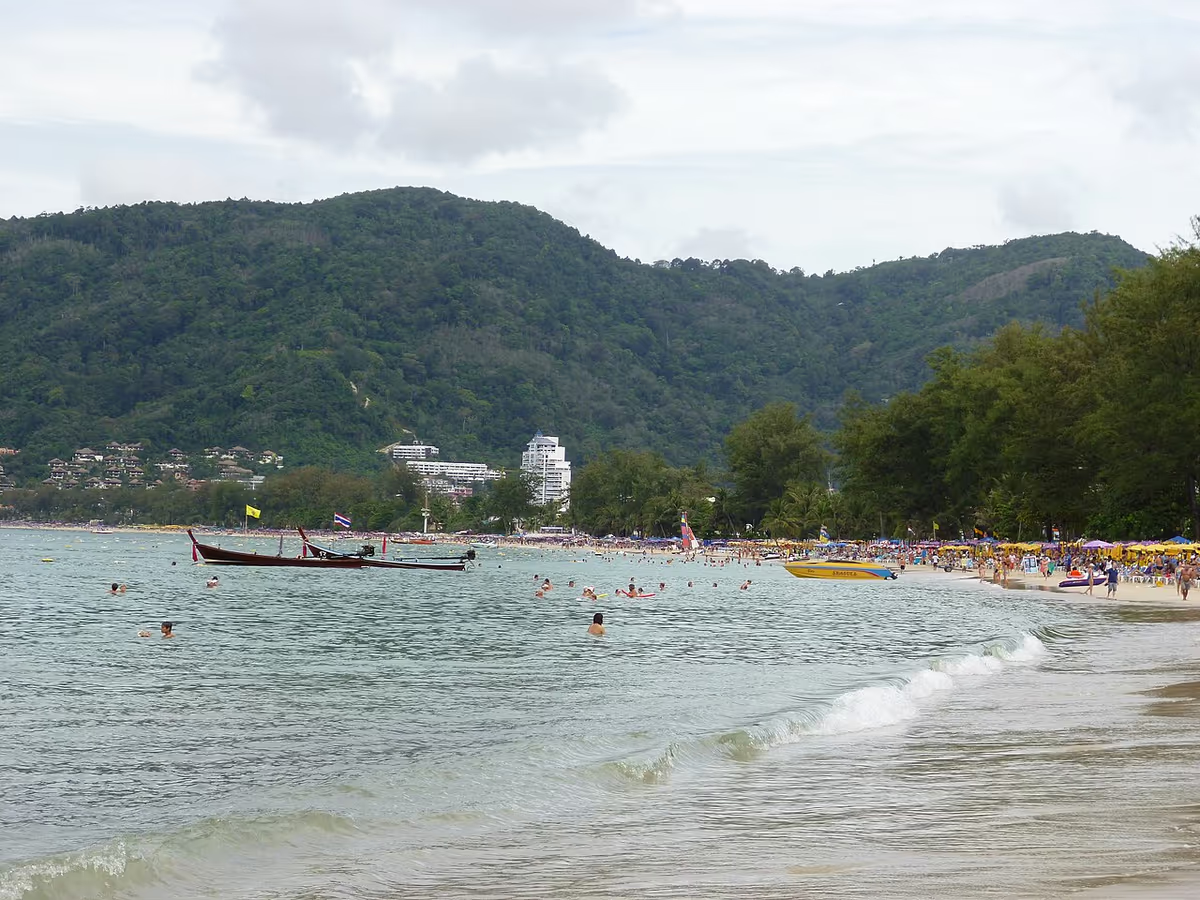
Photo by DΛVΞ GΛRCIΛ on Pexels
Thailand Privilege vs LTR: 5 Numbers That Decide the Outcome in 2026
This material was prepared with the help of artificial intelligence and checked by a person. Editorial responsibility: Aster Of Asia Co., Ltd..
Responsible for content: Leonid Ustinov, Aster Of Asia Co., Ltd.
Aster of Asia editorial team
A buyer closes on a 12 million baht condo in Patong, collects the chanote title and flies in to move into the new apartment. At immigration, the passport gets an ordinary tourist stamp. Sixty days later, he is on a border run.
Owning property in Thailand does not, by itself, give you a visa or any right to a long stay. That is the fact to start from in any Thailand Privilege vs LTR discussion. Property connects to a visa in one place only: since February 2025, real estate can count as a qualifying investment for the LTR visa (BOI announcement No. Por. 3/2568 of 4 February 2025). But what qualifies you is meeting the full category, not the mere fact of ownership.
In short: Thailand Privilege is a paid membership in a government program run by Thailand Privilege Card Company Limited, a subsidiary of the Tourism Authority of Thailand. You pay and do not prove income. LTR is a Board of Investment visa valid for up to 10 years, where instead of paying for membership you present documents: assets, income, pension, qualifications.
The first suits those who cannot or prefer not to disclose their financial picture. The second suits those whose picture is strong and documentable.
Quick Answer
- LTR: up to 10 years (a 5+5 structure), launched by the BOI in 2022. 8,621 applications had been filed as of the start of the year, mostly from US citizens. It is a small program, with far less track record on non-standard cases than Privilege.
- LTR categories with clear thresholds: Wealthy Global Citizen requires global assets of USD 1 million or more; Wealthy Pensioner requires age 50+ and annual pension or fixed income of USD 40,000 or more.
- Property counts as one of three qualifying investment options (alongside Thai government bonds with at least 5 years to maturity and direct investment in Thai companies) under BOI announcement Por. 3/2568 of 4 February 2025. Verify the exact required amount and form of ownership against the current BOI text, as wording has changed.
- Thailand Privilege: 5 to 20 years of stay depending on the package, with no income or asset requirements. Package prices and membership terms must be taken from the operator's current price list only.
- Family Promotion: adding a family member to an existing Platinum, Diamond or Reserve membership for 750,000 THB instead of the usual 1.0-2.0+ million THB, with an application deadline of 14 August. Promotions rotate, so confirm dates and terms with the operator before budgeting.
- Right to work: Privilege gives none. LTR provides a work permit for qualifying categories. Neither program leads to permanent residency or citizenship, and nobody can promise you a processing time or approval.
- The 49% quota on foreign freehold ownership in a condominium applies regardless of visa. A visa does not widen the quota, and the quota does not simplify a visa.
For a Phuket-specific angle, local reporting also notes a separate one-year renewable long-stay visa route for condo buyers, tied to condominiums valued at 3 million baht or more (Thailand Construction and Engineering News). It is a different track from LTR, so check which one a developer is actually describing.
Scenarios and Options
Scenario 1. Retiree aged 58, pension USD 4,500 a month, buying a condo in Rawai. His category is LTR Wealthy Pensioner: over 50, annual income above USD 40,000. Ten years instead of yearly trips to the immigration office, with a lighter 90-day reporting regime. Trade-off: he must collect and legalise proof of income, and the BOI checks health insurance and document structure closely.
Scenario 2. Same age, pension USD 1,200. He does not qualify for LTR. Privilege is usually the wrong answer here too: a retirement Non-O with annual extension costs a deposit of around 800,000 THB in a Thai account (the money stays yours) plus fees in the thousands of baht. That is an order of magnitude cheaper than any membership. Paying millions to avoid an annual immigration visit only makes sense if travel and paperwork cost you more than that. For most people, they do not.
Scenario 3. Entrepreneur aged 41, income from several jurisdictions, assets spread across structures. Formally the assets may exceed USD 1 million, but assembling a package the BOI will accept can take months and cost legal and audit fees. Privilege solves the problem with money and without disclosure. That is its real niche: predictability and no financial due diligence on you.
Scenario 4. Remote worker aged 32, income USD 3,000, renting a studio in Bangkok and considering a purchase. Neither LTR nor Privilege fits. His tool is the Destination Thailand Visa with extensions. Buying a multi-million-baht membership on this budget makes no sense; the money is better spent as a down payment on a property.
If you are flying in for viewings and want to handle both properties and a lawyer visit in one trip, it is sensible to book a hotel near the offices in Phuket Town rather than on the beach: in high season, the drive from the west coast eats two hours a day.
Comparison Table
| Program | Length of stay | Key requirement | Right to work | Best for |
|---|---|---|---|---|
| Thailand Privilege | 5-20 years by package | Membership fee, income not checked | No | Those who do not disclose finances and value predictability |
| LTR (Wealthy Global Citizen) | Up to 10 years (5+5) | Global assets from USD 1 million, qualifying investment | Yes, for qualifying categories | Investors with documentable assets |
| LTR (Wealthy Pensioner) | Up to 10 years (5+5) | Age 50+, income from USD 40,000 a year | Limited | Retirees with a large pension |
| Destination Thailand Visa | 5 years with entries and extensions | Remote employment or documented activity | Only for a foreign employer | Digital nomads and market testers |
| Non-O + annual extension | 1 year, renewable | Deposit of about 800,000 THB or income of 65,000 THB a month | No | Retirees on a moderate budget |
Main Risks and Mistakes
Believing a flat gives you a visa. Phuket developers actively use LTR as a sales argument, and presentation wording can be loose. Mitigation: demand a written reference to the specific clause of the BOI announcement, not a slide with the program logo.

Leasehold instead of freehold. In popular resale projects the 49% foreign quota is often used up and the deal turns into a 30-year lease. Whether that form of ownership counts as a qualifying LTR investment must be settled by a written BOI answer before you pay a deposit, not by an agent. If it is not confirmed, assume it does not count.
Budgeting around a promotion. The Family Promotion at 750,000 THB per extra member is date-limited (until 14 August per the operator). If a family budget is built on that figure and the application is filed later, the difference can reach a million baht or more per person. Get the terms in writing before paying.
Expecting the right to work. Privilege does not allow work in Thailand, for a Thai or effectively a foreign employer from inside the country, without separate permits. If you need a Thai company, staff or a local salary, membership does not solve that.
Promises of timing and approval. Anyone quoting a guaranteed processing time or guaranteeing approval is selling something they do not control. Decisions are made by the BOI and the immigration bureau.
The tax side. Staying more than 180 days in a calendar year makes you a Thai tax resident regardless of visa type. Some LTR categories carry tax preferences; Privilege membership does not. Calculate this before buying, not after the first transfer of funds.
Assumptions about refunds and resale of membership. Exit and transfer terms must be confirmed with the operator against current rules. Any refund figures from an intermediary without a reference to the operator's document are worthless.
FAQ
Does buying property in Thailand give you a visa?
No. Owning a condo or villa creates no visa status. Property can be one qualifying asset within LTR under BOI announcement Por. 3/2568 of 4 February 2025, but you still have to meet the rest of the category conditions.
Which is cheaper over 10 years: Privilege or LTR?
All else equal, LTR is cheaper: you pay government fees rather than a membership fee. Privilege wins only where documents cannot be assembled or assembling them costs more than the difference.
How much does Thailand Privilege membership cost?
Current package prices and terms come only from the operator's price list. What is confirmed for 2026: the Family Promotion lets you add a family member to Platinum, Diamond or Reserve for 750,000 THB instead of the usual 1.0-2.0+ million THB, with an application deadline of 14 August.
Can you work on a Thailand Privilege visa?
No. The program does not provide a work permit. LTR does for qualifying categories, arranged through the BOI.
How big is the LTR program?
8,621 applications had been filed since the 2022 launch as of the start of the year, mostly from US citizens. Compared with Privilege's long history that is modest, meaning less accumulated practice on non-standard cases.
Do LTR or Privilege lead to permanent residency or citizenship?
No. They are long-stay visa statuses. Permanent residency and naturalisation are separate procedures with their own requirements, and neither program speeds them up automatically.
What should a 55-year-old retiree with a small pension choose?
Price a retirement Non-O with annual extension: a deposit of about 800,000 THB stays your money, and fees run in the thousands of baht. That comparison almost always favours this route over a membership.
Can you apply for LTR if the flat is leasehold?
This needs written BOI confirmation before the deal. Ownership-form wording in announcements has changed, and a seller's verbal assurance carries no weight.
What should you check first before applying?
Four things: whether you need to work in Thailand, whether you can document income or assets, how many days a year you will actually spend in the country, and what the annual-extension alternative costs. The answers cut options faster than any table.
The practical takeaway: if you can document assets of USD 1 million or more, or a pension of USD 40,000 a year, start with LTR and treat Privilege as the fallback. If you cannot document either, or doing so costs more than membership, Privilege buys predictability, but not the right to work and not residency status.
Source: Thailand Construction and Engineering News
Ready to invest in Thailand? Our experts will help you find the perfect property.
Planning to live in Thailand?
We will match relocation-ready property and explain the visa options.
What is your goal?