

AssetWise Bets on Phuket: What the 18.5 Billion Baht Target Means for Buyers in 2026
This material was prepared with the help of artificial intelligence and checked by a person. Editorial responsibility: Aster Of Asia Co., Ltd..
Responsible for content: Leonid Ustinov, Aster Of Asia Co., Ltd.
Aster of Asia editorial team
AssetWise built its name on compact student condos near Bangkok universities: units of 25-28 sq m, a first-year tenant, and predictable September occupancy. Now the developer is building a land bank in Phuket. This is not a cosmetic change of plans. The buyer changes, the currency of demand changes, and the payback horizon of each project changes with it.
AssetWise (ticker ASW on the Stock Exchange of Thailand) is working toward a full-year target of 18.5 billion baht and is shifting its portfolio toward large-scale projects on the island. For anyone buying new-build property in Thailand, the practical meaning is simple: over the next two to three years Phuket will see more large launches, more aggressive opening prices and more units reaching the rental market at the same time.
The short conclusion: enter early, and only at a clear discount to the price of completed buildings. Buying the third phase of a megaproject at the price of a finished home is the worst possible decision.
We will shortlist properties for your budget
Pick a range and we will send a shortlist with prices, layouts and payment plans within 24 hours.
Quick Answer
- 18.5 billion baht is AssetWise's full-year 2026 target. By end-March the company had booked THB 6,854 million in sales, about 37% of that target.
- Phuket is now the company's growth engine. Q1 revenue reached THB 2,162 million (+20% YoY), and Phuket leisure residence sales rose 21%.
- For buyers, the upside is a launch-phase discount that is typically 15-25% below comparable completed property in the same area, plus a staged payment plan during construction.
- The downside is supply timing: buildings launched in 2023-2025 reach the rental market in 2026-2028, so early owners may live next to construction while rental rates soften.
- Foreigners can hold freehold condominium units only within the 49% foreign quota of a building. In strong projects the quota sells out early, and what remains is a 30-year leasehold.
- The main risk is not the developer. It is synchronized supply in the same location.
Key Facts
- AssetWise is a listed company on the Stock Exchange of Thailand, grown on compact Bangkok rental condos (brands Kave, Modiz, Atmoz). Resort product means a new audience for the company, not an extension of the old one.
- According to reporting by The Nation Thailand, AssetWise is launching The Fizz Kata (1.1 billion baht condo) and The Kuartz Karon (1.4 billion baht luxury residence), aimed at international buyers seeking second homes and long-term income. The company also has a new THB 2 billion development, THE TITLE Vivana Kamala.
- The group's Phuket portfolio under The Title brand is valued at 47.447 billion baht, and management expects Phuket to overtake Bangkok as the main revenue driver as early as next year.
- AssetWise reports a backlog of 38.01 billion baht, which supports revenue recognition through 2028. Gross margin in Q1 was 41%.
- The Phuket sales model reportedly requires buyers to pay 75% of the property value before transfer (25% at signing, 25% at foundation, 25% at completion), with a near-zero cancellation backlog.
- Phuket covers about 543 sq km with a registered population of roughly 420,000. Phuket International Airport traffic, per operator AOT, has exceeded pre-pandemic levels at above 16 million passengers a year.
- Standard transaction costs: a 2% transfer fee on assessed value, a 3.3% specific business tax if resold within five years, and a 0.5% stamp duty. The reduced 0.01% registration rate under a government support scheme applies to Thai citizens, not foreign buyers.
- Supportive policy cited in local reporting includes a policy interest rate cut to 1% and eased loan-to-value rules.
Why a Bangkok developer wants Phuket
In Bangkok, AssetWise ran a clear model: cheap land in the second ring, small units, a student tenant, fast turnover. But the capital's condo market is oversupplied, land along BTS and MRT lines has become expensive, and Thai buyers keep running into mortgage rejections.
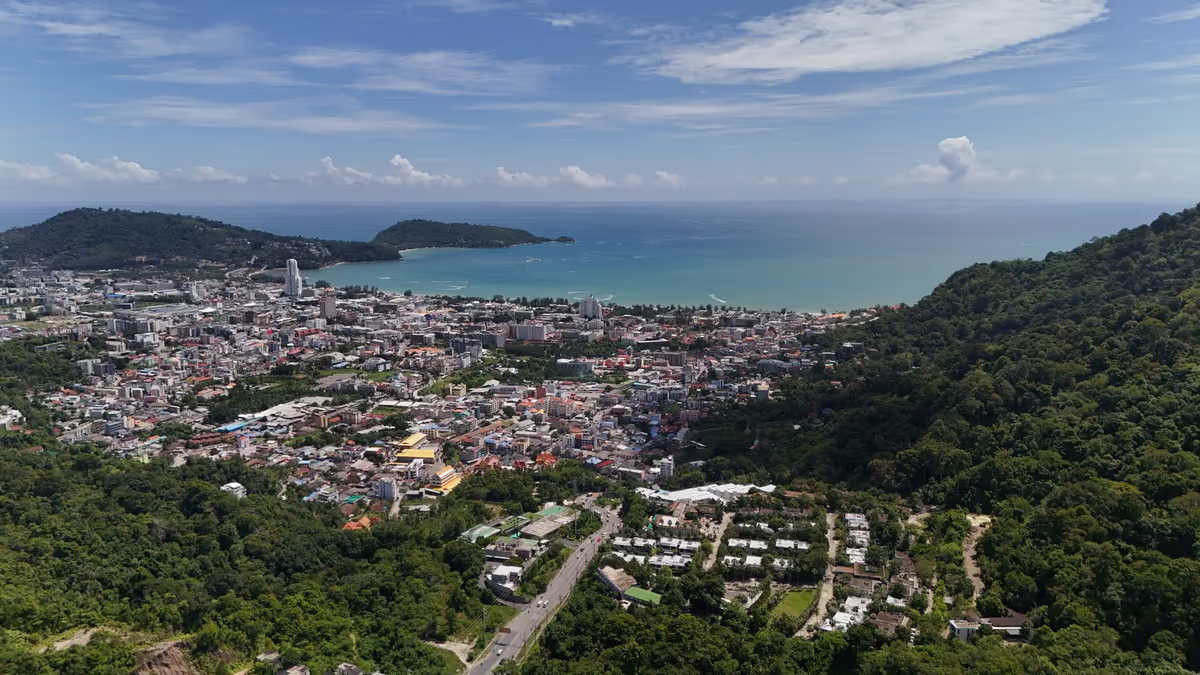
Phuket solves two problems at once. Foreign buyers pay, and they pay in cash: no mortgage, just an incoming currency transfer. Margins on resort product are also still higher than on a Bangkok studio.
The price is a different competence. A resort property is sold on management, not floor plans: occupancy, booking channels and how the building is maintained five years after handover. A Bangkok developer arrives with experience that helps only partly.
Where the usual logic breaks
The common belief is that a large listed developer means safety. That holds for completion risk and little else.
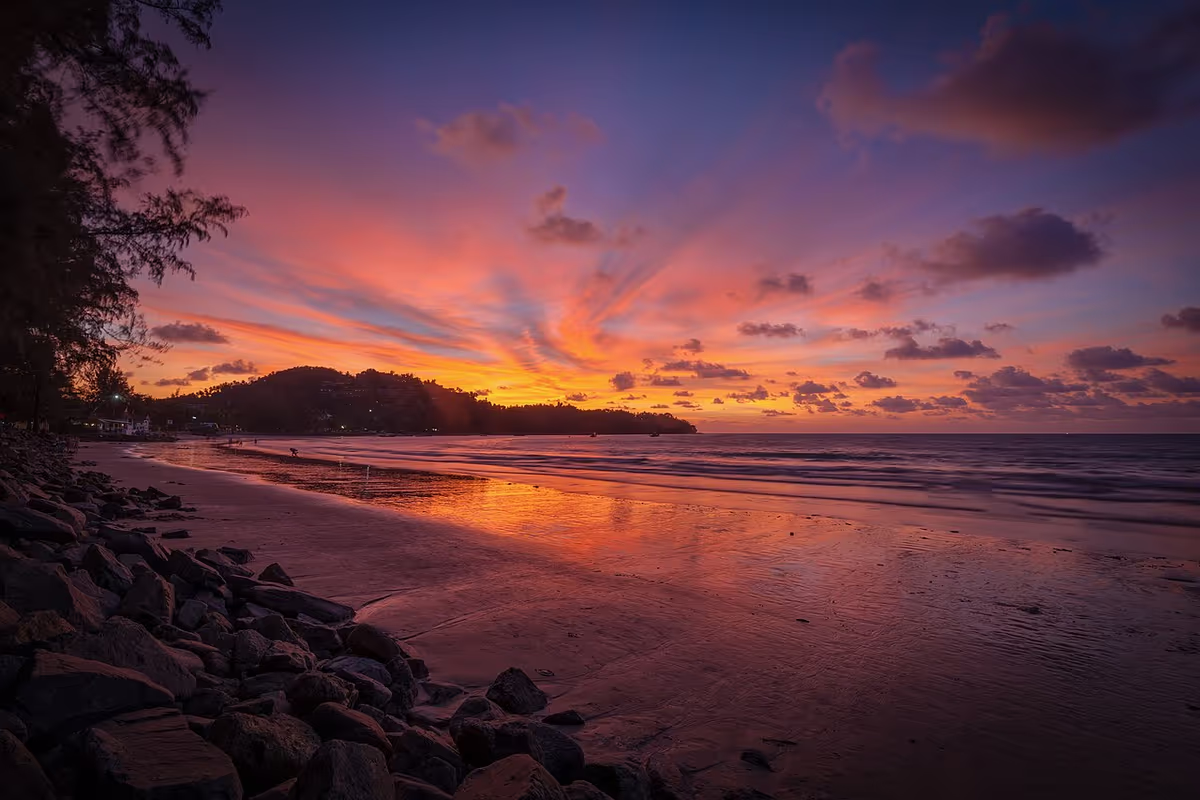
A megaproject by definition puts several hundred, sometimes over a thousand, identical units into one location. When they hit the short-term rental market together, they compete mainly with each other. An owner who bought expecting 7% a year can find a neighbor in the same building cutting rates by 20% to survive low season.
Guaranteed-yield programs deserve the same scrutiny. A promised 6-8% for 3-5 years is almost always already built into the purchase price. You pay for the guarantee up front, as a premium to market, and when it ends you own an asset worth what the next buyer will pay, and that buyer is not counting on a guarantee.
The 49% quota is the third trap. In a project that sells well, foreign freehold runs out within months. After that comes leasehold, a fundamentally different asset in terms of resale liquidity, even if the brochure shows it as a line in small print.
What buyers should do
Entering a megaproject makes sense only in the first phase, on freehold, at a discount of at least 15% to comparable completed stock in the same district, with a payment plan that pushes the main installment toward handover. If any one of these conditions fails, a completed unit in an established rental area such as Rawai, Nai Harn or Kamala delivers comparable cash flow without two years of construction risk.
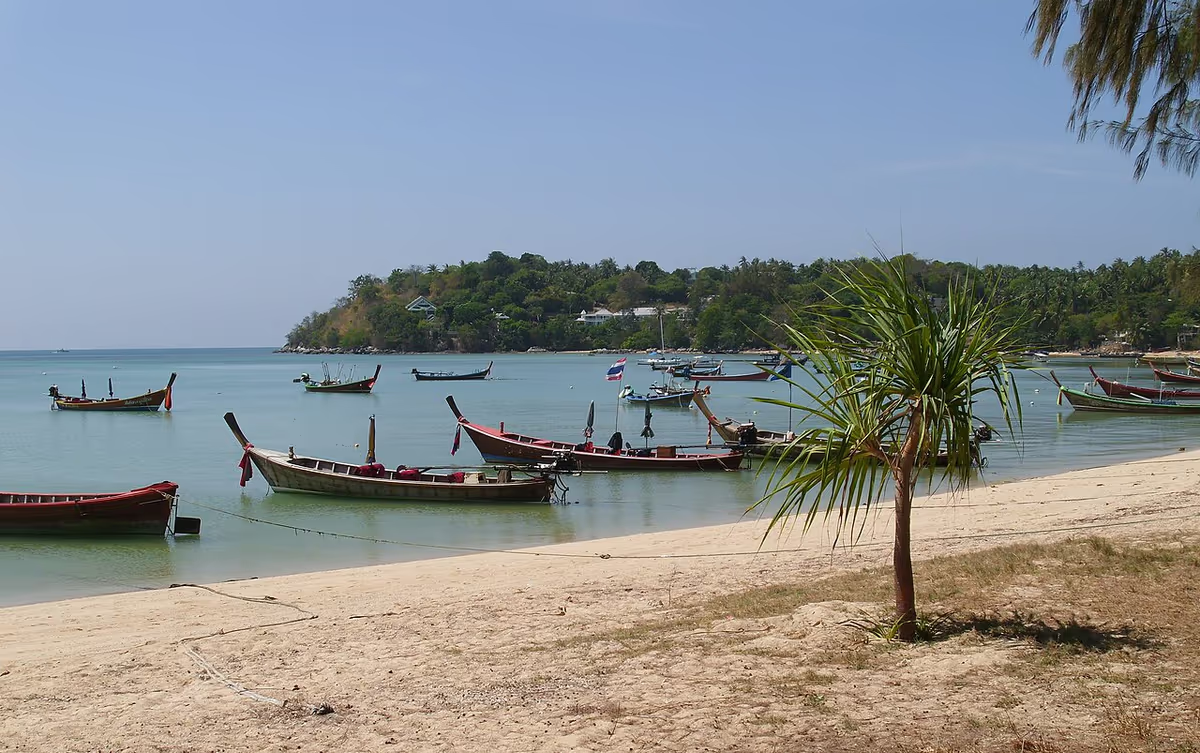
With a budget under 5 million baht, the strategy matters less than the specific building and its management company.
Finally, visit in person, in low season and in the rain. Check the road to the beach at rush hour, not on a render. Combining several site visits in four to five days is far cheaper than reselling an apartment bought from a presentation abroad.
FAQ
What is AssetWise's 18.5 billion baht target?
It is the company's full-year 2026 revenue target. With 6,854 million baht in sales booked by end-March, about 37% was already achieved. The number signals the scale of planned supply, not the quality of any individual building.
Is it worth buying at the launch of a megaproject?
Yes, if the discount to completed property in the same area is 15% or more, freehold is available and payments are weighted toward handover. Without those conditions, the early phase carries risk without compensation.
Why can't foreigners always get freehold?
Thailand's Condominium Act caps foreign ownership at 49% of a building's saleable area. The rest goes to Thai buyers or is offered to foreigners as a 30-year leasehold with renewal terms.
What is the real rental yield in Phuket?
Net yield after management fees, utilities and taxes typically falls in the 4-6% range. Figures of 8-10% in sales presentations are usually calculated before costs or rely on a guaranteed period.
Is a new build or a completed unit safer?
A completed unit removes construction risk and earns income immediately. A new build offers a lower entry price and installments. For a first purchase in Thailand, a completed property with at least two seasons of rental history is the safer choice.
What taxes and fees does a buyer pay?
A 2% transfer fee on assessed value (usually split by agreement), 0.5% stamp duty, or a 3.3% specific business tax instead of stamp duty on resale within five years. Add a sinking fund contribution and monthly maintenance fees.
Is Phuket at risk of oversupply?
The risk is local rather than islandwide. Overheating is most visible in the Bang Tao to Layan corridor, where the most projects launched at once. Districts with limited land and established demand hold up better.
How do I check a developer before buying?
Review the listed company's filings on the Stock Exchange of Thailand website, the list of completed projects with actual handover dates, the construction permit and EIA for the specific plot, and the contract's penalty terms for late delivery.
Source: The Nation Thailand
Ready to invest in Thailand? Our experts will help you find the perfect property.
Which area of Thailand suits you best?
We will match properties in locations that fit your goals.
What is your goal?