

Photo by Reyney Poojary on Pexels
Phuket Retail Supply Set to Jump 30%: What It Means for Rents and Yields in 2026
This material was prepared with the help of artificial intelligence and checked by a person. Editorial responsibility: Aster Of Asia Co., Ltd..
Responsible for content: Leonid Ustinov, Aster Of Asia Co., Ltd.
Aster of Asia editorial team
Walk down Boat Avenue in Cherng Talay on an evening in June rather than January. Half the shopfronts are lit, half the cafes are empty, and in the new community mall next door several units have never opened since handover. That is roughly what Phuket commercial property faces over the next two to three years: 30% more retail space without a matching increase in paying tenants.
The forecast of roughly 30% growth in organized retail supply on Phuket was published by Bangkok Post, citing consultancy market estimates. It covers shopping centers and community malls, meaning lettable area (GLA), not shophouses or condo podiums. New projects will be delivered over several years, not in a single season.
The takeaway for investors is simple: in weak locations rents will drift down, and in strong ones they will hold flat. If you modelled commercial yields above 8% a year in a new project with no tenant in place, rerun the numbers with 4-6 months of vacancy per year.
We will shortlist properties for your budget
Pick a range and we will send a shortlist with prices, layouts and payment plans within 24 hours.
Quick Answer
- Organized retail supply on Phuket is forecast to grow by about 30% (market estimate cited by Bangkok Post, measured by lettable area of shopping centers and community malls).
- The hardest hit will be secondary locations and new condo podiums, where vacancy and tenant discounts are most likely.
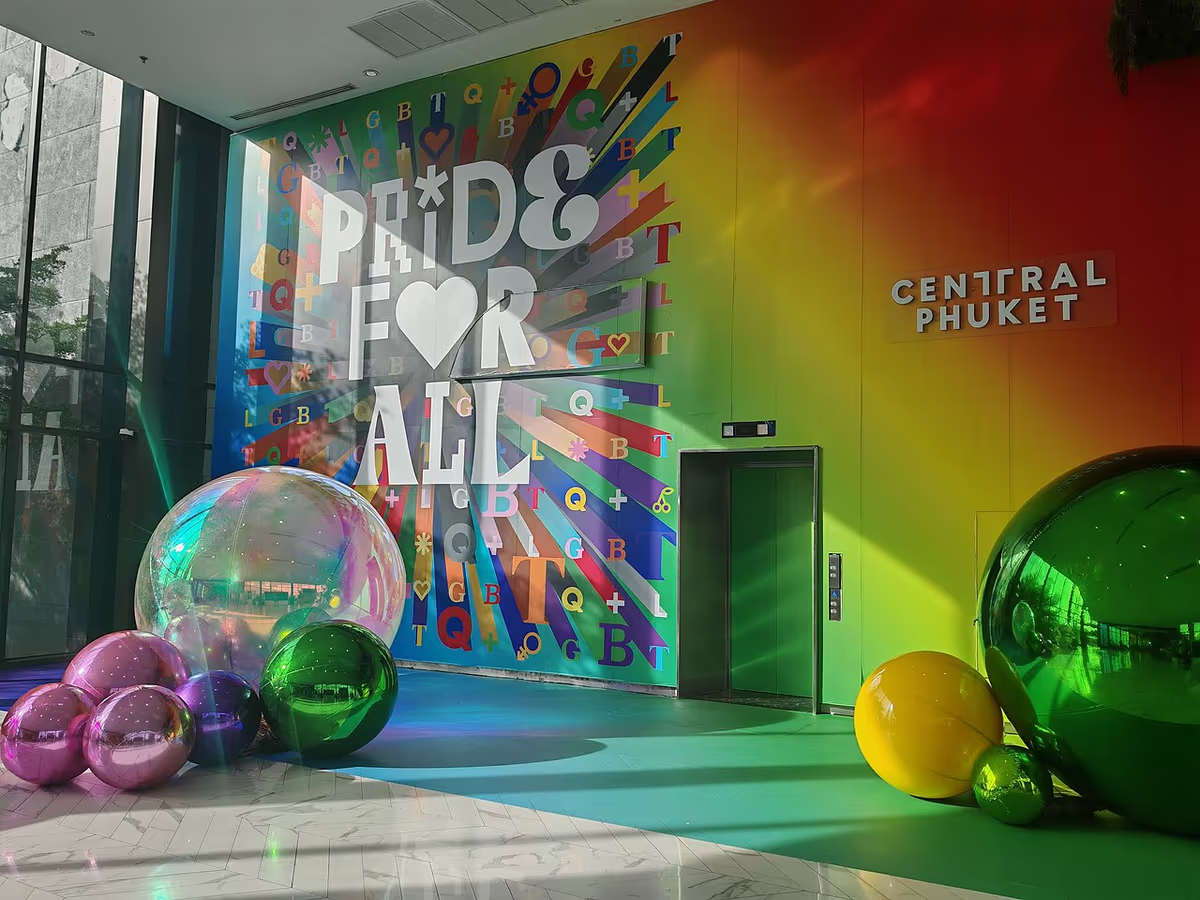
- Strong nodes, Patong, Cherng Talay/Bang Tao, Central Phuket and the 4027 corridor near Thalang, should hold headline rents, but negotiating for a rent-free period will become the norm.
- Realistic net yield on quality Phuket retail today is 5-8% a year with year-round occupancy; marketing claims of 10-12% rely on high-season income only.
- Foreigners cannot own land under commercial property directly. The options are a leasehold of up to 30 years, a Thai company, or a unit registered under the Condominium Act.
- The best protection is a tenant already in place under a signed lease, not new space sold on promised footfall.
Key Facts
- Forecast: Phuket retail supply growth of about 30%, per Bangkok Post (Property section), citing market analytics.
- Modern retail stock on the island is estimated at roughly 0.5 million sq m of GLA; the largest cluster is Central Phuket (Festival and Floresta).
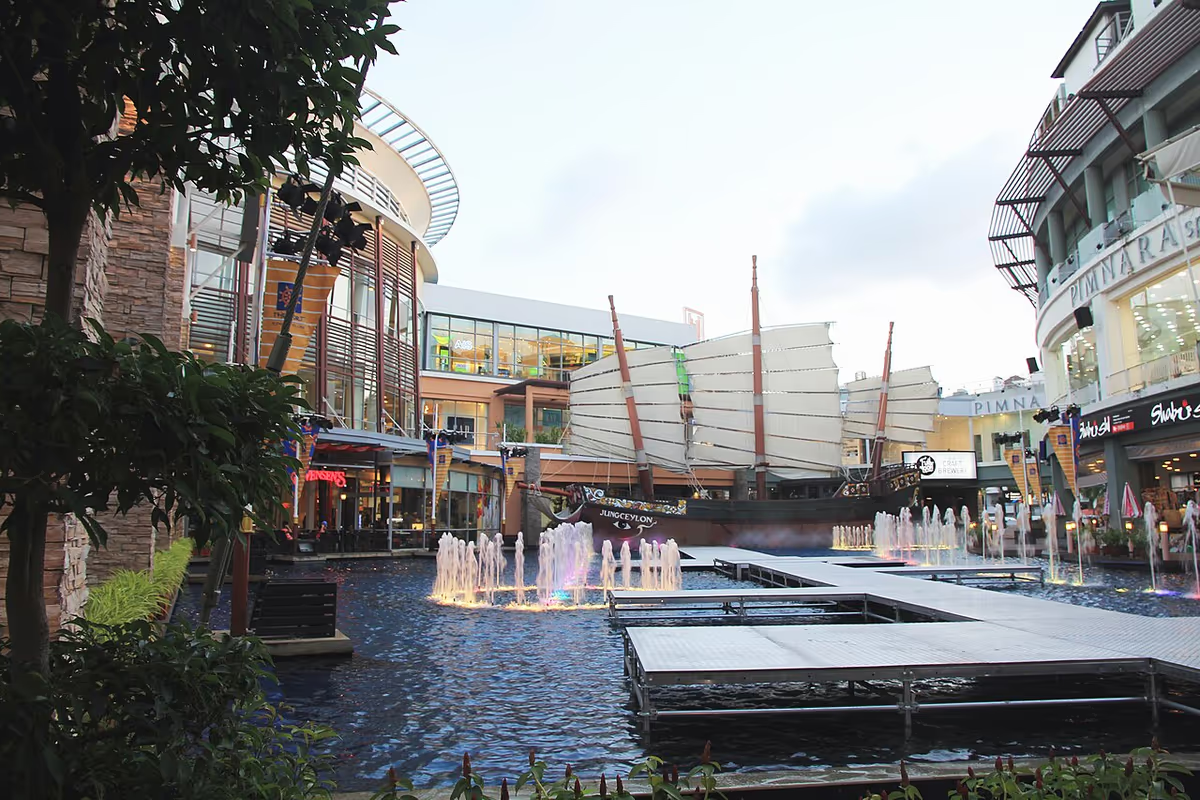
- Jungceylon in Patong completed a major renovation and returned to the market in phases in 2023-2024, so competition comes from refreshed space as well as new builds.
- New construction is concentrated on the west coast and in Thalang: Bang Tao, Cherng Talay and Laguna, where dozens of residential complexes with commercial ground floors have launched in the past five years.
- Phuket receives more than 10 million visitors a year, but flows are uneven: a tenant's revenue in February versus September can differ by a factor of 2-3.
- Street-retail rents in tourist zones are estimated at 600-1,500 THB per sq m per month; in community malls away from the first line they are lower, and turnover-based rent is more common.
- Foreign ownership of commercial units in registered condominiums falls within the 49% foreign quota of total building area.
- Context from Residence Index (2026 outlook): demand is increasingly selective, with premium west-coast areas (Bang Tao, Layan, Cherng Talay, Kamala, Surin) holding up better than oversupplied low-season condo segments.
- Residential rental benchmarks from aiproperty-phuket.com (2026): long-term rental nets about 4-6% after a 25-30% operating cost stack, and licensed short-term rental about 5-8% net at blended occupancy above 65-70%.
Why 30% Is a Lot for Phuket
Thirty percent on top of existing stock sounds abstract until you compare it with the tenant base. Phuket is not Bangkok: there is no deep layer of national chains needing twenty new addresses at once. The island's tenants are cafes, pharmacies, clinics, salons, scooter-rental agencies, a couple of supermarket chains and food-and-beverage operators serving tourists and expats.
When space grows faster than the number of operators, the market does not absorb it. Tenants simply relocate. A strong tenant leaves an older mall for a new one that offers three months free and a shell-and-core handover. The owner of the old property does not see a lower rate in the contract. They see an empty unit and six months of searching.
Single-unit owners underestimate this mechanism most often. A large mall survives losing two tenants. An investor with one 60 sq m unit loses the entire cash flow.
What Happens to Rental Rates
Contract rates will probably barely move. Thai owners are very reluctant to cut the headline price, because it damages the property's valuation and sets a benchmark for neighbors.
The decline arrives in hidden form, and that is what you must price into real yield:
- rent-free periods grow from the usual one month to three to six months;
- landlords start paying for basic fit-out and electrical capacity;
- deposits shrink from three months to one or two;
- leases appear with part of the rent tied to the tenant's turnover;
- terms get shorter: a one-year lease with a renewal option instead of three years.
Recalculate any seller's forecast with a simple formula: annual rent minus incentives minus vacancy. A unit advertised at a 9% yield with three free months and one month of downtime delivers about 6%. That is what quality residential rental earns on Phuket, with far less hassle.
Why 'Tourism Will Absorb It' Does Not Hold
This is the most common argument in commercial project presentations on the island: tourist numbers rise every year, so more shops are needed. The data points elsewhere.
First, demand has changed shape. A large share of visitors travel on packages and spend in hotels and big malls, not in street-level galleries at residential complexes. Second, a west-coast tenant's real earning window is about five to six months. From May to October many outlets barely break even or close. Tenants know this and use it to ask for discounts.
The third point hurts owners of units in new residential projects most. A condo's commercial ground floor is sold on the story of a guaranteed stream of residents. But a 300-apartment complex may have 200 people in residence in winter and 40 in summer. That is not enough for one cafe, let alone five units in a row.
Where Commercial Property Still Makes Sense
In 2026, look only at assets with footfall you can verify with your own eyes, not from a brochure. Visit on a weekday in September, stand at the entrance and count people for an hour. If you plan a trip covering several addresses, base yourself near the zone you are evaluating rather than commuting from the south of the island to Thalang in morning traffic.
What genuinely works:
- units with an existing chain tenant and at least two years left on the lease, even at a 10-15% premium to market;
- street retail on routes locals use year-round: near schools, hospitals, large supermarkets and along Thepkrasattri;
- clinic, dental and wellness premises, where tenants invest heavily in fit-out and therefore stay;
- small warehouses and showrooms in Thalang serving the construction boom, where demand is more stable than tourist-driven demand.
What I would not buy: a commercial unit in a brand-new condo project at launch, sold with a two-year income guarantee. The guarantee expires, the developer moves on, there is no tenant, and reselling into a falling market is close to impossible. A 25-30% discount to purchase price is common.
How Foreigners Structure the Purchase
Foreigners cannot buy the land under a commercial property. In practice there are three routes, each with its own cost.
A 30-year leasehold registered at the Land Department is the most transparent path. The next 30-year extension is not automatic and must be documented again, and the asset loses value as the term shortens. For commercial property with a 12-15 year payback this is tolerable, but residual value should be assumed close to zero.
A Thai company with up to 49% foreign participation works if the company conducts real business, files accounts, is a registered taxpayer and has employees. Structures using nominee Thai shareholders who contributed no capital contradict the law, and enforcement on Phuket has tightened noticeably in recent years. Do not build an investment plan on them.
The third route is a commercial unit registered as a condominium unit. A foreigner can then hold it freehold within the 49% foreign quota of building area. Such units are few and must be sought out deliberately.
Our Recommendation
For the next two to three years Phuket retail will be a tenant's market. Buying new, empty space on the promise of future footfall means paying for someone else's optimism. Buy cash flow that already exists, or stay out of this segment.
One exception to all of the above: if your budget is 10-12 million THB and you need predictable income, commercial property is not the right fit. In that range a residential unit in a managed west-coast project delivers comparable yield with far less vacancy risk.
FAQ
How much will retail supply grow in Phuket?
By about 30% relative to current lettable area in shopping centers and community malls (market estimate cited by Bangkok Post). This is a cumulative effect of the announced pipeline, not an annual rate.
Will rents in Phuket fall?
Headline contract rents will slip only slightly. Effective rent will fall through longer rent-free periods, landlord-funded fit-out and shorter leases. For an investor, that is the same as a lower yield.
What is the real yield on commercial property in Phuket?
With a year-round tenant and careful cost accounting, the market benchmark is 5-8% net a year. Figures of 10-12% usually come from developer income guarantees or from calculations based on high-season rates.
Can a foreigner buy commercial property in Thailand?
Yes, but not the land. The three options are a registered leasehold of up to 30 years, purchase through a Thai company with genuine operations, or freehold of a commercial unit in a registered condominium within the 49% quota.
Is a ground-floor shop in a new condo worth buying?
In most cases, no. Resident numbers are low in the off-season, and competition between neighboring units in the same project depresses rents. The exception is a project on a busy road where footfall passes by rather than coming from inside the complex.
Which Phuket areas are least exposed to the supply increase?
Patong with its dense pedestrian traffic, the Central Phuket zone, Cherng Talay with its stable expat community, and the Thepkrasattri corridor, where year-round demand comes from local residents.
What should I check before buying a commercial unit?
The existing lease and the tenant's payment history, allocated electrical capacity, permitted use for the intended business, common-area charges, and real foot traffic on a low-season weekday.
How much does seasonality affect commercial rents?
On the west coast, tenant revenue in the low season can fall by a factor of 2-3. Tenants cite exactly this when asking to renegotiate, so an owner's budget should withstand at least three to four months a year without income.
Source: Bangkok Post
Ready to invest in Thailand? Our experts will help you find the perfect property.
Which area of Thailand suits you best?
We will match properties in locations that fit your goals.
What is your goal?