

Photo by Markus Winkler on Pexels
Thailand's 1,000 Baht Departure Fee: What Changes for Residents in 2026
This material was prepared with the help of artificial intelligence and checked by a person. Editorial responsibility: Aster Of Asia Co., Ltd..
Responsible for content: Leonid Ustinov, Aster Of Asia Co., Ltd.
Aster of Asia editorial team
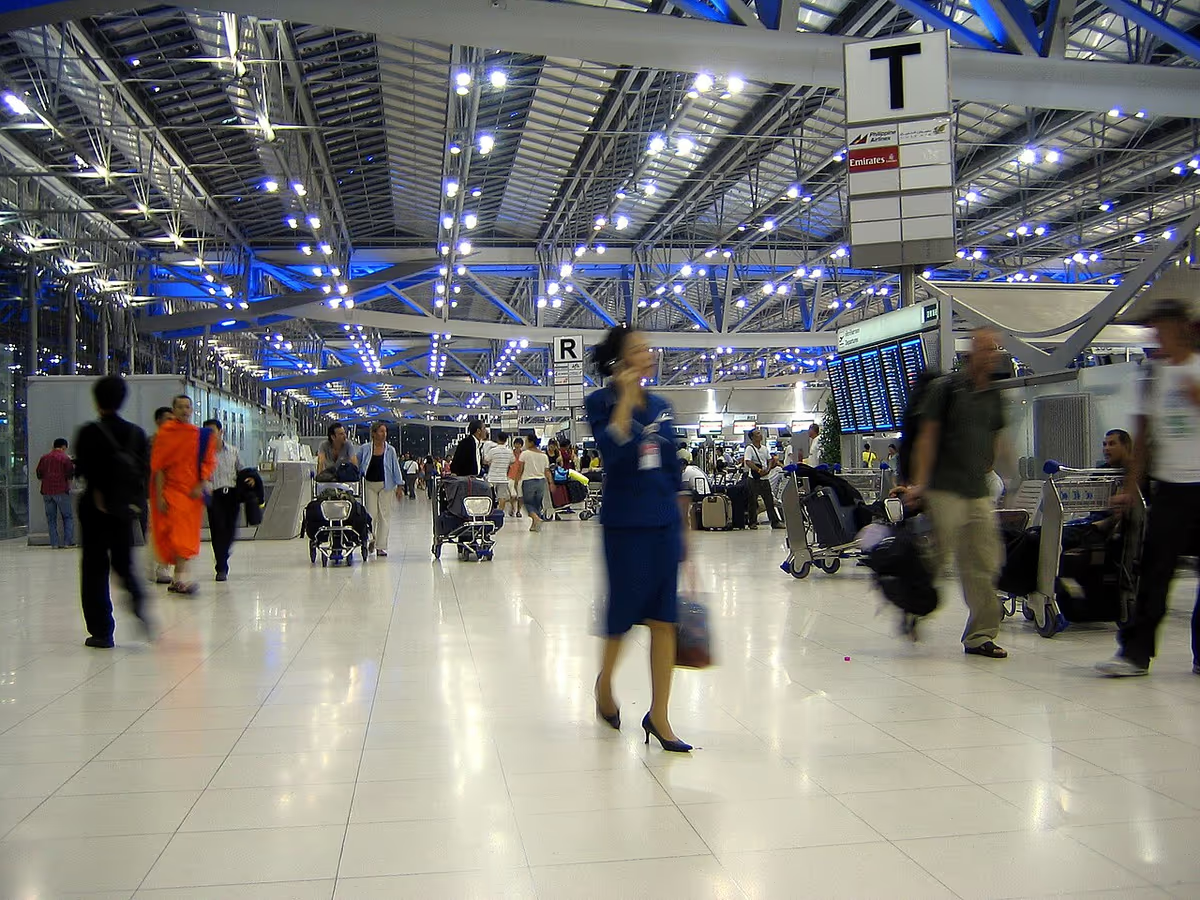
A family of four flies out of Suvarnabhumi for the New Year holidays. The ticket price now carries an extra 4,000 baht that was not there a year earlier. No separate counter, no receipt: just another line in the taxes and fees.
That is how the proposed fee for leaving the kingdom is designed to work. Under the draft rules, every international departure by air would be charged 1,000 baht, collected by airlines and ticket agents together with the fare.
Everyone pays: tourists, long-stay visa holders, LTR and Elite members, and Thai citizens alike. The draft makes no exceptions by nationality.
The public consultation closed on 29 October 2026. Next come adoption of the act itself and secondary regulations on how the fee is collected. For anyone who flies around the region often, that is where the details will matter.
We will shortlist properties for your budget
Pick a range and we will send a shortlist with prices, layouts and payment plans within 24 hours.
Key Facts
- The draft departure tax was open for public consultation from 30 September to 29 October 2026.
- The base rate in the draft is 1,000 baht per international departure by air, per person.
- The law sets a cap of 5,000 baht, the maximum the rate can reach without amending the act itself.
- The fee is not handled by immigration officers or airports: airlines and ticket sellers collect it as part of the fare.
- Exits by land and sea are exempt in the first phase. Buses and minivans to Malaysia, Laos and Cambodia, as well as ferries and yachts, do not pay.
- The fee does not depend on citizenship or visa type: Thais, expats and transit passengers are treated the same in the draft.
- Bangkok Post reports that the 1,000 baht rate would be set by ministerial regulation under a 1983 law, with the 5,000 baht ceiling built into that framework.
Story and Context
Thailand has had an airport departure charge before, and a whole generation of expats remembers queuing at a cash window: 700 baht for an international flight, 100 for a domestic one. In February 2007 it was folded into the ticket price, the counters were removed, and passengers stopped noticing it. The new fee follows the same logic: the state does not want to see a cashier or a paper slip.
The parallel story is far less convincing. A separate entry fee, 300 baht for arrivals by air and 150 for those crossing by land, has been discussed since 2022. It was announced, postponed, announced again and postponed again. No tourist has ever paid it. Hence the main argument of the sceptics in Phuket chat groups: wait, the departure fee will be put off indefinitely too.
The picture is still moving. Pattaya Mail has reported that the 1,000 baht charge is not being collected at Thai airports yet, and that any move would need new official action and an announcement. Tourdom reports that the Finance Ministry has delayed the proposal, citing the need not to hinder tourism growth, along with Middle East tensions and fuel costs. The proposal is also separate from the 450 baht entry fee the Tourism and Sports Ministry plans for 2027. So treat the 1,000 baht as a proposal that is paused, not cancelled.
Still, the technical side explains why this one may fare better than the entry fee. The entry fee required building a whole mechanism from scratch: who collects the money at the border, how it is accounted for, how it funds insurance for tourists. A departure fee requires none of that. Airlines already charge passengers fuel surcharges, airport taxes and VAT. One more line in the fare is a tariff table update, not an infrastructure project.
It also helps to see the bigger picture. The Nation Thailand notes that foreign visitors could face up to 2,570 baht in combined travel fees. That figure combines the already-increased international passenger service charge of 1,120 baht per passenger, the proposed 450 baht foreign tourist fee for air arrivals, and the proposed departure fee.
Now, who feels it in the wallet. For someone flying to Europe in business class once a year, 1,000 baht is noise. For people living in Thailand who hop around the region on budget carriers, the arithmetic is different: on a 3,000 baht ticket to Kuala Lumpur, the fee adds a third to the price. Six departures a year means 6,000 baht that was not in the budget. If you are planning a series of regional trips next year, compare flights in advance and see how the total taxes line changes once a rate starts to apply.
The land and sea exemption in the first phase creates an obvious distortion. Leaving for Laos over the bridge at Nong Khai or for Malaysia via Sadao would stay free, while flying the same route would carry the fee. People who regularly renew their stamps will simply switch to buses. A gap like that rarely lasts, and it is reasonable to expect a second phase that extends the fee to land and sea checkpoints.
The obvious hack, buying tickets in advance before the law takes effect, is unreliable. The secondary regulations will decide how it applies, and the fee could be tied to the date of departure rather than the date of ticketing. I would not build an annual travel budget on that assumption.
Keep the 5,000 baht figure in mind. Because the cap is written into the law, raising the rate from 1,000 to two or three thousand would not need a new act. Today's 1,000 baht is less a final amount than a starting point.
If you fly out of Thailand fewer than three times a year, you can stop reading here: the news will cost you less than one dinner in Bangkok.
FAQ
How much will I pay to leave Thailand by air?
1,000 baht per person for each international departure by air under the draft. The act sets a ceiling of 5,000 baht, but the starting rate is 1,000 baht.
When will the fee start?
There is no confirmed date. The public consultation ended on 29 October 2026, and adoption of the act and secondary regulations on collection come next. Local reports say the fee is not being collected at airports yet. Watch for airline notices about changes to fare structures.
Do expats on long-stay visas and LTR holders pay?
Yes. The draft has no exceptions by nationality, visa type or resident status. Thai citizens pay the same.
Do I need to go to a separate counter at the airport?
No. Airlines and ticket sellers collect the money together with the fare. No separate cash desk is planned.
Does the fee apply to leaving by land to Laos or Malaysia?
Not in the first phase: land and sea checkpoints are exempt. But the exemption is presented as temporary, so it is unwise to count on it for years.
Do children pay?
According to the draft text, the fee is tied to the fact of an international departure by the passenger, and no separate child concessions are written in. The secondary regulations will clarify. It is worth checking before buying tickets for a large family.
What about transit passengers?
This is the most debated part of the mechanism. For a passenger who stays in the transit zone, a departure is formally still an exit from the kingdom. The collection rules, not the draft itself, will settle the details.
How will it affect budget airline prices?
More than long-haul fares. On a 3,000 baht ticket, 1,000 baht is about a third of the price; on a 25,000 baht ticket, about four percent.
What to do right now: recalculate your yearly flight plan out of Thailand and add 1,000 baht for every departure of every family member. If the total comes to more than 10,000 baht a year, it may make sense to shift some regional trips to land routes while the first-phase exemption lasts.
Source: Bangkok Post
Ready to invest in Thailand? Our experts will help you find the perfect property.
Let us calculate the full cost of your deal
We will find options with transparent costs and taxes for your budget.
What is your goal?