

Photo by Follow Fauzia on Pexels
Leasehold in Thong Lor: 30 Years Instead of Freehold, and 25% Off the Price
This material was prepared with the help of artificial intelligence and checked by a person. Editorial responsibility: Aster Of Asia Co., Ltd..
Responsible for content: Leonid Ustinov, Aster Of Asia Co., Ltd.
Aster of Asia editorial team
Two new projects on Sukhumvit 55 sit just 200 metres apart. In the first, a square metre sells for roughly 300,000 THB. In the second, it goes for 230,000 THB. Layouts are comparable and both have an international management company. The whole difference comes down to one line of the contract: in the second project, the buyer doesn't get ownership but a registered 30-year lease.
Developers in Thong Lor are moving to leasehold not because it benefits buyers, but because the best plots in this neighbourhood aren't for sale. The land belongs to Thai family holdings and large land funds. They will lease a plot long-term, but they won't sell it. A developer who wants to build here specifically has no alternative.
For a foreign buyer this isn't a catastrophe, just different maths. The entry price is lower and the yield per baht invested is higher, but the asset doesn't appreciate indefinitely. It decays as the lease term shrinks. And the promise to extend the lease for another 30 years is legally weaker than it looks in a sales presentation.
We will shortlist properties for your budget
Pick a range and we will send a shortlist with prices, layouts and payment plans within 24 hours.
Quick Answer
- Leasehold in Thailand is capped at 30 years under Section 540 of the Civil and Commercial Code. Leases longer than three years must be registered with the Land Department, otherwise they are enforceable for only three years.
- The discount to freehold is roughly 20-30% for comparable units in the same area and class. In premium Bangkok neighbourhoods the discount sits near the lower end, because freehold quotas there are sold out.
- The foreign ownership quota in a condominium is 49% of the saleable area of the building. Once the quota is used up, a foreigner is left with either leasehold or a Thai company.
- Leasehold registration costs: 1% of total rent payable over the full term plus 0.1% stamp duty. For freehold, the base transfer fee is 2% of the appraised value.
- The '30+30+30' structure does not create a real right to renewal. Thai courts have consistently treated a renewal option as a personal obligation of the specific lessor, not a burden running with the land.
- As of early 2026, no 99-year lease law has been passed. The idea was discussed in 2024-2025 together with raising the quota to 75%, then pulled from the agenda amid political criticism.
Key Facts
- Thong Lor (Sukhumvit 55) is one of the most expensive residential corridors in Bangkok by land price. Market estimates put plots in the area and neighbouring Ekkamai at 1.5-2.5 million THB per tarangwa (1 tarangwa = 4 sq m), yet outright sales are rare because owners prefer to lease.
- Record Bangkok land prices are not in Thong Lor but around Phloen Chit and Wireless Road, where valuations have exceeded 3.5 million THB per tarangwa. That is why long-term land leasing reached the capital earlier than the resort provinces.
- Premium Bangkok projects usually structure the lease as 30 years with renewal options.
- Foreigners cannot own land directly in Thailand under the Land Code. Exceptions such as the 40 million THB BOI investment route are used extremely rarely in practice.
- On Phuket, villas are often sold as leasehold: the land under most resort projects stays in Thai hands, and the foreigner gets a 30-year lease plus ownership of the building itself.
- Gross rental yields on Phuket condominiums are estimated at 5-7% a year before management costs and taxes. In central Bangkok they run closer to 4-5.5%.
- Market data on pricing: a 2026 Phuket market review reports leasehold units can be around 15% cheaper than freehold at comparable rental income, and some developments offer free lease renewal as a selling point.
- Nominee crackdown: according to the Bangkok Post, around 60% of Phuket villas and about 90% of those on Koh Samui and Koh Phangan were previously bought by foreigners through nominee structures, which is pushing buyers toward leasehold and condominiums.
Why Thong Lor land stopped selling
The neighbourhood was built up from the 1960s and 70s as a district of affluent Thai family residences. Plots were passed down through inheritance, split between relatives, then pooled again inside family companies. Selling such an asset means paying a one-off tax, quarrelling with heirs, and giving up rental income that arrives year after year without effort.
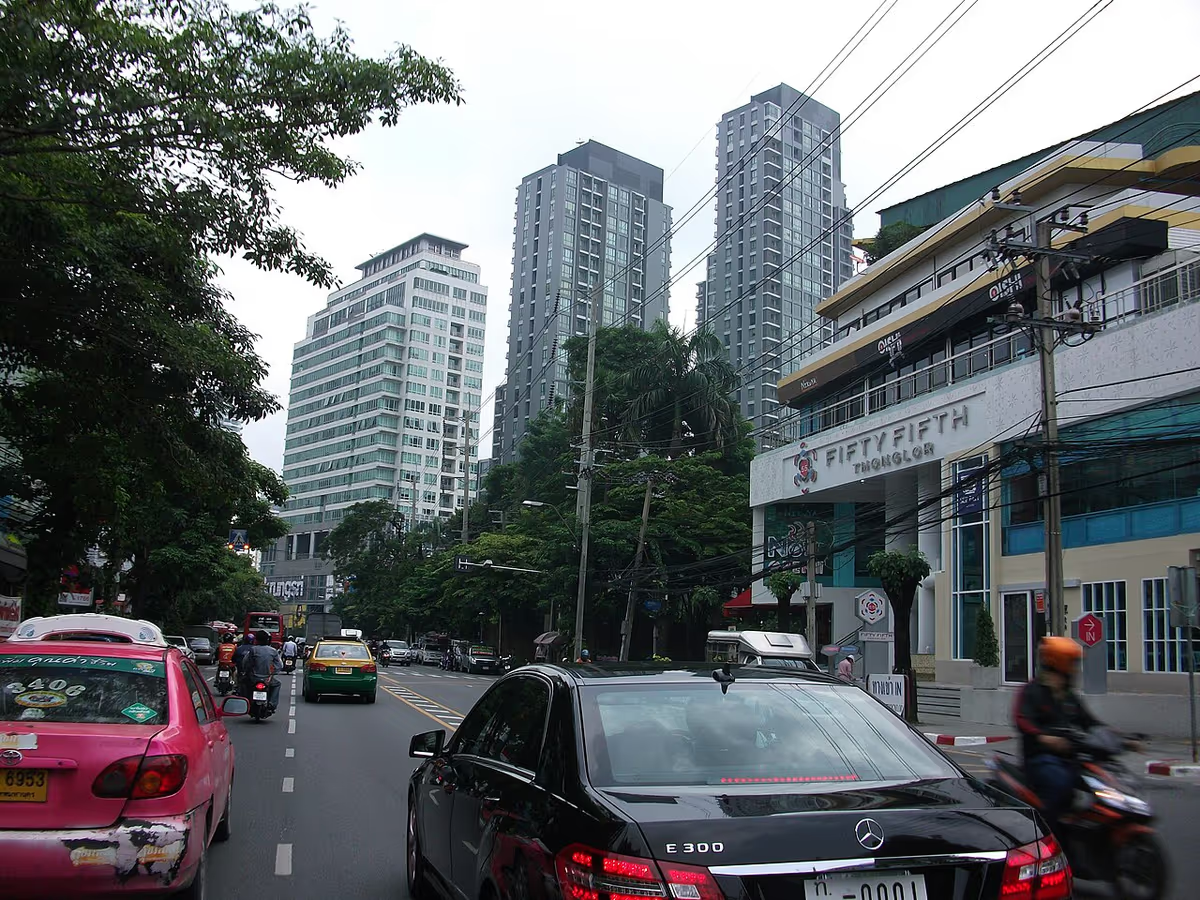
For the developer, paying for land through rent isn't bad either. It avoids freezing 2-3 billion THB in land and spreads the cost over the life of the project. On paper the financial model looks better, with a higher IRR and a lower entry threshold.
The end buyer pays for this. Not at the moment of purchase, but 15-20 years later when it's time to sell.
What the discount really costs
The main mistake in the calculations is this. The buyer sees 25% off and thinks they've won. In reality they've bought an asset with a finite life. By year 20 of the lease, 10 years remain, and the resale market narrows to buyers who see pure cash flow rather than a way to preserve capital.
Valuers work on a simple rule: the residual value of a leasehold falls non-linearly. The first 10 years cost the asset relatively little, while the last 10 take almost everything. If you plan to exit in 5-7 years, a 25% entry discount works in your favour. If you're buying for your children, a leasehold with 28 years remaining is a poor idea, and no discount fixes that.
Our view: for rental investment with a horizon of up to 10 years, leasehold in Thong Lor is justified, because yield is calculated on a smaller base and tenants don't care how you hold title. For everything else, choose freehold. There's one exception: if your budget doesn't stretch to a freehold quota unit in a location that is non-negotiable for you, leasehold is the only honest door in.
What does not work: the 30+30+30 formula
This is the most persistent myth in the market. A seller shows a contract with two renewal options and talks about 90 years of ownership. Legally there are no 90 years.
Only the first 30 years can be registered at the Land Department. The renewal option remains an obligation of the specific lessor under the contract. If the plot is sold, inherited, or pledged and passes to a bank, or if the lessor company is liquidated, the new landowner isn't bound by that option. Thai case law has repeatedly confirmed that a renewal right is personal and doesn't automatically follow the land.
Some structures try to strengthen this, for example a 'protected leasehold' where buyers hold voting rights in the land-owning company to support renewals. That helps, but it's a contractual and corporate safeguard, not a statutory right.
None of this means renewals never happen. With a large institutional lessor that holds dozens of plots and cares about its reputation, the odds are high. With a family trust where eleven heirs will be arguing in 25 years, they're noticeably lower. That difference is worth more than any per-square-metre discount, and it can only be established by checking the title and the ownership structure of the land.
Also steer clear of a Thai company with nominee shareholders created solely to hold a home. The Department of Business Development periodically audits such companies for genuine business activity and for the source of capital of the Thai shareholders. The risk is regulatory, not hypothetical.
Phuket: the same structure, cheaper land
Leasehold has existed on Phuket for a long time, but for a different reason. In Bangkok it grew out of a shortage of land for sale; on the island it comes from the direct ban on foreigners owning land under villas. The standard structure is a 30-year land lease plus ownership of the building itself, documented through a construction permit.
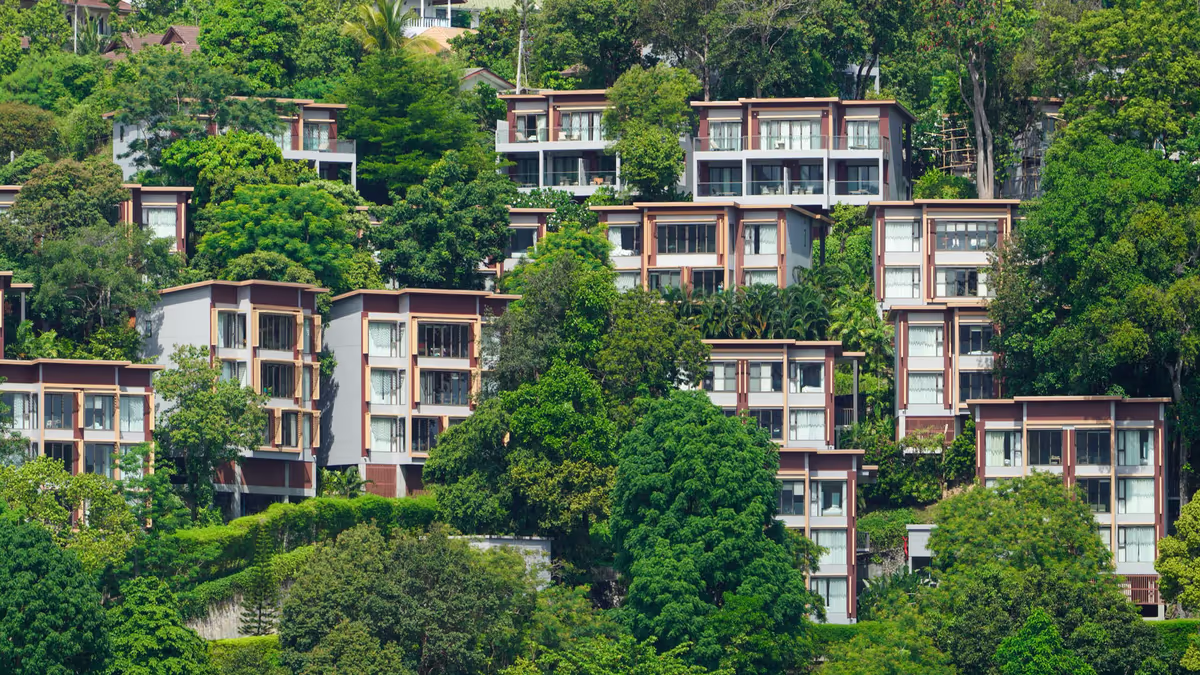
This is sturdier than a bare leasehold on an apartment. The building belongs to you, so in a land dispute you hold your own asset and a negotiating position. But the key question is unchanged: who is the lessor, and what happens to the plot after 30 years.
There's an important difference for investors. On Phuket you can almost always find a condominium with a freehold quota, with entry prices from 4-6 million THB. In Thong Lor there may simply be no comparable alternative in the same location.
A practical tip: you can't judge a form of ownership from a render. Before paying a deposit, spend two or three days in the neighbourhood, including a Friday night. Thong Lor is known for its bars and traffic, which directly affects how easily a particular side of a building can be rented out.
What to check before paying a deposit
- The land title deed (chanote) and the name of the plot owner: an individual, a family company, or an institutional fund.
- The lease term, the start date of the count (from registration or from handover of keys), and whether it is registered at the Land Department.
- The wording of the renewal option: who is obligated, on what terms, at what price, and what happens if the landowner changes.
- Terms for assigning the lease to a third party: whether a separate fee to the lessor applies, whether there is a commission, and whether consent is needed for each transaction.
- How the lease passes on inheritance and what the contract says if the tenant dies.
- The developer payment structure and delivery security. Foreign buyers of Thai property have no escrow-style protection of funds, so the only real protection is a payment schedule tied to construction stages and a contract with late-delivery penalties.
FAQ
What is the difference between leasehold and freehold in Thailand?
Freehold is ownership registered in your name indefinitely. Leasehold is a registered right of use for up to 30 years. When it expires the property reverts to the landowner unless a renewal has been separately formalised.
Can I resell a leasehold apartment?
Yes, through assignment of the lease. But the buyer receives only the remaining term, and the contract may require the lessor's consent and payment of a fee. Read this clause before the deal, not after.
Is a lease always renewed?
No, there are no guarantees. Renewal depends on the landowner's will at that time. Renewals do happen in practice, but a new landowner can't legally be forced to extend unless the option is registered as a burden on the land itself.
Why is leasehold cheaper, and by how much?
Because the asset has a finite life. The typical gap on comparable units is 20-30%. It's smaller in the scarcest Bangkok locations, and for units with almost no lease term left the discount can reach 50% or more.
Has Thailand passed a 99-year lease law?
No. The proposal was discussed in 2024-2025 alongside the idea of raising the foreign condominium quota to 75%, then withdrawn. As of early 2026 the maximum term remains 30 years.
Which is better for rental income: Thong Lor leasehold or Phuket freehold?
On gross yield, resort Phuket often wins thanks to short-term rentals. On stability of income, Bangkok wins, with longer expat contracts and less seasonality. Leasehold raises the calculated yield in both cases but limits your exit horizon.
What taxes and fees apply when registering a leasehold?
A registration fee of 1% of total rent over the full term plus 0.1% stamp duty. The parties often split these costs, but the contract determines who pays.
Is the lease inheritable?
It depends on the contract wording. A well-drafted leasehold expressly provides for the right to pass to heirs for the remaining term. If the contract is silent, the heirs' position is considerably weaker.
Is buying a Phuket villa through a Thai company safer?
No, the risks are higher. A company with nominee Thai shareholders and no real business activity falls under regulatory scrutiny. Leasehold with ownership of the building is more transparent and durable.
Source: Bangkok Post
Ready to invest in Thailand? Our experts will help you find the perfect property.
Ready to take the first step?
Answer 4 questions and we will prepare a personalised selection.
What is your goal?