

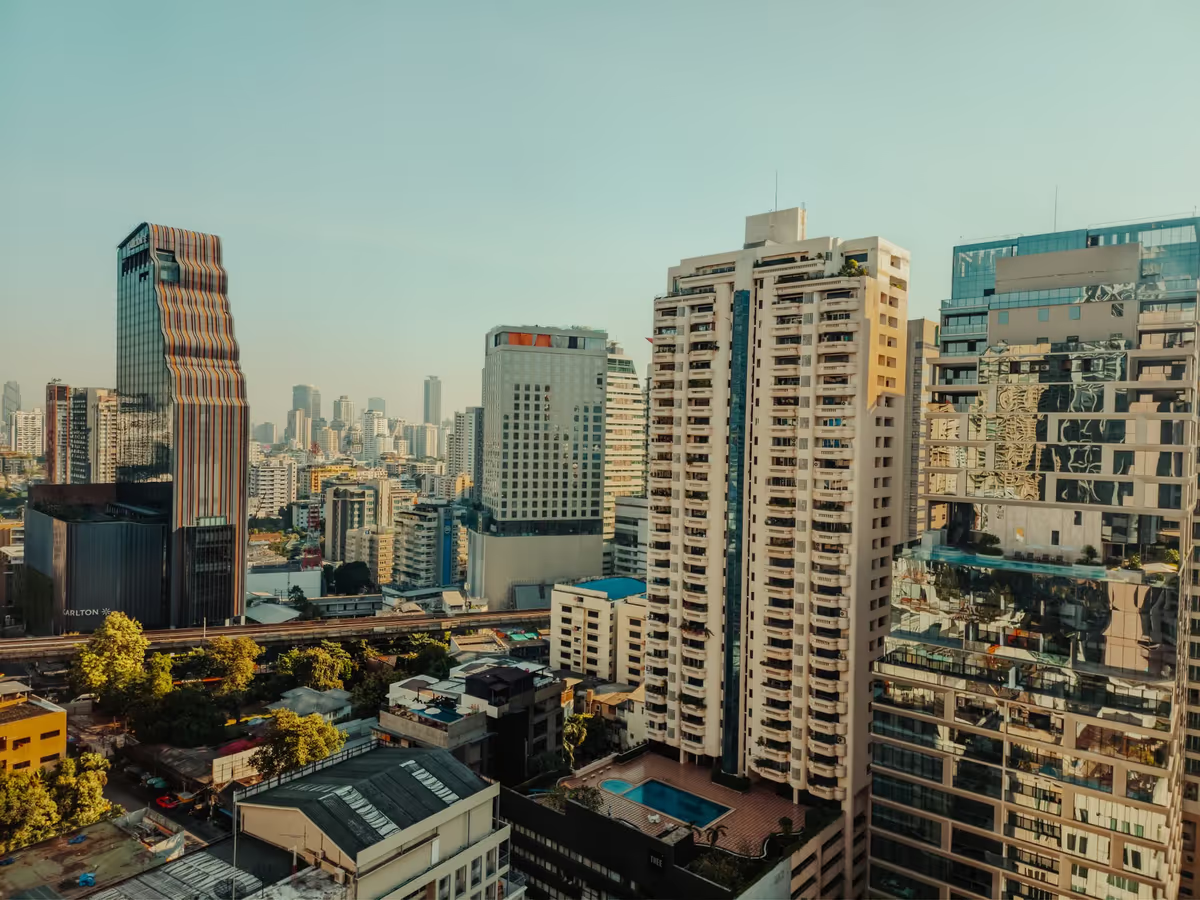
Photo by KATRIN BOLOVTSOVA on Pexels
Nominee Companies in Thailand: 5 DBD Red Flags in 2026
This material was prepared with the help of artificial intelligence and checked by a person. Editorial responsibility: Aster Of Asia Co., Ltd..
Responsible for content: Leonid Ustinov, Aster Of Asia Co., Ltd.
Aster of Asia editorial team
A villa owner in Bang Tao paid 28,000 THB a year for eight years to keep his Thai company's accounting in order. In 2025 he discovered he had been removed from the shareholder list back in 2019: the signature on the meeting minutes was not his. For all those years the villa belonged to people he had met exactly once, at registration.
The direct answer: holding a house with land, or an apartment, through a Thai company is not illegal in itself. What makes a structure illegal is being nominee: Thai shareholders who contributed no funds of their own, received no dividends and have no role in management.
A foreigner can hold a condominium unit in freehold within the 49% foreign quota of total unit area in the building. Land is off the table. For a house with a plot, the workable options are a leasehold of up to 30 years registered at the Land Department, a superficies right over the structure, or a usufruct. A company only makes sense when it runs a real business and pays tax on real revenue.
We will shortlist properties for your budget
Pick a range and we will send a shortlist with prices, layouts and payment plans within 24 hours.
Quick Answer
- Condo freehold is the only full ownership available to a foreigner. The quota is 49% of the combined unit area in the building (Condominium Act, Section 19 bis). Check the remaining quota before paying a deposit, not after.
- Freehold land is effectively unavailable to a foreign individual (Land Code, Section 86).
- Leasehold is registered for up to 30 years. The 30+30+30 structure gives no automatic renewal: the Supreme Court of Thailand treats a promise to renew as non-binding on a new owner if the land is sold or inherited.
- Penalty for nominee holding under the Foreign Business Act (Section 36): up to 3 years in prison and a fine of 100,000 to 1,000,000 THB, plus a daily fine while the violation continues. Separately, under the Land Code the Director-General can order a forced sale of the plot within a set deadline.
- Enforcement is scaling up. The DBD is scrutinising 36,277 foreign-linked landholding entities nationwide, including 31,516 companies with foreign ownership of 49% or less, and now cross-checks company registries against Land Department data.
- Sudden changes of directors and shareholders in 2025-2026 land straight on the radar of the DBD and the DSI. Quietly rewriting the structure yourself no longer works.
Scenarios and Options
Buying to live, budget up to 15M THB. A condominium unit in freehold, within the foreign quota. The most boring and most durable option. You pay a 2% transfer fee on the appraised value (usually split with the seller), receive the title deed in your own name and sleep well. One downside: you do not own the land under the building and depend on the condominium juristic entity as the building ages.

Villa with a plot, long horizon. A 30-year land leasehold plus a superficies or a separately registered right over the structure. Registering the lease at the Land Office costs 1% of total rent over the term plus 0.1% stamp duty. The trade-off is honest: a protected real right with an end date instead of the illusion of indefinite ownership. Heirs receive the remaining term only if the lease says so explicitly, not by implication.
You already hold a company and suspect it is nominee. The worst move is changing directors on your own. Shareholders and directors are summoned to the DBD in person, and someone who left the structure three months ago must explain it to an investigator. The right order is reversed: title and corporate due diligence first, then an exit scenario with lawyers, then re-registration of the asset. In practice this takes at least three months and requires personal presence, so plan a 10-14 day visit around the Land Office and DBD, since appointment dates are rarely moved.
You run a real business. In permitted sectors, a company with 100% foreign participation is available, and in some cases a foreign business licence or BOI privileges. Property on the balance sheet then stops being a nominee question: the company earns, reports, and pays salaries.
Comparison Table
| Ownership form | What a foreigner actually gets | Term and durability | Fees at registration | Regulator attention |
|---|---|---|---|---|
| Condo freehold | Full ownership of the unit, your name on the title deed | Indefinite, within the 49% quota | 2% transfer, 0.5% stamp duty | Minimal, source of funds is checked (FET form) |
| Land leasehold | Registered right to lease | Up to 30 years, renewal not guaranteed | 1% of total rent + 0.1% stamp duty | Low, if registered correctly |
| Superficies over a structure | Right to hold a house on another's land | Up to 30 years or for life | Fee based on valuation, usually up to 1% | Low |
| Usufruct | Right of use and income | Up to 30 years or for life, not inheritable | Small fixed fee | Medium, if it plainly disguises a purchase |
| Thai company with real operations | Asset on the company's balance sheet | While the company operates and reports | Registration + annual audit | Medium, revenue and dividends are reviewed |
| Nominee company | Effectively nothing protected | Until the first inspection | Cheapest to set up | Maximum: FBA Section 36, forced-sale order |
Main Risks and Mistakes
Zero-activity filings. A company that files nil returns for ten years shows that there is no business and the entity exists only to hold land. Mitigation: either genuine operations with revenue, or an exit from the structure into a leasehold.
Thai shareholders with no money and no role. If 51% sits with people who contributed no capital, received no dividends and cannot explain their part in the business, the structure collapses at the first interview. Mitigation: due diligence on every shareholder before a request arrives.
One shareholder in ten companies. The DBD sees this in a single database query. Mitigation: check how many entities your Thai partners appear in before treating the structure as sound.
Believing in 30+30+30. The costliest mistake villa buyers make. The second and third 30-year terms are sold as near-freehold, but performance can only be demanded from the person who signed the promise, and only while they still own the land. Mitigation: register the first term at the Land Office, add a superficies over the structure, and write the inheritance of the remaining term into the contract.
An owner removed from the structure without knowing it. More common than people assume, as the Bang Tao case shows. Mitigation: request a DBD extract on your company once a year. It costs very little and takes one day.
Buying a condo when the building's foreign quota is exhausted. The seller offers a company workaround or a lease instead. Mitigation: get written confirmation of the remaining quota from the condominium juristic entity before the deposit.
Cleaning up the structure yourself. A sudden change of directors is now read by inspectors as an attempt to hide nominee status and accelerates scrutiny rather than preventing it.
Source: The Phuket News
FAQ
Can a foreigner buy land in Thailand in their own name?
No. The Land Code does not allow a foreign individual to do this outside narrow exceptions that are almost never applied in practice. What remains is leasehold, superficies and usufruct.
My villa is registered to a Thai company. Will I go to prison?
Having a company is not a violation. The danger lies in signs of nominee status: shareholders with no investment, no operations, nil reporting. Where a violation is confirmed, the Foreign Business Act provides fines and imprisonment, and the authorities can order the asset sold.
Which is safer: a 30-year leasehold or a company?
For a home you do not use in a business, a leasehold registered at the Land Department. A company is justified only with real operations. Without a business, a company means audit costs plus risk.
How do I check the foreign quota in a condominium?
Ask the management company or the condominium juristic entity for a statement of the share of area already registered to foreigners. The limit is 49% of total unit area.
Is a leasehold inheritable?
Only if the right of inheritance is written into the lease and registered. By default, a lease in Thailand is treated as a personal right of the lessee and ends on their death.
How much does it cost to put a structure in order?
It depends on the number of assets and companies. Due diligence on one title and one entity runs to several tens of thousands of THB. Re-registering an asset into a leasehold adds 1% of total rent plus legal fees. Set against a forced-sale order on a villa, it is a small cost.
What should I do if I have already been summoned by the DBD?
Do not attend without a Thai lawyer, and change nothing in the structure before the visit. Any fresh change in the registry will be the first thing they ask about.
My recommendation is simple: start with a check, not a restructuring. A DBD extract on your company and a fresh title check give you the real picture within days. Until you know who is registered as a shareholder today and what the title deed states, any move on the structure is a bet in the dark.
The one case where you can skip all this: you own a condominium unit in freehold, within the foreign quota, in your own name. Then nominee structures do not concern you at all.
Ready to invest in Thailand? Our experts will help you find the perfect property.
Ready to start?
Answer 4 questions and we will prepare a personalised selection of property in Thailand.
What is your goal?